The Fog: Carpenter's Ghost Story on the Coast
The film Carpenter made when he refused to repeat himself
Contents
Every filmmaker who scores an out-of-nowhere hit faces the same test, and most of them fail it by making the same film again with a bigger budget. John Carpenter, fresh off Halloween in 1978 having spent about three hundred thousand dollars and earned a fortune, did the harder thing. For his follow-up he reached past the knife and the suburban night into something older and slower: a campfire ghost story, told the way your grandfather might have told it, with a drowned crew coming back through the sea-mist to collect a debt.
The Fog (1980) is the one people underrate, partly because it sits between two louder films — the slasher that started an industry, and The Thing two years later — and partly because Carpenter himself has been unusually hard on it over the years. He shouldn’t be. It is one of the most atmospheric horror films of its decade, and it works on a principle most horror has forgotten: dread is a matter of weather.
A town built on a murder
The set-up is folklore stripped to its bones. Antonio Bay, a small fishing town on the northern California coast, is about to celebrate its centennial. A hundred years earlier, six of the town’s founders lured a clipper ship, the Elizabeth Dane, onto the rocks with a false fire, drowned everyone aboard, and stole the gold to build the town — and its church. The dead do not stay dead. On the anniversary, a luminous fog rolls in off the water carrying the drowned mariners, led by a leprous seafarer named Blake, back to claim six lives against the six who wronged them.
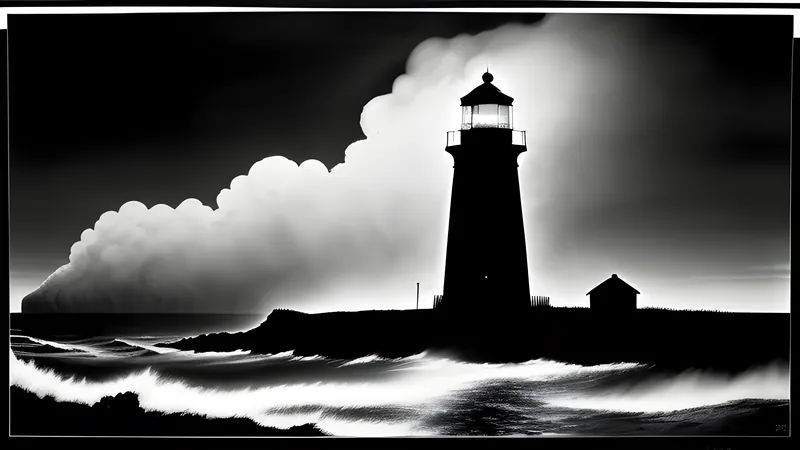
Carpenter and his co-writer and producer Debra Hill build the film as an ensemble drifting toward a single midnight. Adrienne Barbeau anchors it as Stevie Wayne, a late-night DJ broadcasting from a lighthouse radio station, watching the fog come in over the water and warning the town by voice alone — a wonderful device, because it makes the film’s real weapon (sound, coming from the dark) into its heroine’s only tool. Around her: Jamie Lee Curtis as a drifting hitchhiker, Tom Atkins as the fisherman who picks her up, Janet Leigh organising the centennial, Hal Holbrook as a drink-sodden priest who finds his grandfather’s journal bricked into the church wall and learns exactly what the town is sitting on. Casting Curtis and Leigh together — the Halloween lead and her own mother, Psycho’s Marion Crane — is the kind of film-buff wink Carpenter can never resist, and it costs the movie nothing.
The framing device tells you where the film’s heart lives. It opens on a beach at midnight with the great John Houseman, as an old sailor, telling ghost stories to children around a fire — a pocket watch stopping, the sea giving up its dead. Carpenter is announcing his lineage out loud. This is oral horror, the yarn passed hand to hand, and the whole film is a version of the tale Houseman is telling those kids.
Why the atmosphere holds
The reason The Fog still creeps rather than dates is Dean Cundey’s photography and Carpenter’s own score, working as a single instrument. Cundey, who shot Halloween and would shoot The Thing, understood Carpenter’s love of the wide anamorphic frame and its empty edges — the negative space where something might already be standing. Here he lights fog for a living, and fog is the hardest thing to photograph well: too much light and it’s a smoke machine, too little and it’s mud. Cundey finds the register where the mist glows from inside, so the danger is the light itself creeping under a door.
Carpenter’s synthesiser score does the other half. It is mostly pulse and drift — a low, patient throb with a lonely piano figure over it — and it functions as a tide. You feel the fog coming before you see it because the music has already started to move. The film’s best jolts are almost all sound design: three slow knocks on a door, a car alarm tripping itself in an empty street, the foghorn. Carpenter grew up on Universal’s monster pictures and on the radio, and The Fog plays like a man who learned that the scariest thing is a noise from a place you cannot see.
Watch, too, how the ghosts are staged. Blake and his crew are rarely more than silhouettes with glowing eyes, hooks and blades catching what light there is, framed in doorways so the fog behind them does the acting. Carpenter had learned from Halloween that a shape held at the edge of the frame beats a monster shoved in your face, and he holds that discipline even when the reshoots pushed him toward showing more.
Because there is a production wrinkle worth knowing. Carpenter finished a first cut, watched it, and decided it simply wasn’t frightening enough — the ghost-story mood was there, the scares weren’t. He went back and reshot perhaps a third of the film, adding the sharper shock sequences and a good deal more of Blake. You can feel the seam if you look, a slight tonal switch between the slow-building dread and the punchier set-pieces. What’s remarkable is that the two halves fuse rather than fight. The added scares give the atmosphere something to pay off, and the atmosphere earns the scares a legitimacy they’d never have on their own.
The ancestors it’s carrying
This is where a Carpenter film rewards the collector, because he is the most openly referential of the American horror directors, and The Fog is a compendium. The engine of the plot — the wronged dead returning on an anniversary to punish the descendants of the men who murdered them — is pure EC Comics, the Tales from the Crypt morality machine where the buried always dig their way back up on schedule. The framing yarn on the beach is Amicus anthology grammar (Dr Terror’s House of Horrors, Tales from the Crypt the 1972 film) folded into a feature. And the deeper root is the British ghost-story tradition — M. R. James and his revenants who arrive because someone disturbed what should have stayed buried, the past presenting its bill.
There’s a nod hiding in the names, too, the sort Carpenter plants for people who’ll catch it: the town priest reads from his grandfather’s journal, and the whole structure — buried guilt in a coastal community, a sin the founders have prospered from — owes something to the Welsh horror writer Arthur Machen, whose fog-and-coast unease Carpenter admired. Character names across his films quietly salute Hawks, Machen, and the directors he loved.
The most useful cross-reference, though, is a film released the same year: The Changeling, Peter Medak’s Canadian ghost story, another 1980 picture about a house sitting on a covered-up killing and a spirit that will not rest until the record is set straight. Both films argue that a haunting is a community’s suppressed history coming due, and both trust slowness. If The Fog is the version told as folk-horror weather, The Changeling is the version told as forensic investigation, and they make a perfect double bill about the same idea.
Set it, then, against the rest of Carpenter’s run and you can see the whole shape of him. The formal control connects it straight to Halloween; the mounting siege of a small group by an implacable outside force is the skeleton he’d perfect in The Thing; the low-budget swagger and the doomed-cool leading man point toward Escape from New York; and the interest in an evil that has always been here, waiting under the surface of an ordinary place, runs forward to In the Mouth of Madness and the satirical rot of They Live.
The verdict is easy to argue: this is Carpenter’s most purely atmospheric film, a ghost story that understands ghost stories, and the fact that it doesn’t reach for the profundity of The Thing is a feature of its design. It wants to raise the hair on your arms and send you to bed uneasy, and it does. Watch it late, in the dark, with the volume up — and if the coast has its own fog rolling in outside your window, so much the better.
Spoilers below
The film’s cruellest stroke is its arithmetic. The fog needs six lives to balance the six founders who drowned Blake’s crew, and Carpenter lets it do the maths in front of us — the weather-station operator, the fishermen picked off at sea, the bodies mounting toward the total. It gives the haunting a horrible legibility; you can count down to the safe moment.
Except Carpenter cheats the count, and this is the ending’s genius. Father Malone offers himself and the stolen gold cross to Blake as the sixth and final payment, and the fog lifts, the debt apparently settled, the survivors exhaling. Then Blake’s hand comes down and takes Malone anyway. The gold was never the point; the balance was never truly restorable. Carpenter cuts to Stevie Wayne alone in her lighthouse, broadcasting into the dark, telling whoever’s listening to look for the fog — and the film ends on Blake’s shape rising behind her.
It is an EC Comics punchline in its purest form: the ledger is a lie, the dead do not accept payment plans, and a town built on a murder does not get to buy its way clean with the very gold it stole. The reshoots that gave the film its scares also gave it that final, unappeasable reach out of the mist — the sea taking one more than it was owed, because the sea was never keeping honest books.
Related Content