The Fifth Element: Besson's Gorgeous Comic-Book Future
A teenage daydream, two French comics legends, and the most maximalist blockbuster of the nineties
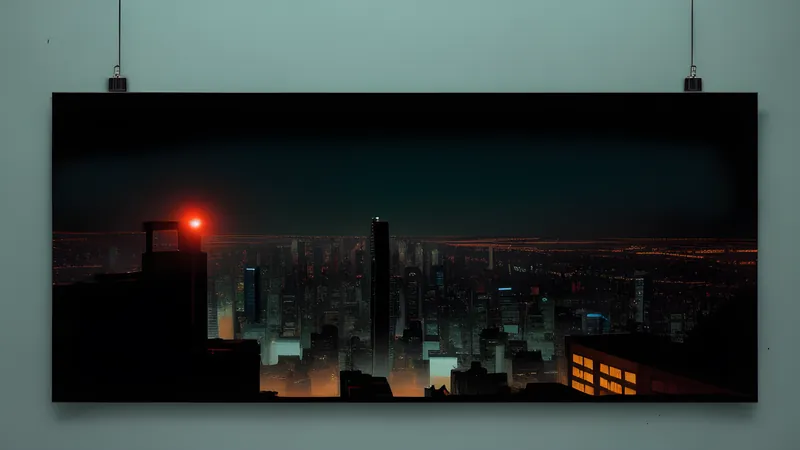
Contents
There is a specific kind of pleasure The Fifth Element delivers that almost no other blockbuster attempts, which is the pleasure of a film with far too many ideas and no interest in restraint. Luc Besson’s 1997 picture arrives loud, gaudy, tonally deranged, stuffed with more invention per minute than films three times its length, and it commits to that excess so completely that the excess becomes the point. This is a comic book that got a ninety-million-dollar budget, at the time the most expensive European film ever made, and spent every franc on making the frame overflow.
The story of the story matters here. Besson began writing The Fifth Element as a teenager in the south of France, a sprawling adolescent space opera he carried for years before he had the clout to film it. That origin explains a great deal: the film has the shape of a brilliant sixteen-year-old’s daydream, in which a New York cab driver, an ancient cosmic evil, a supermodel messiah, a camp radio host and a weaponised opera all belong in the same afternoon. Most directors would sand that down into coherence. Besson kept the teenage maximalism and hired the right people to make it beautiful.
The two men who drew the future
The visual DNA of The Fifth Element comes from French comics, and specifically from two artists whose fingerprints are on every frame. Besson brought in Jean Giraud, the illustrator known as Mœbius, and Jean-Claude Mézières, co-creator of the long-running Valérian and Laureline strip, to design the world. Mézières had spent decades drawing exactly this sort of teeming, vertical, multi-species future city, and his flying-taxi cityscapes went more or less directly onto the screen. The result is a science-fiction metropolis that feels drawn rather than built, its perspectives slightly heightened, its colours pushed past realism into the saturated register of the printed page.
That comic-book lineage is the film’s secret and its defence. Critics in 1997 who complained that the plot was thin or the tone childish were, in a sense, reviewing the wrong medium; The Fifth Element is a bande dessinée given motion and sound, and it obeys the logic of the panel, where a single striking image outranks narrative economy every time. The same thing had happened when Japanese comics reached Western screens, a translation I traced through Akira and how it sold the West on the form; Besson performed the European version of that trick, importing the density and swagger of French SF comics into a Hollywood-scale production. Set his teeming vertical New York beside the rain-black towers of Ridley Scott’s Blade Runner and you see two opposite futures built from the same comic-book roots: Scott’s soaked in noir melancholy, Besson’s blazing with pop colour and jokes.
Casting against gravity
The performances are calibrated to the comic register, which is why they read as strange out of context and perfect in it. Bruce Willis, as cab driver Korben Dallas, plays the one grounded man in a cartoon, and his weary competence gives the film a floor to bounce off. Milla Jovovich, as the reconstructed being Leeloo, invents a language, tumbles through action in a costume of white bandages designed by Jean-Paul Gaultier, and carries an innocence the film treats as literally sacred. Gary Oldman, as the industrialist villain Zorg, plays a Southern-fried grotesque with a haircut like a duck, chewing every syllable. And Chris Tucker, as the radio personality Ruby Rhod, delivers a performance so shrill and so committed that it functions as a stress test for the whole audience: your tolerance for Ruby Rhod is roughly your tolerance for the film itself.
Gaultier’s costumes deserve their own paragraph, because they are load-bearing. The couturier dressed the entire cast, from Leeloo’s straps to the flight attendants’ cropped jumpsuits to Zorg’s textured suits, and the clothes do the work that exposition usually does, telling you instantly what kind of world this is and how seriously to take it. This is production design as storytelling, the same principle that makes Brazil legible in a glance, though Gilliam’s ducts and Gaultier’s couture point in opposite emotional directions, one toward decay and one toward delirium. The lesson holds either way: in the best design-driven science fiction, you could mute the dialogue and still read the film.
Why the excess works
It would be easy to call The Fifth Element a mess, and on any conventional metric it is one. The plot is a fetch-quest for four magic stones; the villain and the hero barely share a scene; the tone lurches from slapstick to genuine awe within a single sequence. What holds it together is conviction, the sense that Besson believes in every ludicrous choice with his whole chest, and that belief is contagious. The film never winks at its own silliness or apologises for its sincerity, and that refusal to be embarrassed is exactly what dates so much cooler, more ironic nineties science fiction while The Fifth Element stays fresh.
The high-water mark of that conviction is the opera sequence, the film’s most famous set piece, in which a blue alien diva performs an aria that morphs mid-song into an impossible techno passage while Korben and Leeloo fight assassins in intercut action. Éric Serra’s score and the layered vocal (performed by Inva Mula) build a genuinely transcendent few minutes that no plot summary can convey. It is the sequence where the comic-book maximalism stops being merely fun and becomes something close to sublime, a demonstration that pure spectacle, pursued without irony and without limit, can reach heights that restraint never will. This is craft in the service of overwhelm, and the film earns the overwhelm.
Where it sits now
Nearly three decades on, The Fifth Element has aged better than most of its 1997 peers precisely because it never tried to be realistic and so has nothing to grow dated about. A film reaching for gritty plausibility ages against the calendar; a film reaching for the eternal energy of a great comic panel simply keeps being that. Besson’s picture is a fixed and gorgeous object, as vivid now as on release, and its influence runs through every subsequent blockbuster that dares to be colourful and weird rather than grey and grave.
That is the verdict. This is a maximalist masterpiece by the only reasonable standard for a maximalist film, which is whether the maximalism delivers, and it does, relentlessly. It works as a comedy, as an action film, as a design showcase and, in the opera sequence, as something briefly transcendent, and it works because Besson refused to be embarrassed by the teenage grandeur that started it. Come for the flying cabs; stay for the diva.
If the comic-book DNA is what caught you, seek out the Valérian and Laureline strips that Mézières drew, then Besson’s own troubled 2017 attempt to film them, an instructive failure that shows how thin the margin is between glorious excess and empty noise. If it was the design-as-storytelling, Blade Runner and Brazil are the two poles between which The Fifth Element dances, one drenched in dread and one blazing with joy.
Spoilers below
Everything above is safe. The climax and its logic are unpacked here.
The engine of the plot is the recurring cosmic threat: every five thousand years a Great Evil, a sentient dark planet drawn toward Earth, must be repelled by an ancient weapon made of four elemental stones (earth, water, air, fire) arranged around a fifth element, a “supreme being” in living form. Leeloo is that fifth element, reconstructed by scientists from a fragment of alien tissue, which is why the film treats her literal-mindedly as a messiah rather than a metaphor. The stones spend most of the running time lost, then in the wrong hands, and the final act is a race to assemble them inside a Egyptian-style temple before the dark planet arrives.
The climax turns on a switch from mechanism to feeling. The four stones are activated by the four classical elements, straightforward enough, but the central weapon will not fire, because Leeloo, having learned the whole grim history of human violence from a data-download, has lost the will to save a species she now sees as bent on destroying itself. The film’s answer to its own science-fiction puzzle is romantic rather than technical: Korben has to convince Leeloo that humanity is worth defending, and he does so with a declaration of love. Only then does the fifth element ignite and the divine light lance out to stop the approaching evil.
That resolution is either the film’s silliest move or its most honest, depending on your patience, and I think it is honest. Besson has spent two hours building a comic book, and comic books resolve on emotion and spectacle rather than plausibility. To end a teenage space opera on a physics solution would betray the whole register; ending it on love, blasted out as a beam of light from a supermodel in an Egyptian temple, is the only conclusion the film’s logic actually supports. The excess that governs every earlier scene governs the ending too, and the consistency is what makes it land instead of collapse. Besson trusted the daydream all the way to the last frame, and the daydream held.
Related Content