The Endless: Lovecraft on a Mumblecore Budget
Two brothers, a UFO death cult, and a cosmic horror you can't afford to look at
Contents
Cosmic horror has a budget problem. The whole appeal of the Lovecraftian mode is a force so vast and indifferent that the human mind cannot hold it, and the moment you put that force on screen it becomes a rubber tentacle with a price tag. Justin Benson and Aaron Moorhead solved the problem the only honest way, which is to refuse to solve it. Their 2017 film The Endless is a cosmic horror in which the cosmic horror is almost never shown, because they could not have afforded to show it and, more importantly, because the fear works better as a set of rules than as a monster. The result is one of the smartest low-budget genre films of its decade.
The two men wrote it, directed it, edited much of it, and star in it as versions of themselves — a pair of brothers named Justin and Aaron. That do-it-all economy is the mumblecore inheritance, the naturalistic, improvisation-adjacent American indie mode where the money goes into performance and location because there is no money for anything else. What Benson and Moorhead did was graft that intimate, talky register onto genuine cosmic dread, and the graft took.
The setup, kept above the line
The brothers escaped a group they describe as a UFO death cult ten years ago, and they now live thin, brittle lives on the outside — dead-end cleaning jobs, cheap ramen, the older Justin insisting they are better off, the younger Aaron quietly grieving the only community he ever knew. When a videotape arrives from the camp, seemingly a goodbye message, Aaron talks his brother into driving back up for a single day, just to see it, just to have closure. Justin agrees against every instinct. They return to Camp Arcadia expecting the squalid, sinister commune of their memory and find instead a warm, sane, welcoming group of people who brew good beer, seem entirely unaged, and are very glad to see them.
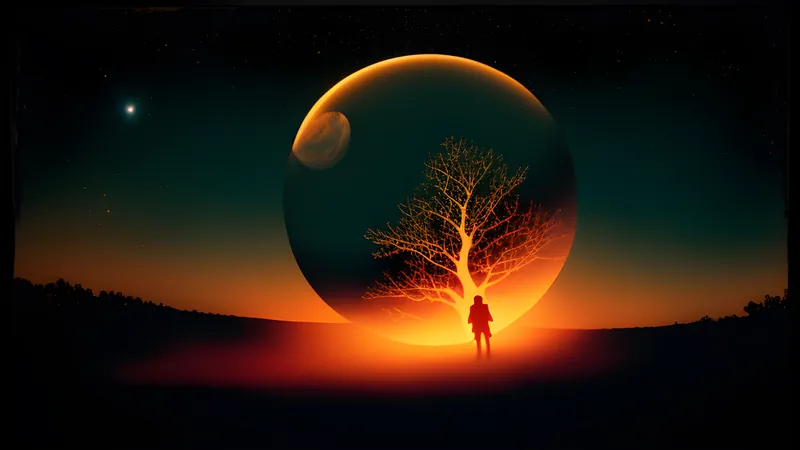
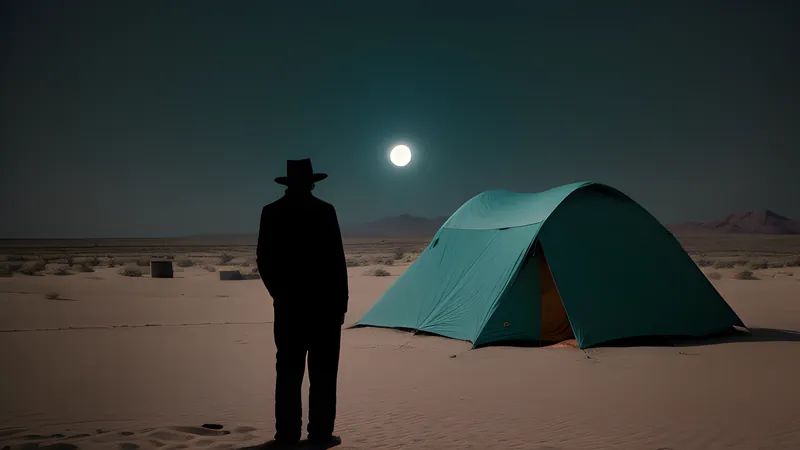
That is the trap the film springs slowly. Something in the valley is wrong in a way that has nothing to do with the usual cult-horror machinery of brainwashing and charismatic leaders. The days do not quite behave. Objects and events recur. The sky, occasionally, has more than one moon. Benson and Moorhead let the wrongness accumulate in the corners of otherwise ordinary scenes, so that you spend the first hour unsure whether you are watching a story about a manipulative sect or something far stranger, and the uncertainty is the pleasure.
Why the cheapness becomes the style
The craft lesson here is worth spelling out, because it is the whole reason the film succeeds where better-funded cosmic horror flounders. Benson and Moorhead never give you a clean look at the entity that governs the valley. It is a presence felt through its effects — a photograph that develops impossibly, a rope that pulls back, a tremor in the air, a game of catch that returns a ball nobody threw. The horror is delivered as behaviour, a set of increasingly disturbing rules about how time and death work inside the camp’s boundary, and rules cost nothing to film. A wide shot of a lake at dusk with one detail wrong is more frightening than any creature the budget could have bought, because your mind supplies the shape and your mind never runs out of money.
The performances carry what the effects cannot. Because the two leads are real brothers-in-arms who have made films together for years, the sibling friction reads as lived rather than acted — the older one’s protective condescension, the younger one’s resentment at being managed, the shared shorthand of people who have only ever had each other. Aaron Moorhead also serves as cinematographer, and his images find an unforced natural beauty in the California backcountry that makes the creeping wrongness land harder by contrast. The film is warm before it is frightening, which is exactly why the fright works.
There is a formal daring underneath the naturalism, too. The film is built around loops — literal recurrences that the characters are trapped inside, some of them small and comic, some of them a slow-motion damnation. Benson and Moorhead are interested in the way a loop can be a comfort as well as a prison, the way an addict or a cult member might choose the familiar cage over the terror of an open future. The cosmic horror, when you finally understand it, turns out to be a metaphor sharp enough to draw blood: the thing in the valley offers people an eternity of the same day, and some of them say yes.
The lineage it wears openly
Magpie’s move is to point at the ancestors, and The Endless is unusually generous about naming its own. The presiding spirit is Lovecraft — the indifferent cosmic force, the geometry that should not exist, the sanity that frays on contact with scale — filtered through the low-fi American weird. Its budgetary cousin is the two-hander creature film that hides its monster to devastating effect; the case for that method is Gareth Edwards’s tiny-budget wonder, another picture that turned poverty into restraint and restraint into dread.
For the loop mechanics specifically, the film belongs to a rich tradition of movies that treat repeating time as a moral and formal engine, mapped out in the survey of time-loop cinema’s rules, cheats and the ones worth watching. And for the sensation of a bounded, rule-bound region that reshapes anyone who enters it, its arthouse ancestor is Tarkovsky’s roped-off territory, examined in the Zone as a test of faith — Camp Arcadia is a Zone with better beer. Viewers who came to Benson and Moorhead through the studio-scale weird of Annihilation will recognise the family resemblance to the film whose nerve the studio nearly lost, another story of a place where the rules of biology and time quietly stop applying.
Does it work? It works better on a second viewing than a first, which is the mark of a puzzle box built by people who respected the audience. There is a piece of connective tissue that will reward the initiated and slightly baffle newcomers, and I will keep the specifics below the line, but the film stands entirely on its own for anyone walking in cold. Where to find it: it streams on the horror and arthouse services and sits on a good disc; watch it in one sitting, in the dark, and pay attention to the sky. This is a film that hides its scares in the middle distance.
Spoilers below
The revelation that organises everything is that the valley is ruled by an unseen cosmic entity — never named, never fully shown — that has divided the surrounding land into invisible zones, each one a separate time loop of a different length. Inside its territory, nobody ages and nobody truly dies until the loop resets, and the entity appears to feed on the deaths, staging them and replaying them. The cult is not a cult in the ordinary sense at all; the members have simply chosen to live inside the entity’s protection, trading freedom and forward time for a form of immortality. Some loops run for decades. Some, the film shows with real horror, are cruelly short — a handful of people locked in a shack, reliving the same few minutes of their own deaths forever.
The masterstroke is that this is a stealth sequel. Benson and Moorhead’s earlier micro-budget film Resolution (2012) took place inside the same phenomenon, and midway through The Endless the brothers cross paths with that film’s protagonist and his addicted friend, still trapped in their loop, unaged, doomed to repeat. It reframes the whole enterprise: the entity has been telling stories, feeding on narratives, for far longer than one film. Newcomers feel the eeriness of the encounter without the full payoff; viewers who have seen Resolution feel the floor drop out.
The ending refuses tidy escape and is stronger for it. Justin works out that the entity’s power weakens if you deny it the ending it wants — that a loop can be broken by refusing to complete the story it is trying to tell. The brothers flee the boundary of the valley in a race against the closing loop, and the film’s final ambiguity is whether they truly got out or simply bought themselves the next, larger cycle. What lingers is the theme underneath: the cult members chose eternity over the frightening open road of a mortal life, and the film’s sympathy for that choice — its refusal to treat them as fools — is what raises it above a genre exercise. The real cosmic horror is the appeal of never having to change.
For more genre cinema that mistrusts the very apparatus of perception, the natural next stop is a body-swap nightmare about identity coming apart at the seams — Brandon Cronenberg’s Possessor asks the same question about who is really driving from the opposite direction.
Related Content