The Conversation: Coppola's Surveillance Nightmare
The film Coppola made between the two Godfathers, and the one he cared about most
Contents
Francis Ford Coppola made three films in a row that would have been any other director’s whole career, and the middle one is the one nobody talks about first. The Godfather came in 1972. The Godfather Part II came at the end of 1974. Wedged between them, released that same spring and shot on a fraction of the budget, is The Conversation — the small, cold, personal picture Coppola has repeatedly said is the one closest to him. It won the Palme d’Or at Cannes in 1974. It then had the bad luck to be up against Coppola’s own sequel at the Oscars, which is a level of self-competition that borders on the comic.
Watch it now, half a century on, and the striking thing is how little it has dated. The reel-to-reel decks and the trench coat belong to another world. The dread does not.
A man who listens for a living
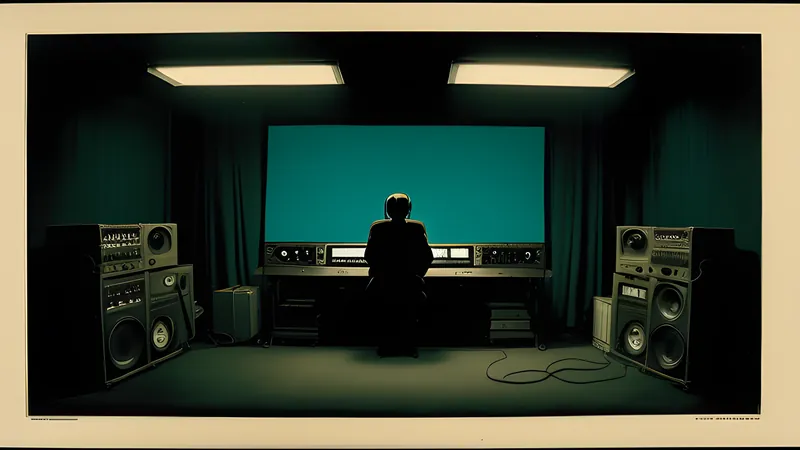
Gene Hackman plays Harry Caul, the best surveillance man on the West Coast, a fact everyone in his trade keeps telling him and he keeps refusing to enjoy. He is hired by a corporate client — a shadowy figure billed only as the Director, played uncredited by Robert Duvall — to record a young couple as they walk laps around Union Square in San Francisco, threading through a lunchtime crowd and a busking band. The opening sequence is one of the great pieces of technical bravura in American cinema: a slow zoom from a rooftop, a smeary long-lens image, and a soundtrack that keeps dropping out and swimming back into focus as Harry’s various hidden mics fight the ambient noise.
Harry gets his tape. He cleans it up in his workshop, layering the passes together until a full sentence surfaces from the mush. The couple, played by Frederic Forrest and Cindy Williams, say something that lands wrong in his ear — a line about being killed if the chance arose — and Harry, who has spent his life insisting that what people do with his recordings is none of his business, cannot let it go. He has reason to be haunted. An earlier job of his ended in deaths, a fact the film doles out in fragments, and his Catholicism gives the guilt somewhere to live. There is a confession scene that tells you everything about how he has learned to file his conscience.
Around him Coppola arranges a small gallery of watchers and used men: John Cazale as Stan, Harry’s put-upon partner; Allen Garfield as Bernie Moran, a gloating rival who humiliates Harry at a surveillance-trade convention; a very young Harrison Ford as Martin Stett, the Director’s smooth assistant, all smiles and menace. Teri Garr plays the girlfriend Harry keeps at arm’s length because intimacy is another kind of exposure.
Why it works: the sound is the subject
Most thrillers about surveillance are shot like heist films — the gadget, the plan, the payoff. The Conversation is built the other way round. Its true author, alongside Coppola, is Walter Murch, who edited the picture and designed its sound during a period when Coppola had gone off to shoot the Godfather sequel and effectively left him to assemble it. Murch’s achievement is to make hearing itself the drama. We are trapped inside Harry’s ears. The same recorded exchange returns again and again through the film, and each time the mix is a shade different — a word pushed forward, a level nudged — so that the meaning of the sentence keeps sliding under us. The film teaches you, physically, how a recording lies by telling the truth selectively.
That is the craft lesson worth stealing. Suspense here is generated by emphasis rather than by any ticking clock. Change which syllable is stressed and you change who the victim is. Coppola and Murch understood that an audience will lean in harder to catch a half-heard phrase than to watch an explosion, and they starve us of clarity on purpose. The colour palette is drab greens and greys, David Shire’s score is a lonely, circling piano, and Harry’s saxophone — he plays along to jazz records alone in his flat, a man who can only harmonise with the dead — becomes the one place his blocked feeling escapes.
Hackman’s performance is a marvel of subtraction. Fresh off the swagger of The French Connection, he plays Harry as a locked cabinet: fussy, evasive, wearing a translucent plastic raincoat indoors like a man who expects to be rained on by God. He gives you a professional whose entire expertise is aimed at everyone except himself.
The film it comes from, and the ones it fathered
Every collector’s instinct wants to place The Conversation in its family, and the ancestor is not American at all. It descends directly from Michelangelo Antonioni’s Blow-Up (1966), in which a fashion photographer enlarges his snaps until he convinces himself he has photographed a murder in a London park. Coppola has said he took the premise and swapped the eye for the ear — the photographer becomes a sound man, the grainy enlargement becomes the layered tape. Both films are really about a technician who mistakes the ability to record reality for the ability to understand it.
The line runs forward too. Brian De Palma’s Blow Out (1981) closes the loop, giving John Travolta a movie-sound-effects man who accidentally tapes a political assassination — the same anxiety wearing a sleeker, bloodier suit. And the whole strain of the American paranoia film flows out from here into every drama about being watched; I traced a slice of that lineage on the genre side in nine sci-fi films that saw the surveillance age coming, and The Conversation is the crime-drama root the sci-fi grew out of.
Two other threads are worth pulling. One is obsession as a trap for the professional: Harry belongs to the same lonely order as the fixated investigator in David Fincher’s Zodiac, a man ruined by needing to know. The other is the aesthetics of the isolated craftsman, the tradesman of violence or intrusion who has organised his soul out of existence — the direct European cousin here is Alain Delon’s hitman in Melville’s Le Samouraï, another meticulous loner undone the moment he lets one thread of feeling in.
The other resonance is historical accident. Coppola wrote the script in the late 1960s, long before the word Watergate meant anything, and the film happened to arrive in cinemas as the tapes were destroying a presidency. Audiences read it as ripped from the headlines. It was, if anything, prophetic.
The verdict
The Conversation is the quietest great film of the New Hollywood decade and, for my money, the one that has aged the least. It asks a question that has only grown teeth: what does it do to a person to spend a life listening in, and what happens when the listener finally hears something meant for him? It refuses the easy exit of a plot twist that lets Harry off. Watch it for Hackman’s masterclass in withholding, and for a sound design that remains, fifty years on, an argument for what cinema can do that no other form can.
Spoilers below
The genius of Murch’s construction only fully lands when the picture springs its trap. Harry has spent the film convinced he is protecting the young couple from a murderous, jealous employer — reading the recorded sentence as they are the prey. He is wrong about the grammar. The couple are the predators; the Director is the intended victim, and the line Harry kept replaying carried a stress he heard the wrong way round the whole time. The reveal is delivered partly by replaying the tape one last time with the emphasis corrected, so that the same words we have heard a dozen times finally confess what they meant. It is a twist that indicts the audience along with Harry: we too accepted the reading the mix handed us.
The ending is the cruellest and best image in Coppola’s whole filmography. Warned by a phone call that he is himself under surveillance — the watcher watched — Harry tears his apartment to pieces looking for the bug. He pries up floorboards, strips the wallpaper, dismantles everything he owns, and never finds it. In the final shot he sits amid the wreckage of his own privacy and plays his saxophone, the one honest sound he has, in a room he has personally destroyed trying to prove he is not being heard. There is no catharsis and no rescue, only a man who has finally been reduced to the condition he inflicted on everyone else. If you want to see where the American thriller learned that the surveillance state’s deepest cruelty is what it does to the surveillant, this is the source text — and it pairs beautifully with a rewatch of Blow Out the same evening.
Related Content