The Black Hole: Disney's Grim Space Gothic
The studio's first PG film is a haunted-house picture with a cathedral for a set
Contents
Walt Disney Productions in 1979 was a studio in genuine trouble. Its founder had been dead thirteen years, its animation department was hollowed out, its live-action output was talking cars and shaggy dogs, and Star Wars had just demonstrated that the family audience Disney thought it owned would queue around the block for someone else. The response was The Black Hole: the most expensive film the studio had ever made, its first ever PG certificate, and a picture so tonally peculiar that forty years of viewers have come away unable to agree on what they watched.
It is a bad film. It is also, in about four separate departments, a magnificent one, and the gap between those two statements is the most interesting thing on the studio’s slate that decade.
The setup
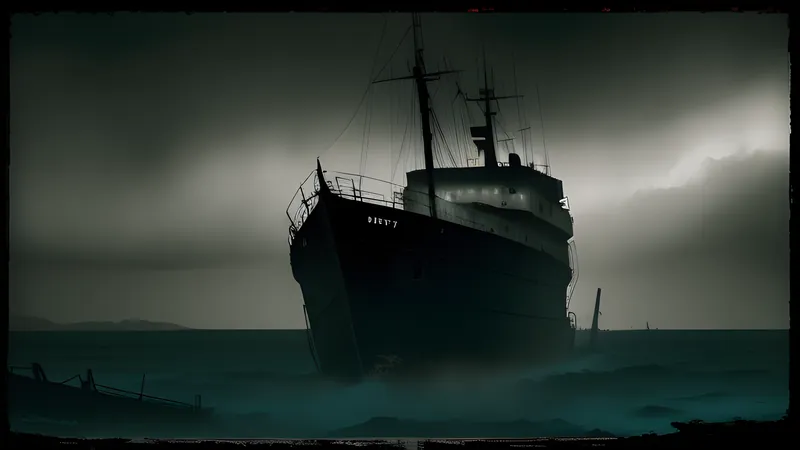
The research vessel Palomino, five crew and a hovering robot, finds a black hole at the edge of explored space. Parked on its event horizon, holding station where nothing should be able to hold station, is the Cygnus — a ship lost twenty years earlier with all hands, now lit up like a city and running on something.
Aboard is Dr Hans Reinhardt (Maximilian Schell), sole survivor, who has spent two decades preparing to fly into the hole on the grounds that the greatest discovery in human history is on the other side of it. He has a crew of black-hooded humanoid drones and a personal enforcer: Maximilian, a red machine with a rotating blade for a hand and no face at all.
The Palomino crew are Robert Forster’s captain, Yvette Mimieux’s telepath, Ernest Borgnine’s cynical reporter, Joseph Bottoms’s pilot, and — the reason the film has any dread in it whatsoever — Anthony Perkins as a scientist who admires Reinhardt and would very much like to be shown the machine room.
The ship is the film
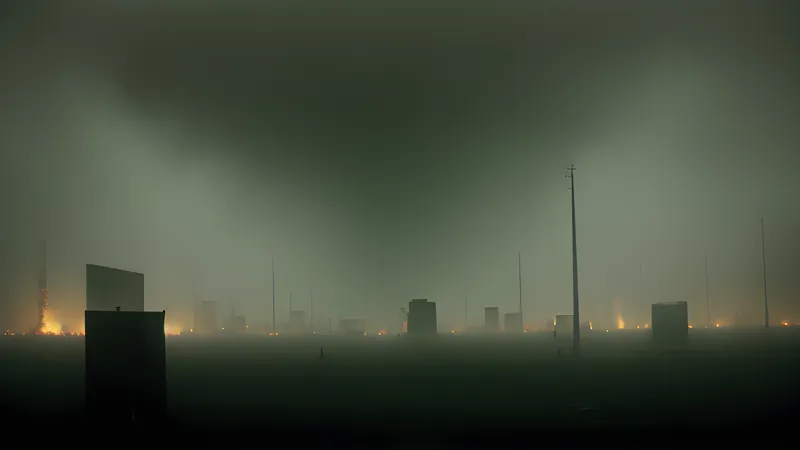
The Cygnus is one of the great sets in science fiction cinema and it was never built. Peter Ellenshaw came out of retirement to design it, and what he designed is a cathedral: a filigree of latticework and glass and Gothic arch, three miles long, lit from within, hanging over an abyss. It looks nothing like a spacecraft. It looks like a nineteenth-century glasshouse that has been consecrated.
That is a deliberate and quite radical choice. Every other post-Star Wars ship of the period was industrial — greebled, panelled, functional. Ellenshaw went the other way and made the Cygnus an ecclesiastical object, and the whole film’s meaning is in the decision. Reinhardt is not a scientist in a workshop. He is a priest in a nave, and the black hole is not a phenomenon; it is a god he intends to walk into.
The effects work getting it on screen was the studio’s own doing. The ACES rig — a computer-controlled motion-control camera system built in-house — allowed the repeatable passes that composite work of this density needs, and the matte paintings, most of them Ellenshaw’s, remain gorgeous. The main-title sequence is one of the earliest substantial pieces of computer-generated wireframe imagery in a feature: a green grid funnelling into a vortex, austere and mathematical, running under John Barry’s overture.
That overture is the other thing the film gets absolutely right. Barry writes it as a slow, dark, waltzing dread — no fanfare, no heroism, a piece of music that tells you at minute one that this story ends badly. Disney had just watched a rival studio conquer the world on the back of a brass fanfare, and it hired the composer of the Bond films to write a funeral march. Somebody in that building had taste.
The ancestor
The collector’s answer is unusually easy here, because it is Disney’s own. The Black Hole is 20,000 Leagues Under the Sea rebuilt in orbit, and it is not remotely subtle about it.
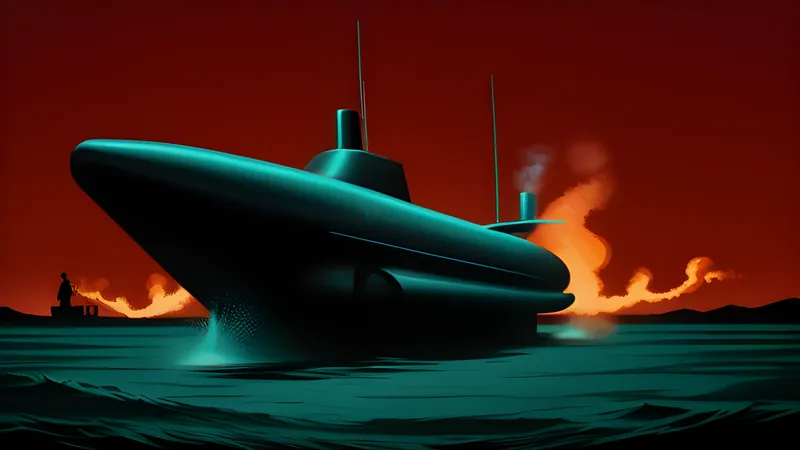
Reinhardt is Nemo. The Cygnus is the Nautilus: an impossible, beautiful vessel of a technology nobody else possesses, run by a man of genius who has withdrawn from humanity in disgust and who considers his hospitality a form of imprisonment. The Palomino crew are the Aronnax party, taken aboard, given dinner, shown wonders, and gradually made to understand that they are not leaving. The reporter who will not stop asking questions is Ned Land with a press pass. Disney had made the definitive Verne adaptation in 1954 and it was still the best live-action film on the studio’s shelf; twenty-five years later, in a panic, it remade it with the ocean swapped for a singularity.
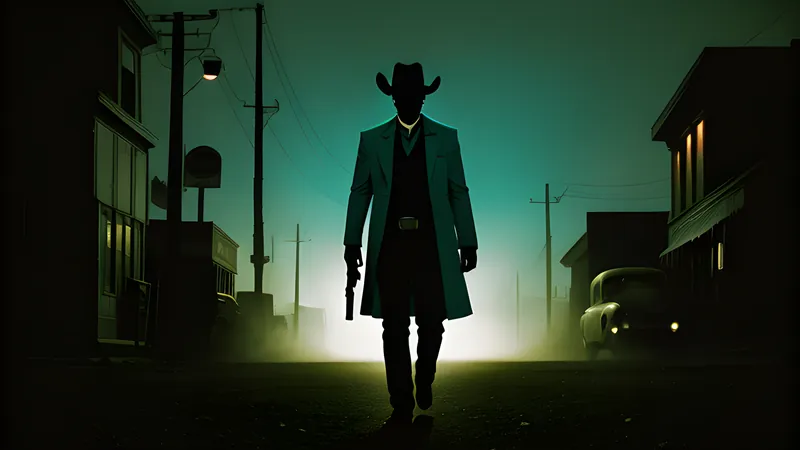
The other ancestor is the haunted house. The Cygnus is explored the way a Gothic mansion is explored — a party arrives, is received by a courteous host, is warned away from one wing, and goes there. The silent hooded figures gliding through corridors are the servants who do not speak in every ghost story ever filmed. Once you see the shape, the film’s tonal weirdness stops being a mystery: this is a haunted-house picture that Disney tried to sell to children.
Watch it alongside Forbidden Planet, which pulled the same trick with Shakespeare and pulled it off, and the deficiency comes into focus. Both films are about a brilliant recluse on the edge of the universe with a machine and a secret. Fred Wilcox’s picture trusted its source and its audience. Disney kept flinching. And for the version of this that has none of Disney’s money and all of its nerve, 2001 is the film The Black Hole keeps glancing at in its final reel and cannot reach.
The craft detail worth isolating is how Nelson stages arrival. The Palomino approaches the Cygnus dark, finds nothing, and is nearly past it when the ship comes on — every light at once, three miles of it, filling a frame that a second earlier held only stars. It is a reveal built entirely out of scale and patience, with no cutting to speed it up, and it works because the film has spent ten minutes establishing that there is nothing out here. Barry holds a single chord under it. Whatever else the picture fumbles, that shot understands exactly what a haunted house is for: the house has to be beautiful before it can be frightening.
The robots are the problem
Here is where it collapses. V.I.N.CENT is a hovering barrel with eyes, voiced by Roddy McDowall in a register of chipper condescension, and Old B.O.B. is his rusted counterpart, voiced by Slim Pickens. They exist because a Disney executive looked at Star Wars, saw two comedy droids, and issued an instruction.
They are catastrophic. Every scene they carry is pitched at eight-year-olds, inside a film whose actual business is a recluse, an abyss and a crew who are not permitted to leave. There is a sequence in which two robots have a laser-pistol duel — a Western quick-draw gag, played entirely for laughs — in the same building where the dread of the picture is standing in plain sight. The tonal whiplash is not a subtle flaw. It is a hole in the hull.
The maddening part is that Maximilian, the third robot, is one of the best-designed screen villains of the decade precisely because he does none of this. He never speaks. He has no eyes and no articulation beyond a slow rotation and a hand that opens into blades. He simply appears in doorways and waits. He is what the whole film should have been.
The case against
The dialogue is flat and functional throughout, and the human characters have one attribute each. Mimieux’s telepathy is a plot device that arrives when required and is never thought about. Forster is stranded playing decency. Borgnine is entertaining and doing an entirely different film. Only Perkins and Schell seem to know what picture they are in — Schell playing Reinhardt with a heavy, wounded grandeur that keeps threatening to make the whole thing work, and Perkins playing a man in the grip of hero worship, which is the single most frightening performance in a Disney live-action film.
The science is nonsense of a wholly unembarrassed kind. The Cygnus holds position on an event horizon; people walk about in gravity; the hole is a hole. The film wants an abyss with a lip you can stand on, and takes it.
And the studio never resolved who it was for. The result is a film with a body count, a mutilation, an on-screen impalement and a metaphysical ending, sold with a merchandising line and two comedy robots.
Where to watch: it turns up in Disney’s back catalogue and has had disc releases. Watch it as widely and darkly as you can manage. The Cygnus is the reason to be here, and it is a lighting effect.
Spoilers below
Reinhardt’s crew did not die. They mutinied, twenty years ago, when he refused to obey a recall order, and Reinhardt — with Maximilian’s help — put them down and then lobotomised the survivors, sealed them into the hooded drone suits, and has been served by them ever since. The reveal is staged with real restraint: Borgnine’s reporter follows a limping drone, watches it enter a chamber, and sees the mask come off. The film’s most disturbing image is a funeral, conducted by the hooded figures for one of their own, in which they mourn a colleague they are no longer capable of remembering.
Perkins is the one who works it out and the one it kills. His scientist has spent the film asking to be shown the great man’s work, and Reinhardt shows him — sets Maximilian on him, and the blade goes in with the camera on Perkins’s face. Disney cut around the impact and it makes no difference at all. It remains, by a distance, the most violent thing the studio put on screen in its first sixty years, and it is committed by a robot the marketing department had made into a toy.
Then there is the ending, about which no two people agree. The Cygnus breaks up, everyone who is left is funnelled into the hole, and the film abandons narrative entirely for four minutes of imagery: Reinhardt fused into Maximilian’s body, standing on a rock in a burning red landscape, surrounded by his hooded drones, staring out over a lake of fire. Then a cut to a white cathedral corridor, an angelic figure, and the survivors’ ship emerging into a new sky.
It is Hell and it is Heaven, staged unmistakably, with Barry’s music going full requiem. Nobody at Disney appears to have been able to explain in 1979 what it meant, and Gary Nelson has never claimed it was coherent. What it is, plainly, is Dante — the man who made himself a god gets the pit, and the ones who did not get the light — grafted onto a Verne adaptation by a studio that had lost its bearings so completely it accidentally made the strangest thing in its history.
The failure is real. The reach is also real, and it is the only time in that decade that the studio reached at all. A film that pairs a laser duel between comedy robots with a literal vision of the damned should not be dismissed as a misfire. It should be dismissed as several films, at least one of which is extraordinary.
Related Content