The Black Cat (1934): Karloff Versus Lugosi in Art-Deco Dread
Edgar Ulmer's Bauhaus fortress, a chess game for a woman's life, and Universal's nastiest hour
Contents
Universal’s most profitable film of 1934 is sixty-five minutes long, is credited as an adaptation of an Edgar Allan Poe story it has nothing whatsoever to do with, takes place in a Bauhaus bunker built on top of a mass war grave, and ends with a man being skinned alive. Nobody has ever quite explained how it got made.
The Black Cat was directed by Edgar G. Ulmer, and it is the first pairing of Boris Karloff and Bela Lugosi — billed, in the studio’s blunt house style, as KARLOFF and BELA LUGOSI, the top name having by then dispensed with a Christian name altogether.
The set is the argument
The single most startling thing about the film is what it looks like. Universal horror in 1934 meant cobwebs, candelabra and Gothic stonework — the vocabulary imported from Germany a decade earlier and by then thoroughly domesticated. Ulmer threw all of it out.
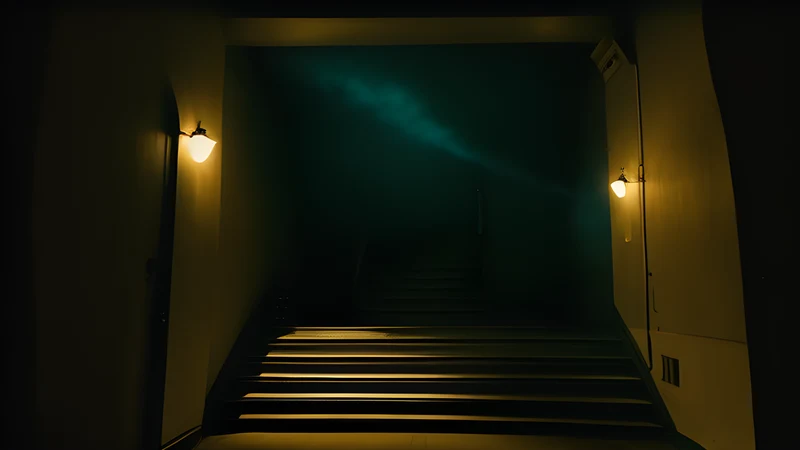
Hjalmar Poelzig’s house is modernist. Flat planes, glass, chrome, indirect lighting recessed into the walls, an intercom system, clean staircases with no ornament, radios, steel doors. It is a millionaire’s contemporary home, and it sits atop Fort Marmorus in the Hungarian mountains, where — as the film eventually gets around to telling you — ten thousand men died in the war, betrayed by the commander who now sits upstairs in his tastefully furnished lounge.
That is a genuinely radical piece of design thinking. The horror is not in a dark corner. There are no dark corners. Ulmer’s fortress is bright, hygienic and modern, and the bodies are in the basement, and the film’s whole thesis is that a clean surface is exactly what you build over an atrocity. It is 1934. The war is sixteen years gone and the next one is visible from the hilltop.
Ulmer had trained in the German industry — he had worked on Murnau productions and came over on Sunrise — and the villain’s name is a straight tribute to Hans Poelzig, the architect who built the ghetto for The Golem in 1920. One German craftsman naming a devil-worshipping modernist after another, inside a picture the front office believed was a Poe adaptation.
Karloff and Lugosi, properly cast for once
The pairing is usually written up as a duel and it is better described as an exchange, because the film gives them the roles the wrong way round on purpose.
Lugosi’s Dr Vitus Werdegast is the sympathetic one. He has spent fifteen years in a prison camp at Kurgaal, sent there by Poelzig’s betrayal, and he has come to the house for his wife and daughter. Lugosi plays him quietly, with a fragility that his Dracula persona never permitted, and he is given a phobia — an uncontrollable terror of cats — that is played as trauma rather than as a gag. It is the best performance of his career and it is the one that gets forgotten because he spent the rest of it in capes.
Karloff’s Poelzig is a serene monster. He wears a black robe, he sleeps beside a preserved corpse, and Karloff plays him with a soft, cultured absence of affect — a man for whom the atrocity in the cellar is a matter of taste. He is introduced sitting up in bed in profile, and Ulmer holds the shot longer than is comfortable.
Around them, David Manners and Julie Bishop play the American honeymoon couple who take the wrong bus and end up as furniture in someone else’s grudge. Manners was Universal’s designated bland young man — he had done the same duty in Dracula and The Mummy — and here the blandness is functional. The newlyweds are irrelevant to the argument going on over their heads, which is what makes the chess game land.
The title, meanwhile, is a marketing instrument and Ulmer treats it as one. Poe’s story is about a man who walls up his wife and is undone by the cat sealed in with her. The film has a cat, which wanders through two scenes so that Lugosi can flinch at it, and one line about the animal’s supposed deathlessness. That is the entire adaptation. Universal owned Poe’s name, Poe’s name sold tickets in 1934, and the studio had already run the same trick with Murders in the Rue Morgue two years earlier. What Ulmer smuggled in under the licence is a war-guilt drama about a continent that buried its dead and built something fashionable on top of them, and the marketing department appears never to have read it.
Wall-to-wall Liszt
Heinz Roemheld’s score is the film’s other quiet revolution. Universal in 1934 barely scored its horror pictures — Dracula has almost no music at all, three years earlier, because the convention had not settled and producers worried audiences would wonder where the orchestra was. Ulmer runs music under nearly the entire film, and he builds it from the classical repertoire: Liszt, Schubert, Bach, Brahms, Chopin, Tchaikovsky, arranged and stitched by Roemheld into something continuous.
The effect is peculiar and extremely effective. The film feels civilised. Poelzig plays Bach on his organ while preparing a Black Mass, and the music is the same music that has been playing over the honeymooners’ train journey, so the audience has been sitting inside the villain’s taste for an hour without noticing.
Ulmer’s camera is worth watching for the tracking. He keeps the lens gliding through Poelzig’s house on long lateral moves, following characters past those flat modern walls, and the house reveals itself as a continuous space with no hiding places. Then he inverts it for the cellar, where the coverage goes static and the compositions box people in. The building is open above ground and a maze below, and Ulmer never says so. He had a genuine architectural training behind him, having worked in design before he ever directed, and The Black Cat is the rare horror film where the man in charge understood buildings as well as he understood scares.
Ulmer pays for it
The film made Universal a great deal of money and did Ulmer no good at all. During production he began a relationship with Shirley Kassler, then married to Max Alexander, a nephew of Carl Laemmle. She left her husband; Ulmer married her; the Laemmle family closed the majors to him.
So the man who directed the studio’s biggest hit of the year spent the rest of his career on Poverty Row, mostly at PRC, shooting features in six days on redressed sets. He made Detour in 1945 for pocket change and it is one of the finest films noir ever produced. His whole career is the case study for Poverty Row — proof that the constraint was never the talent. The studio dynasty he briefly served is covered in the Universal monsters.
The Black Cat itself was reshot before release; the front office lost its nerve about the ending and about the Black Mass, and the surviving film carries the scars of a compromise that is still, remarkably, one of the cruellest things Universal put out before the Production Code hardened.
Spoilers below
The plot, once it declares itself, is worse than the atmosphere prepares you for.
Poelzig commanded Fort Marmorus, sold it to the Russians, and ten thousand men died. Werdegast was captured and spent fifteen years at Kurgaal. In the meantime, Poelzig took Werdegast’s wife Karen, told her that her husband was dead, married her — and then, when she died, preserved her body and installed it in a glass case in the cellar, standing upright among a collection of other women he has kept the same way. He has also married Werdegast’s daughter, now grown, who is upstairs in the house.
The cellar sequence is the film’s centre and it is staged with a horrible calm. Poelzig walks Werdegast through his collection, by the hand, naming the women, indirect lighting glowing behind each case, as though showing off a wine cellar. The dead are exhibits. The whole modernist house is a vitrine.
Then the chess game. Poelzig proposes chess for the life of Joan, the young American wife, whom he intends for the Black Mass. Werdegast agrees because he has no other move. Ulmer shoots the game in near-total silence, cutting between two faces, and Werdegast loses. The film’s hero plays for a woman’s life and is beaten, and the plot simply proceeds on that basis.
What follows is the ending the studio flinched at. Werdegast, having found his daughter’s body, takes Poelzig, straps him to the embalming rack he keeps for the purpose, and begins to flay him. Ulmer shows it in shadow on a wall — the arm rising and falling, Karloff’s screaming — and it is more than enough. Manners, arriving and misreading the scene entirely, shoots Werdegast. Dying, Werdegast throws the switch on the dynamite under the fort and blows the whole house, the cellar, the collection and himself into the mountain.
The last scene is the honeymooners on a train reading a review of a novel loosely based on their ordeal, which dismisses it as far-fetched. Universal ends its nastiest picture with a joke at the expense of anyone who found it implausible, and the joke is the only comfort offered. Ten thousand men, a cellar of preserved wives, a chess game lost, and a critic complaining it strains credulity.
Related Content