The Babadook: The Monster in the Basement of the Mind
Jennifer Kent's grief that walks upstairs in a top hat
Contents
Jennifer Kent’s The Babadook (2014) arrived wearing the costume of a haunted-house film and turned out to be a study of a woman drowning in grief while raising a child she cannot always bring herself to love. That gap between the costume and the thing underneath is the film’s whole method, and it is why the picture has outlasted a hundred slicker ghost stories from the same years. The monster in the top hat is a magnificent piece of design. The horror is somewhere else entirely, in a suburban Adelaide house where a mother has not slept properly in six years.
Amelia is a widow. Her husband died in a car crash while driving her to hospital to give birth to their son, Samuel, so the boy’s birthday and the anniversary of the death are the same date, and every candle on every cake is also a wound. Samuel, now six or seven, is a difficult child, prone to shrieking, building weapons, insisting a monster is coming. Amelia is exhausted past the edge of function. Then a pop-up book appears on his shelf, Mister Babadook, that no one remembers buying, and it promises in nursery-rhyme cadence that once you know the Babadook is real, you can never be rid of it.
The house that grief built
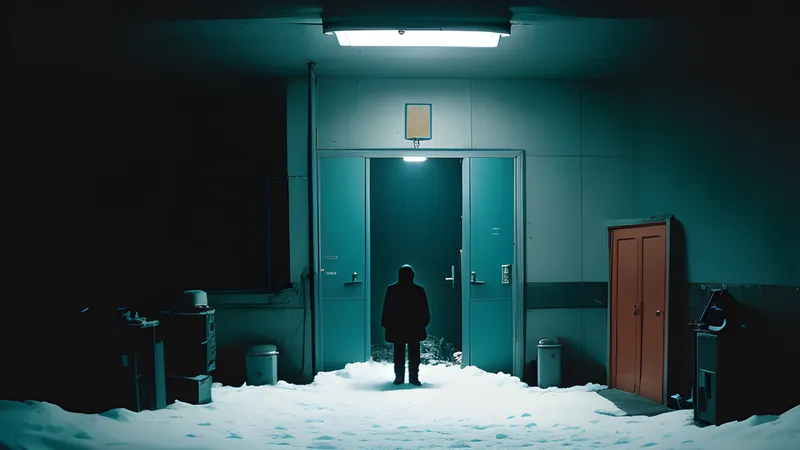
Kent, directing her first feature after years as an actor and a stint studying under Lars von Trier, builds the film out of a colour palette that is doing thematic work before a single scare lands. The house is drained of warmth, greys and cold blues and a dishwater light, the palette of a home where the curtains have not been opened in months because opening them would take energy no one has. It looks like the inside of a depression, and that is deliberate. Radek Ladczuk’s camera keeps Amelia hemmed in by doorframes and staircases, the architecture of the house closing on her like a set of parentheses.
The performances carry the load a monster movie usually hands to prosthetics. Essie Davis gives one of the great horror performances of the century as Amelia, and what makes it great is that she plays the unspeakable thing directly: a mother who resents her child, who is worn down to the point where love has curdled into something she is ashamed of. Noah Wiseman, as Samuel, has the harder job, because the script needs him to be genuinely maddening, the kind of child whose neediness you understand and cannot bear in the same breath, and he manages it without ever tipping into the stagey precociousness that ruins most horror children. You believe this pair. That is the film.
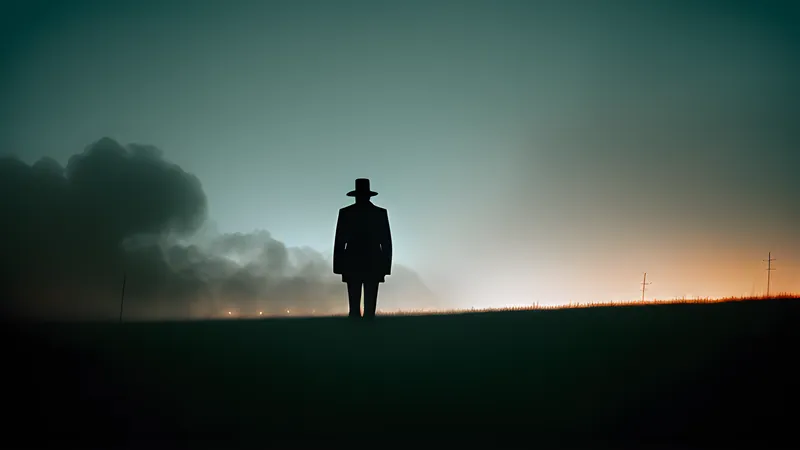
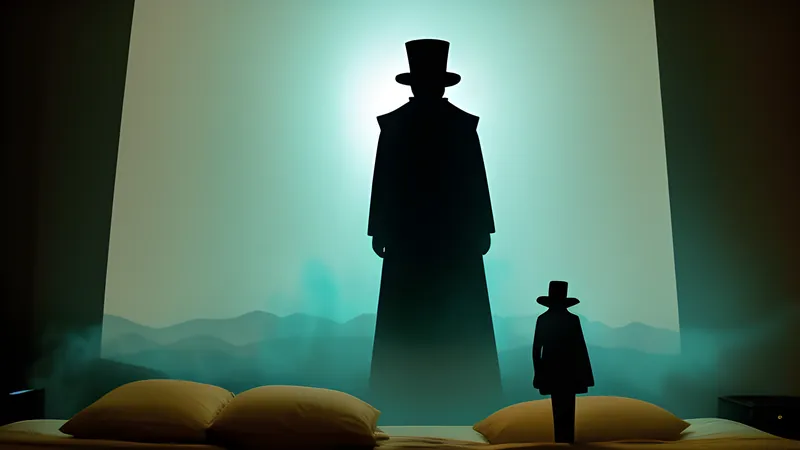
The Babadook itself, when Kent finally lets it move, is a triumph of restraint and old craft. Kent has said she wanted the creature to feel like something out of the silent era, and she got there by using practical effects and stop-motion timing rather than digital smoothness, so the thing moves with the jerky, wrong rhythm of a Lon Chaney apparition or a Méliès trick. It is glimpsed, never explained, mostly a silhouette, a coat, a set of fingers, a sound. The sound is the masterstroke, that guttural three-beat croak of its own name that the film trains you to dread the way Jaws trained a generation to dread two notes.
Grief that cannot be exorcised
Here is where The Babadook separates itself from the haunted-house tradition it is quoting, and where the collector wants to draw the family tree. The standard ghost story runs on a promise: identify the spirit, learn its grievance, perform the rite, and the house goes quiet. Exorcism is the genre’s oldest contract. Kent tears the contract up. The Babadook cannot be sent away, because it is not a spirit with unfinished business. It is Amelia’s grief, and her rage, and the part of her that on the worst nights wishes her son had never been born, and you do not exorcise those. You learn to live with them or they eat you.
This puts the film at the head of a small, distinguished lineage of grief-horror that the following decade would deepen. The most obvious descendant is Ari Aster’s story of a family unmade by loss and inheritance, which I wrote about in Hereditary and grief wearing a haunted house; Aster’s film shares the conviction that mourning is a supernatural force and that a house can be a diagram of a mind coming apart. The truer cousin, though, is Joel Anderson’s quiet Australian mockumentary about a family that cannot stop conjuring a dead daughter, which I covered in Lake Mungo and the film that grieves. Both films understand that the ghost is often just the shape we give to the person we are not ready to release.
The deeper ancestor, the one that earns The Babadook its place in a serious horror library, is Roman Polanski’s apartment cinema, especially Repulsion (1965), where a woman’s psychological collapse is rendered as the physical decay of the rooms around her, hands bursting through walls, corridors elongating. Kent has clearly studied it. The Babadook’s house behaves the way Catherine Deneuve’s flat behaved, the interior warping to match the interior of a mind. Where Polanski left his heroine lost inside the breakdown, Kent is after something Polanski never allowed: the possibility of survival on the far side of the horror, which brings us to the ending everyone remembers.
Why the top hat is the wrong thing to look at
The failure mode of talking about this film is treating it as a puzzle box, decoding B-A-B-A-D-O-O-K as depression and then congratulating yourself. Kent is smarter than her own allegory, and the film resists the neat solve in the way the best genre cinema always does, by being frightening on the literal level while the metaphor hums underneath. You do not need the reading to be scared. A child’s book that rewrites itself with new threats, a shape at the foot of the bed, a mother’s voice going wrong, all of it works as pure horror. The grief reading is the film’s second floor, available if you climb to it, never forced on you from the ground.
If the film has a weakness, it is in the middle stretch, where the escalation of household strangeness occasionally reaches for a jolt the material does not need; a woman coming apart at the seams is already unbearable, and the odd conventional scare feels like Kent reassuring a genre audience she has not forgotten them. But these are small debts against an enormous achievement, a debut so assured it makes the run of glossy paranormal product around it look like it was made by machines.
The Babadook is one of the essential horror films of its decade and, quietly, one of the most humane. It takes the least sayable feeling a parent can have and dramatises it without flinching and without punishing the parent for feeling it. Watch it, and then watch how carefully it refuses to let you off the hook at the end.
Where to find it: it has been well served on physical media and streams on the horror-leaning platforms. Watch it alone, ideally when you are tired, which is the state it was made to find you in.
Spoilers below
The reason The Babadook matters is its final ten minutes, which invert every rule the haunted-house film lives by. Amelia, fully possessed by the creature at the height of the film, does the thing the genre has been dreading: she turns on Samuel, and for a stretch this looks like it will be a film about a mother killing her child. It is genuinely close. She strangles the family dog, she advances on the boy, and it is the child, improbably, who saves the adult, holding her face and telling her he loves her until the Babadook is driven out of her mouth in a torrent.
Then comes the ending that put the film in the canon. Amelia does not destroy the Babadook. She traps it in the basement. And in the closing scene, on Samuel’s birthday, the day of the crash, she goes down to the cellar with a bowl of worms dug from the garden and feeds it. The monster lunges once, she calms it, and she comes back upstairs to her son. The grief lives in the house now, in the basement, and she visits it, tends it, keeps it fed so it does not come up the stairs.
I cannot think of a wiser ending in modern horror. The film refuses the exorcism because it knows the truth about loss, that you do not get over the death of the person who was driving you to hospital when your child was born. The grief does not leave. It moves downstairs. On the good days you can function, raise your son, open the curtains, and on the anniversary you go down and you feed the thing so it lets you live. That the film reaches this through a top-hatted storybook ghoul, and that the ghoul never stops being frightening even once you have read it, is the measure of how completely Jennifer Kent understood what she was making.
Related Content