The American Astronaut: The Sci-Fi Musical From Nowhere
Cory McAbee's black-and-white space Western and the cult film that sounds like nothing else
Contents
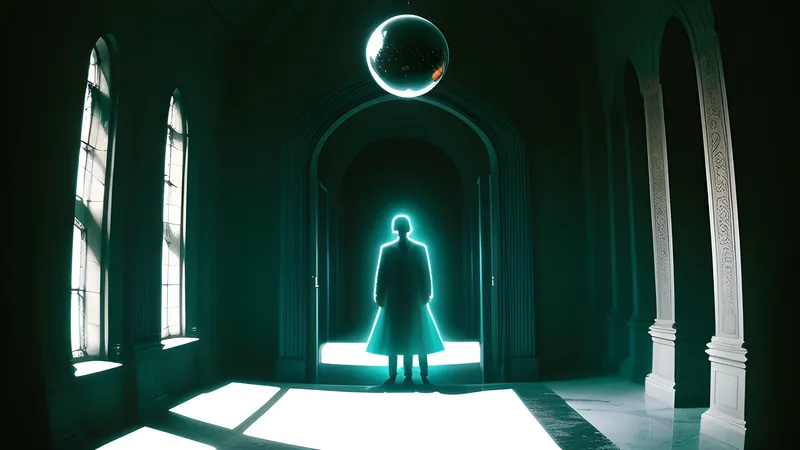
Every so often a film arrives with no visible parents and no obvious peers, a thing that seems to have assembled itself in a garage out of spare parts from four incompatible genres. Cory McAbee’s The American Astronaut (2001) is one of those. It is a black-and-white science-fiction Western musical made by the frontman of an art-rock band, and I have never successfully described it to anyone who then watched it and said I had oversold it. If anything I always undersell it, because the sentence “sci-fi Western musical” makes it sound like a stunt, and the film is far stranger and far more sincere than a stunt could ever be.
A trader, a corpse, a solar system of lonely men
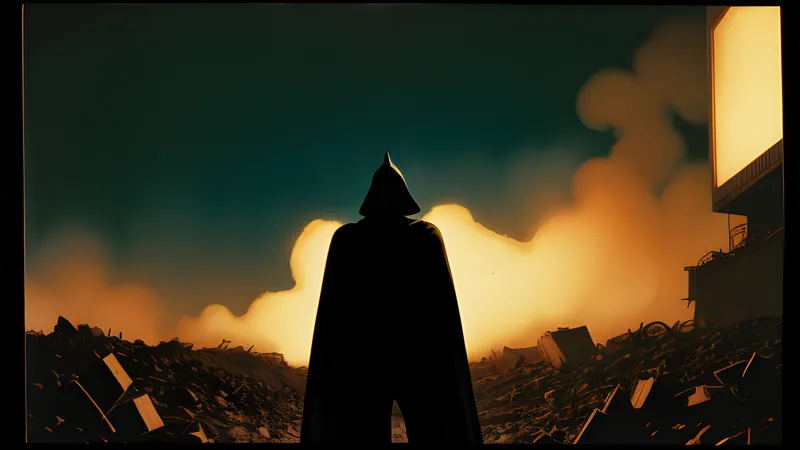
McAbee wrote, directed and stars as Samuel Curtis, an interplanetary trader working a solar system that has been colonised by single-sex populations — mining colonies of men, a Venus of women — with commerce and desire routed clumsily between them. Curtis is handed a byzantine delivery job. He must move a person, and then a body, through a chain of transactions that spans several worlds, and he is pursued the whole way by Professor Hess (Rocco Sisto), a man who murders anyone he envies and weeps while doing it.
That is roughly the shape, and the shape barely matters. The plot is a clothesline on which McAbee hangs a series of self-contained set pieces: a barroom dance contest, a musical number performed by miners, an interlude with a character called the Blueberry Pirate. The film moves like a folk tale told by someone slightly drunk and entirely charming, one incident leading to the next by association rather than logic. You either surrender to that rhythm in the first ten minutes or you spend the running time waiting for a coherence that never arrives and was never on offer.
McAbee did not come to cinema by the usual door. He was the frontman of The Billy Nayer Show, an art-rock outfit whose live performances already braided music, animation and absurdist narrative, and The American Astronaut grew out of that sensibility rather than out of any film-school apprenticeship. That origin explains the film’s shape. It is structured like a concept album, a sequence of songs bridged by spoken-word interludes, and it carries the loose, associative logic of a stage show that has been dreamed larger than any stage could hold. Knowing that, the film stops looking like a broken narrative and starts looking like exactly the thing it set out to be.
What holds it together is tone and craft. The songs come from The Billy Nayer Show, McAbee’s own band, and they are genuinely good — ramshackle, catchy, emotionally direct in a way the deadpan visuals are not. The black-and-white photography is beautiful on a budget that clearly had no business producing beauty, all hard shadows and improvised production design. And McAbee plays Curtis with the weary decency of a Western hero who has wandered into the wrong universe and decided to keep his manners regardless.
Why it works
The great risk of a film this arch is that it becomes a smirk, a feature-length nudge about how clever it is to smash genres together. The American Astronaut avoids that trap through absolute commitment and a straight face. Nobody in it winks. The musical numbers are performed as if the characters have always sung, the sci-fi is treated as lived-in fact, and the Western code of honour that governs Curtis is played entirely for real. The comedy comes from the collision of these registers, and the film never steps outside itself to point at the collision. That discipline is the difference between a cult classic and a student sketch.
The other thing McAbee understands is the seductive power of a low budget honestly embraced. The spaceships are toys, the sets are plainly sets, and rather than apologise the film leans into a handmade quality that recalls silent cinema and early Méliès. Constraint becomes style. Because it never pretends to a scale it cannot afford, the imagination is free to run in the gaps, and the viewer does more of the work of world-building than in any effects-driven blockbuster. This is the oldest lesson of cult sci-fi, learned again from first principles.
There is also real melancholy here, which is what lifts the film above novelty. The solar system McAbee imagines is desperately lonely — colonies of men who will pay a fortune simply to see a woman, a villain who kills out of a longing he cannot name, a hero drifting between worlds with no home to return to. Under the deadpan and the toy rockets, The American Astronaut is about isolation and the strange economies desire builds around it. The songs carry that ache directly, which is why the film lingers long after its jokes have faded.
It is worth saying plainly how funny the film is, because the melancholy reading can make it sound like a chore. It is not. The dance contest that opens the film, judged on a criterion no ordinary bar would recognise, is one of the great deadpan comic set pieces of low-budget cinema, and the miners’ musical number has the daft, communal joy of a work song sung by men who have forgotten women exist. The comedy and the sadness are the same material seen from different angles, which is the mark of a real film rather than a novelty.
Where it comes from
For a one-of-a-kind object, The American Astronaut sits inside a traceable tradition, and the fun of it is spotting the ancestors. The clearest is David Lynch. McAbee’s black-and-white industrial dread, his patient weird tableaux, his willingness to let a scene run on pure atmosphere all descend from the shadow world of Eraserhead. Both films use monochrome and sound design to build a universe that feels tactile and impossible at once, and both were made by artists working outside any studio’s permission.
The deeper root is the midnight-movie circuit itself, the culture that kept films like this alive by playing them at weekends to audiences who returned again and again. The American Astronaut is a direct descendant of the acid-Western surrealism that Alejandro Jodorowsky poured into El Topo — the Western hero as pilgrim through a symbolic landscape, the refusal of ordinary narrative causality, the sense that you are watching someone’s dream rather than a script. McAbee lightens Jodorowsky’s mysticism into deadpan comedy, though the DNA of the acid Western is unmistakable.
There is a European animation cousin too. The chilly, alien-yet-handmade sci-fi imagination on display here rhymes with the surrealist space visions of Fantastic Planet, another film that used limited means to conjure a whole cosmos with its own internal logic. Both understand that strangeness is cheaper and more durable than spectacle. And for a modern film that shares this faith in committing fully to an absurd premise with a completely straight face, the deadpan cult comedy of The Greasy Strangler makes an unlikely but instructive companion piece.
The verdict
The American Astronaut is a minor miracle, and I use “minor” only to describe its budget. McAbee made a film with the confidence of an auteur and the resourcefulness of a busker, and the result has aged into one of the purest cult objects of its decade — genuinely singular, genuinely felt, and impossible to mistake for anyone else’s work. It asks a great deal of patience and a taste for the oblique, and it rewards both with songs you will hum for weeks and images you will not shake.
Twenty-odd years on, its reputation has grown slowly and by word of mouth, which is exactly how a film like this is supposed to find its people. If the description alone intrigues you, that is usually a reliable sign you are one of them. Watch it late, watch it alone or with one trusted accomplice, and let the toy rockets do their work.
Spoilers below
The film’s structure is a relay of macabre bargains, and it is worth spelling out how bleak the underlying economy is. Curtis’s mission threads through transactions in which people themselves are the currency — a cloned young man delivered as a novelty, and eventually the corpse of a dead man traded onward, because in this solar system even the dead have market value to colonies starved of company. McAbee stages these grotesque deals so lightly that their horror only registers afterwards.
The pursuit by Professor Hess resolves the film’s emotional argument. Hess is not a conventional villain with a scheme; he is envy given human form, a man compelled to destroy whatever life he cannot possess, and his tearful violence is the dark mirror of the loneliness that drives every other character. When their confrontation finally lands, the film reveals that its true subject was never the delivery job at all but the different shapes that isolation takes — Curtis’s stoic drift, the miners’ longing, Hess’s murderous grief. The songs told you this the whole time; the plot merely caught up. The last movement leaves Curtis where a Western always leaves its wanderer, moving on alone across an indifferent frontier, only here the frontier is the whole empty solar system.
For the traditions this grew out of, El Topo is the founding acid Western and Eraserhead the monochrome nightmare it shares a palette with.
Related Content