Tetsuo: The Iron Man: Tsukamoto's Body-Horror Assault
Shinya Tsukamoto's 1989 metal-flesh nightmare is 67 minutes of stop-motion industrial dread that still outruns everything it inspired
Contents
Tetsuo: The Iron Man runs sixty-seven minutes, was shot on 16mm in black and white by a tiny crew over something like eighteen exhausting months, and hits like a cattle prod. Shinya Tsukamoto’s 1989 debut is the loudest quiet film you will ever see — a near-wordless industrial nightmare about a man turning into scrap metal, assembled frame by punishing frame in the director’s own apartment with a cast of friends who doubled as crew. Nothing about its budget or its length should produce something this overwhelming. It does anyway, and thirty-five years later almost everything that has tried to copy it looks tame.
This is a revisit, so I will keep the mutations that matter below the spoiler line. Above it, the case for why Tetsuo is one of the essential cult objects of its era.
The assault, described
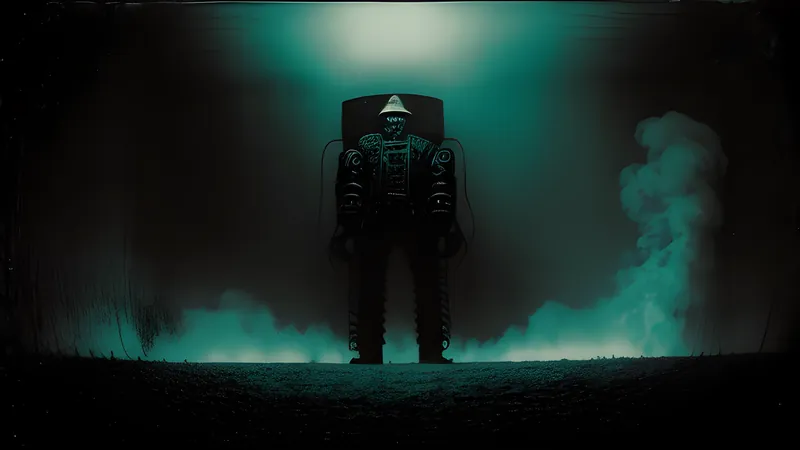
A Japanese salaryman (Tomorowo Taguchi) wakes to find a shard of metal erupting from his cheek. It spreads. Over the course of the film his body is progressively colonised by iron and wire and machinery, driven by his psychic entanglement with a figure the credits call the Metal Fetishist (played by Tsukamoto himself), a man with a compulsion to insert metal into his own flesh. The salaryman’s girlfriend (Kei Fujiwara, who also served as the film’s co-cinematographer and let Tsukamoto shoot in her home) becomes both witness and target as the transformation accelerates toward a finale of pure industrial delirium.
That synopsis makes it sound coherent, and Tetsuo is only intermittently interested in coherence. It moves by association and assault, in bursts of stop-motion animation, strobing montage and stampeding handheld camera, scored to Chu Ishikawa’s clanging metal-percussion soundtrack. The experience is closer to being trapped inside a machine than to watching a story unfold. You do not follow Tetsuo so much as endure it.
Why the poverty is the power
The instructive thing about Tetsuo — the reason it belongs in any serious conversation about low-budget genius — is that its limitations generated its style. Tsukamoto had no money for smooth special effects, so he used stop-motion, moving props and actors a fraction at a time between exposures, which gives the metal an unnatural, skittering, insectile life that a bigger budget would have smoothed into something less alarming. The jerky, wrong movement is a direct product of the technique, and it is far more disturbing than any polished CGI transformation because it looks like it should not be able to move at all.
The same alchemy runs through every department. Black-and-white 16mm hides the seams and lends everything the grain of found footage or industrial documentary. The absence of a coverage budget forced Tsukamoto into aggressive, fragmented editing — cutting on impact, cutting to noise — which turns out to be the perfect grammar for a film about a body being violently reassembled. Even the famous chase sequence, where the camera itself seems to hurtle through the streets, was a solution to having no equipment: Tsukamoto strapped the camera to a performer and ran. The velocity is real because it had to be.
And the sound. Ishikawa’s score is not accompaniment; it is the film’s bloodstream. Built from the shriek and hammer of actual metal and machinery, it fuses with Tsukamoto’s imagery so completely that you cannot afterwards separate the sight of the transformation from the sound of it. This is one of the great marriages of image and noise in the medium, and it is the element most of the film’s imitators forget to reproduce.
Underneath the assault there is a genuine idea, which is what separates Tetsuo from mere provocation. The film is a scream about the collision of the human body with the industrial city — flesh overtaken by the machinery it built, desire and disgust and mechanisation fusing into one runaway process. It arrived at the exact moment Japan’s economic and technological boom was peaking, and it plays like the culture’s own anxiety about becoming an appendage of its machines, vomited straight onto celluloid.
The collector’s lineage
Tetsuo did not emerge from nowhere, and half the pleasure of placing it is tracing its family. The most obvious ancestor is David Lynch’s Eraserhead — the same monochrome industrial dread, the same droning sound design, the same nightmare logic and body anxiety, the same DIY apartment-cinema poverty turned into a virtue. Tsukamoto has cited Lynch’s influence, and you can feel Eraserhead’s slow black hum accelerated here into a sprint.
The deeper genre bloodline is Cronenberg. Tetsuo is the most extreme point on the body-horror map the desk keeps returning to, and it converses directly with the Canadian’s obsessions: the flesh betrayed and remade, technology and desire and disease braided together. Its truest conversation partners are Videodrome, Cronenberg’s prophecy about the screen colonising the body, and above all The Fly, Cronenberg’s love story told in meat — where a man’s transformation into something inhuman is the engine of tragedy. Tetsuo takes that transformation and strips it of the melodrama, leaving only the process, the noise and the horror of watching a body cease to be one.
There is a native lineage too. Tetsuo is the punk, live-action shadow of the cyberpunk imagination that Akira sold to the West a year earlier — the same fear of flesh and technology fusing into something monstrous, the same imagery of the body swelling and mutating beyond control, rendered in ink and cel by Otomo and in scrap metal and sweat by Tsukamoto. And for the cold, clinical, transformation-under-glass version of the same somatic nightmare, the back half of Beyond the Black Rainbow plunges into the same tar-black abyss Tsukamoto sprints through — one film hypnotic and sealed, the other a full-body seizure.
The verdict
Tetsuo: The Iron Man is not for everyone, and I would be lying to pretend otherwise. It is abrasive, relentless, formally exhausting, and only glancingly interested in the comforts of plot or character. Sixty-seven minutes is exactly the right length; any longer and the assault would numb into monotony, which is precisely what happened when Tsukamoto made larger, glossier sequels that never recaptured the debut’s feral charge.
But as a demonstration of what a singular imagination can wring from nothing — no money, no time, no equipment, just conviction and a camera and a girlfriend’s apartment — it is close to unmatched. It is one of the purest examples in all of cinema of style born from constraint, of an artist turning every limitation into a weapon. Watch it loud, watch it once through without pausing so the momentum can do its work, and understand that you are seeing the source code for a whole strain of body-horror and cyberpunk that followed. Seek the Third Window restoration; the image and that extraordinary soundtrack deserve better than the murky old bootlegs it spread on.
Spoilers below
The film’s engine, revealed as it goes, is that the salaryman and his girlfriend earlier struck and killed the Metal Fetishist in a hit-and-run and, in a genuinely transgressive stroke, were sexually aroused by the accident and the disposal of the body. The Fetishist’s revenge is not to haunt them conventionally; it is to infect the salaryman with the same metal compulsion that drove him, turning the guilty man’s own body into the instrument of retribution. The transformation is a punishment that arrives from inside the flesh.
That psychosexual charge is what makes Tetsuo more than a technical stunt. The film’s most notorious image — the salaryman’s genitals replaced by an enormous, whirring power drill — is the crudest possible literalisation of its theme, desire mechanised into a weapon that destroys the very intimacy it was meant to serve. A nightmare sequence in which the girlfriend, transformed, assaults him with a metal appendage completes the film’s vision of a couple whose sexuality has been wholly colonised by the machine. It is grotesque and it is meant to be; Tsukamoto is dead serious about the horror of appetite fused with hardware.
The finale abandons realism entirely. The salaryman and the Fetishist merge into a single lumbering mass of scrap and cabling, a two-headed metal creature that declares its intention to rust the whole world, to spread the transformation to all of humanity and reduce the city to a single fused organism of flesh and iron. It is an apocalyptic ending played at maximum volume and minimum explanation — the individual body-horror scaled up to a cosmic threat in the final seconds, and then a hard cut to nothing. Tsukamoto offers no resolution and no comfort, only the promise that the rust is coming for everyone. Thirty-five years on, in a world where the boundary between flesh and machine has only grown blurrier, that final image of a metal thing lurching off to convert the earth feels less like a fever dream and more like a forecast.
Related Content