Supervixens: Meyer's Cartoon Excess at Full Throttle
Russ Meyer's desert road movie, and the tonal whiplash between cartoon and real cruelty
Contents
By 1975 Russ Meyer had nothing left to prove about commerce and everything left to prove about how far he could push his own style before it broke. Supervixens is the answer, and it is Meyer at his most Meyer — the fastest cutting, the broadest caricature, the most cartoonish landscape of impossibly proportioned women and cretinous men, all of it running at a pitch that never once drops below hysterical. I want to look at it as film history and as craft, because the film is instructive precisely at the point where its cartoon logic collides with something genuinely nasty, and that collision is the most interesting problem in Meyer’s whole catalogue.
A road movie built from tall tales
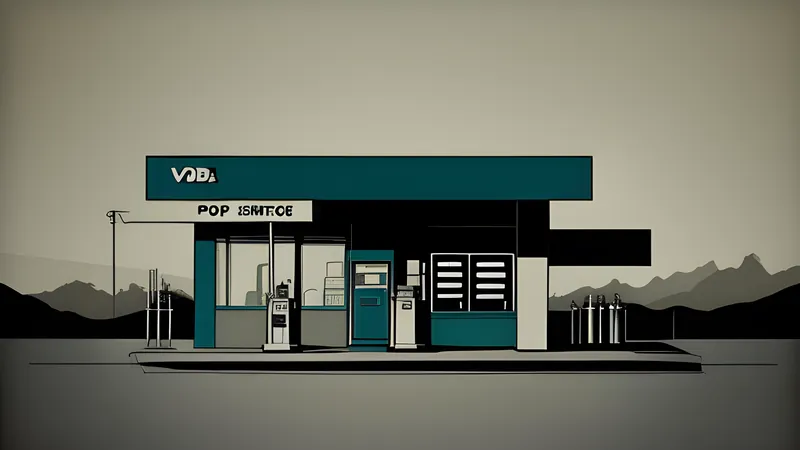
The structure is picaresque, a road movie strung together from set pieces. Clint Ramsey (Charles Pitts) is a decent, dim young gas-station attendant married to the violently jealous SuperAngel (Shari Eubank). After a catastrophic misunderstanding turns lethal, Clint finds himself on the run, framed, drifting across a sun-blasted American Southwest and washing up in the orbit of one improbable woman after another — each a variation on the Meyer archetype, each played for a mixture of lust and slapstick. His journey eventually delivers him to a remote desert gas station and to SuperVixen, also played by Eubank, whose double casting gives the film a fairy-tale symmetry of loss and restoration.
Presiding over the whole thing, as a villain who lingers long after the film ends, is Charles Napier as Harry Sledge, a psychotic sheriff’s deputy whose wounded, impotent rage sets the plot in motion and returns to close it. Napier, with his enormous rectangular grin and coiled physical menace, gives one of the great exploitation performances, and Meyer clearly knew what he had; Sledge is shot like a force of nature, and the film organises its dread around him.
The film sits at a particular moment in Meyer’s career, after his brief, strange detour through the studio system. He had gone to Twentieth Century-Fox and made a genuine hit, then found the studio relationship soured, and by the mid-seventies he had retreated to full independence, financing and controlling his own pictures again. Supervixens has the swagger of a man who has been inside the machine, decided he preferred his own workshop, and come home to do exactly as he pleased. That independence is audible in every reckless cut; nobody was standing over Meyer telling him to modulate.
The film also runs on a fairy-tale logic that only becomes clear on a second viewing, structured as a fall and a redemption with the same actress at both ends. Meyer, for all his reputation as a mere purveyor of flesh, was building his picture on a genuine narrative armature, and the excess sits on top of a surprisingly firm frame.
Everything is dialled past realism. The dialogue is barked, the performances are enormous, the editing chops between faces and bodies and roadside Americana with a frenetic, almost avant-garde aggression. Meyer cut his films himself, and Supervixens is a montage showcase, closer in rhythm to a battle sequence than to a comedy. This is the maximalist Meyer that separates him from every hack who copied his subject matter and none of his technique.
The problem at the centre
Here is where Supervixens stops being simple fun and becomes worth arguing about. Early in the film, Meyer stages a scene of domestic violence against SuperAngel that is genuinely brutal, protracted, and shot with a savagery that sits very awkwardly beside the film’s cartoon register everywhere else. It is the single most discussed sequence in Meyer’s work, and for good reason. The film asks you to treat its world as a live-action comic strip where nothing has weight, and then, for several minutes, it makes something land with terrible weight.
Critics have never fully agreed on what to do with this. One reading holds that Meyer, deliberately or not, exposes the ugliness that always lurked under the leering comedy of the genre, that the scene is the return of a repressed reality the nudie tradition worked hard to keep offscreen. Another reading finds it simply indefensible, a lapse of control or taste that no amount of stylistic bravado redeems. My own view is that the discomfort is real and worth sitting with rather than explaining away — the tonal whiplash is the film’s most honest moment, the point where the machinery of exploitation grinds and shows you its gears. A critic’s job is to name that, not to smooth it over.
What the sequence proves, at minimum, is that Meyer’s cartoon was always a choice and never an incapacity. He could make violence hurt when he wanted to, which means the weightlessness everywhere else is a deliberate style rather than a limitation. That matters for how we read the whole film, and the whole career.
Napier deserves a paragraph of his own, because Harry Sledge is the connective tissue of the film and one of exploitation cinema’s most memorable heavies. Meyer used him repeatedly across these years, and here he weaponises the actor’s all-American squareness — the jaw, the grin, the upright posture of a lawman — into something genuinely frightening. Sledge looks like authority and behaves like a wild animal, and the gap between the two is the film’s sharpest satirical stroke. When people remember Supervixens decades on, it is Napier’s grin they remember first.
The craft under the caricature
Set that sequence aside and the rest of Supervixens is a technical tour de force of low-budget filmmaking. The desert photography is crisp and vivid, the pacing is relentless without becoming exhausting, and the comic timing — Meyer’s inheritance from the nudie-cutie years — remains sharp. He builds gags visually, through juxtaposition and cut, in a way that reveals how much he had absorbed from silent comedy and animation. Watch how he uses scale, framing tiny men against monumental women and monumental landscape, and you see a satirist’s exaggeration at work rather than a simple pin-up sensibility.
The film also completes an argument Meyer had been making since the beginning. The nudie-cutie he invented back in 1959 with The Immoral Mr. Teas was a joke with a loophole inside it; by Supervixens the joke had grown teeth, a plot, a villain and a genuine visual signature. The lean attitude of Faster, Pussycat! Kill! Kill! and the box-office respectability of Vixen are the intervening steps, and Supervixens is where all of it arrives at a kind of demented apotheosis. For the fuller argument that this excess is satire rather than mere provocation, my essay on Russ Meyer, the satirist of the drive-in lays out the case.
The collector’s note is that Supervixens is the Meyer film to reach for once you have accepted his terms. It is his aesthetic undiluted, for better and for worse, the pure product with all its brilliance and all its ugliness on the same reel.
The verdict
Supervixens is Meyer’s most complete statement and his most troubling one. As pure technique it is exhilarating, a masterclass in editing and comic construction achieved on a shoestring by a man who understood exactly what he was doing. As a moral object it is genuinely vexed, and the violence at its heart is a real fracture that any honest account has to reckon with rather than wave through.
I would not send a newcomer here first; the film assumes a viewer already fluent in Meyer’s grammar and comfortable arguing with it. For anyone who has that fluency, it is indispensable — the fullest, wildest, most self-aware thing he ever made, and the clearest evidence that the drive-in’s most notorious showman was also, unmistakably, an artist.
For the map of the tradition he built, the historically essential sexploitation canon places Supervixens among the films that define it.
Spoilers below
The tragedy that launches Clint’s flight is the murder of SuperAngel by Harry Sledge, whom she has taunted over his impotence. Sledge kills her in the brutal set piece discussed above and then frames Clint for the crime, which is what puts the innocent young man on the road and turns the film into a picaresque of escape.
The fairy-tale structure pays off in the double casting. When Clint reaches the desert gas station and meets SuperVixen, Shari Eubank’s return in a second role reads as a kind of restoration, the dead wife reborn cleansed of her jealousy, love offered a second chance the first film destroyed. Meyer, the old montage soldier, cannot resist bringing the story full circle: Sledge tracks Clint down for a final confrontation, and the film detonates into a literally explosive climax involving dynamite at a remote cabin, violence answered with violence until the villain is destroyed. The symmetry — a woman lost and a near-identical woman found, a wrong done and a wrong avenged — is pure pulp mythology, and it is the closest Meyer ever came to admitting his cartoons were built on very old storytelling bones.
For where this began, The Immoral Mr. Teas is the four-day quickie that made the whole career possible.
Related Content