Strange Days: Bigelow's Millennial VR Noir
A $42m flop about recorded experience, police murder and the last two days of the twentieth century
Contents
The first thing Strange Days does is put you inside a robbery. No establishing shot, no title card — the frame simply becomes a pair of eyes, and those eyes belong to a man going up the stairs of a Los Angeles restaurant with a gun, and the camera is his head. It goes wrong. There is a rooftop. There is a jump. And then the image cuts out mid-fall and we are somewhere else entirely, watching a man pull a wire off his scalp, disgusted, complaining that he does not buy snuff.
That is the most efficient opening in nineties science fiction. In ninety seconds Kathryn Bigelow has established a technology, its criminal economy, its ethical floor, and the fact that you — sitting in a seat, watching for pleasure — have just consumed exactly the product the film is about to spend two hours interrogating. The audience is implicated before the title appears.
The film cost around $42 million and took roughly $8 million in the United States. It is one of the most complete commercial failures of its decade, and one of the very few science-fiction films of the period whose predictions have not needed a single amendment.
The wire
The device is a SQUID — a superconducting quantum interference device, borrowed from real magnetoencephalography, worn as a mesh cap under a wig. It records experience straight off the cerebral cortex: sight, sound, touch, proprioception, emotion. Played back through another person’s wire, it delivers the event itself — first-hand, in real time, in the body of whoever lived it.
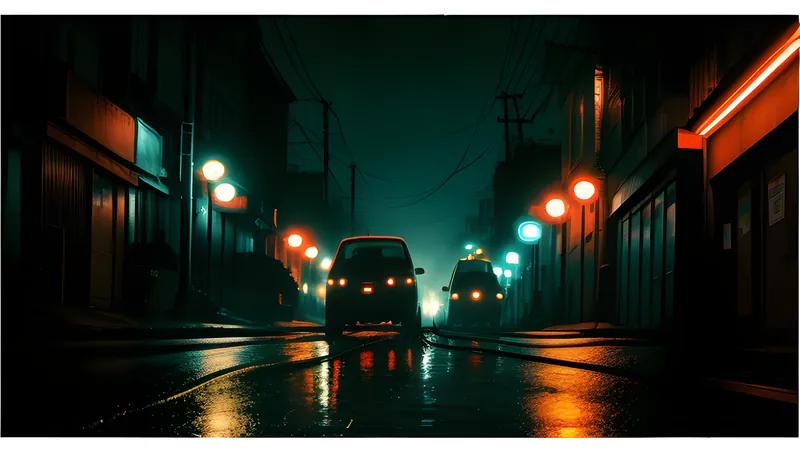
Lenny Nero (Ralph Fiennes) sells the clips. He is an ex-LAPD vice cop, now a street dealer working the last days of 1999 in a Los Angeles that has come apart — permanent police presence, permanent unrest, a millennium party building toward something. Fiennes plays him as a sweaty, likeable, fundamentally pathetic hustler, and it is a brave piece of casting against a face that usually gets used for gravitas. Lenny’s tragedy is legible from the first reel: he sells other people’s lives because he cannot stand his own, and he spends his evenings replaying old clips of his ex-girlfriend Faith (Juliette Lewis) on a loop, wire on his head, weeping.
Angela Bassett plays Lornette “Mace” Mason, a limousine driver and security professional, single mother, and the only competent adult in the film. Bassett gives what is straightforwardly the best performance in it, and the film’s most durable structural joke is that the noir hero is a mess and the person doing all the actual heroism is the woman he has never once seriously looked at. Tom Sizemore is Max, Lenny’s private-investigator friend. Michael Wincott is Philo Gant, a music manager with a wire habit and a temper.
Then someone leaves a clip on Lenny that he very much does not want: two LAPD officers pulling over the rapper and political agitator Jeriko One, and killing him. Recorded from the inside. The plot is the clip.
The date on the calendar
Strange Days was released in October 1995. The Rodney King beating had been recorded in March 1991, the acquittal of the officers had burned Los Angeles in April 1992, and the film is set in that city three and a half years later with the wound entirely open. The screenplay came from a story by James Cameron, who also produced, with Cameron and Jay Cocks writing; the film they built is about a recording of police murdering a Black man, and about whether making that recording public will produce justice or produce a fire.
Nobody involved was being subtle, and the film has been rewarded for that by never dating. The specific hardware is wrong — the future does not run on Minidisc-shaped clips handed over in nightclub toilets — and the specific hardware has never once mattered. What Bigelow got right is the shape: that the recording device would end up in everyone’s hand, that the footage of the atrocity would exist, that the existence of the footage would settle nothing on its own, and that the fight would immediately move from did it happen to who controls the tape. Every argument the film has about the Jeriko One clip is an argument that has since been held, verbatim, in public, about real footage.
It sits with the small group of films catalogued in nine sci-fi films that saw the surveillance age coming, and it is the one that understood earliest that the interesting problem is distribution rather than capture.
Why the POV shots work
The craft here is the film’s real achievement, and it is a hardware problem solved by a director who cared about it more than the plot required.
The SQUID sequences are shot as unbroken first-person takes, and Bigelow’s team built a lightweight rig to get them — a camera small enough to be worn or hand-carried at head height by a performer who could run, fight, climb and fall while operating it. The rule they set is the thing that makes it land: within a clip, there are no cuts. A clip is a continuous recording of a continuous experience, so the moment an edit appears, the illusion breaks and you are watching cinema again.
This is why the opening robbery is unnerving in a way that ordinary POV gimmickry never is. Conventional first-person filmmaking cheats constantly — it cuts to conceal a stunt, to hide a rig, to compress dead time — and the audience’s eye reads those cuts as the reassuring grammar of a movie. Bigelow refuses the cuts, so your brain runs out of reasons to feel safe. The body-mounted camera also introduces the correct wrongness: the frame is never level, never smooth, and it looks where the wearer’s attention goes, which is frequently not where a cinematographer would point it. It glances at the wrong thing at the wrong moment, the way real attention does.
And the film weaponises the technique’s pleasure. Bigelow makes the early clips genuinely thrilling — a robbery, a run along a beach — so that the audience learns to want the next one. By the time she plays a clip you should not be watching, she has already trained you to lean in. The POV rig is the whole thesis in a piece of aluminium.
The ancestor
Everybody reaches for Blade Runner, because Los Angeles and rain. The actual ancestor is Brainstorm, Douglas Trumbull’s 1983 film about a machine that records sensory experience to tape and the immediate, inevitable, entirely human discovery that the first two uses anyone finds for it are pornography and death. Trumbull got the technology and the moral trajectory a decade early; Bigelow took the same device, moved it from the corporate lab to the street, and added the thing Trumbull lacked, which is a criminal economy. Watch them in order and Strange Days stops looking like an original and starts looking like a superb sequel to a film it never mentions.
Behind both sits Peeping Tom (1960), the film that first argued that the camera and the weapon are the same instrument and that the audience is holding it. Bigelow’s opening is Powell’s thesis with better gear.
It also has a twin. Johnny Mnemonic arrived in the same year, from the same conviction that cyberpunk was about to be the dominant commercial mode, and failed just as comprehensively. 1995 was the year the genre bet everything on the wire and lost. Four years later a film about a simulation with sunglasses in it collected the entire pot.
The case against
The film is a good half-hour too long and its plotting is loose in the back nine — a conspiracy that requires several characters to behave stupidly on schedule, a couple of reversals visible from a distance. The Faith material is thin, and Juliette Lewis is asked to be a fixation rather than a person. The millennium-party climax reaches for an operatic scale the story has not quite earned, and the resolution leans on a coincidence of authority that plays as wishful. Bigelow’s control of texture is total; her control of the third act is negotiable.
The verdict, spoiler-free
Strange Days is a magnificent, overstuffed, badly-marketed film that arrived four years too early and aimed at exactly the right target. It has the best opening of its decade, the best performance Angela Bassett has been given in genre, a technology that turned out to be a metaphor with a shelf life of thirty years and counting, and a moral seriousness about recorded violence that almost nothing since has matched.
It has been hard to see legitimately for long stretches, which is its own small scandal; disc editions surface periodically and are worth grabbing when they do. Pair it with Brainstorm and watch a good idea get twelve years better.
Spoilers below
The Jeriko One clip is the film’s engine and its trap. Lenny spends the film trying to get it into the hands of someone who will act on it, and the sequence of people who could act on it and decline is the film’s real indictment. The two officers who killed him, Steckler and Engelman, spend the last day of the century hunting the recording, and Bigelow shoots their pursuit as ordinary police work, which is the point. They are a department doing what a department does when the evidence is inconvenient.
The film’s most notorious sequence is the one that got it its rating and much of its hostile press. A killer wires a woman’s SQUID rig to his own, so that as he attacks her she experiences her own murder through his eyes while he experiences her terror through hers — a closed loop of forced empathy used as a weapon. Bigelow plays it long and gives you no exit, and it is genuinely one of the most upsetting things in mainstream nineties cinema. It is also the film’s argument taken to its endpoint. The device that lets you feel what another person feels was always going to be used for this, and the audience that leaned forward during the beach clip is still sitting in the same seat.
The reveal is that Philo Gant’s associate Max — Lenny’s friend, the private investigator, the one person he trusts — is the killer, and that the murders are freelance work rather than any grand plan. Sizemore’s performance recontextualises beautifully on rewatch: the affable slob has been standing next to Lenny the entire film, and Lenny, who sells other people’s inner lives for a living, never once looked at the man beside him.
The ending is where opinion splits and I land on the generous side. The clip reaches the police commissioner during the millennium party, and he acts — the officers are taken down in the street as 2000 arrives, and the city does not burn. Mace is beaten by police in the middle of the crowd, on camera, in front of everyone, and it is that public spectacle rather than the recording that turns the moment. Critics have called the resolution a fantasy, and it is. Cameron and Bigelow built a film that argues footage settles nothing without power behind it, then granted their characters an honest man with power, because the alternative was to end on the fire they had already watched their city have. The wish is visible. Thirty years later, so is the reason for it.
Related Content