Spider Baby: The 1967 Gothic Black Comedy
Jack Hill's debut hides a whole future of horror inside a crumbling house, a doomed family, and Lon Chaney Jr singing the theme tune.
Contents
Spider Baby opens with Lon Chaney Jr singing the theme song, a mock-spooky ditty about cannibals and murder delivered in the voice of an actor who by 1964 had been the Wolf Man, the Mummy, Frankenstein’s Monster and Dracula, and knew exactly how funny and how sad it was to be doing this now. That opening tells you the whole film in ninety seconds. It is a horror picture that loves horror, mocks horror, and grieves for it, all at once, and it was made by a first-time director who understood the genre better than most people who had been working in it for decades.
The full title is Spider Baby, or The Maddest Story Ever Told. Jack Hill wrote and directed it in 1964 as his feature debut, on almost no money, and then watched it sit on a shelf for years while the financing collapsed around it, so that it did not properly surface until 1967 or 1968 depending on where you were. By then Hill had moved on, and the film went straight into the limbo of the barely-released, which is where cult reputations are forged. It is one of the great secret ancestors of American horror, and almost nobody saw it when it mattered.
The maddest story
The premise is a black-comic fairy tale. The Merrye family suffers from a hereditary condition — “Merrye Syndrome” — that causes its members to regress, mentally and physically, as they grow older, sliding backward through savagery toward something pre-human. The last three Merrye children, Virginia, Elizabeth and Ralph, live in a decaying mansion under the care of Bruno, the family chauffeur, played by Chaney with startling gentleness. Bruno has promised the dying father he will look after the children and keep their condition hidden, and he does, with a devotion that is the beating heart of the film even as it curdles into complicity with murder.
Virginia (Jill Banner) plays a game she calls “spider,” trapping visitors in loops of string as though in a web and then killing them with kitchen knives. Elizabeth (Beverly Washburn) is the sly enabler. Ralph (Sid Haig, in an early role, entirely without dialogue) is the eldest and furthest gone, a leering, scuttling near-feral presence. Into this sealed world arrive distant relatives who mean to claim the estate and have the children committed, along with their lawyer, and the film becomes a long, mounting dinner-party horror as the outsiders slowly grasp what they have walked into.
Hill plays it as comedy, and the comedy is genuinely funny — the dinner sequence, with its “special” meal and its escalating tension, is a small masterpiece of tone control. But under the laughs runs real tenderness and real dread. The Merrye children are monsters and victims at once, and Bruno’s impossible loyalty gives the film a moral weight that most horror comedies never reach for. You end up caring about a household of killers, which is a difficult trick, and Hill pulls it off with a rookie’s fearlessness.
The house and its ancestors
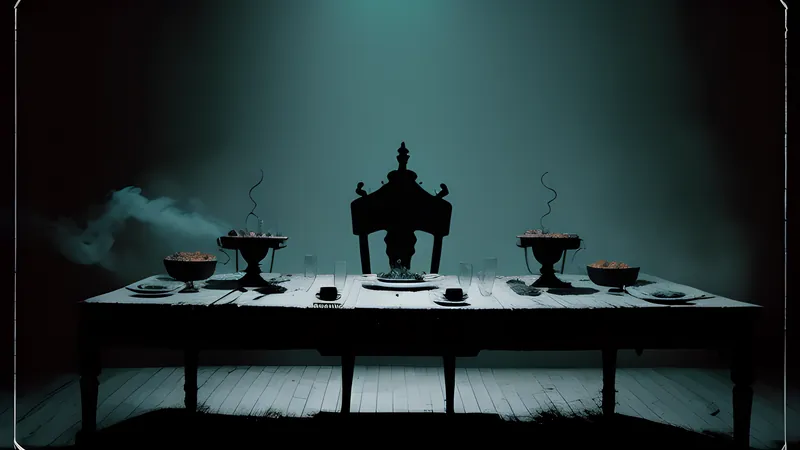
Watch Spider Baby now and its family tree runs in both directions. Behind it stand the storm-bound black comedies of an earlier era — above all James Whale’s The Old Dark House, where travellers take shelter with a family of grotesques and the horror comes dressed as an awful dinner party. Hill clearly drank deep from that well: the isolated mansion, the mad relatives, the outsiders trapped by manners and weather and their own greed, the humour and menace braided so tightly you cannot pull them apart. Boris Karloff’s shadow falls over the whole thing, and casting Chaney was a way of making the lineage flesh.
And behind both films stands Tod Browning’s Freaks, the 1932 shocker that dared to make its “monsters” the sympathetic centre and its “normal” outsiders the true villains. Spider Baby inherits that inversion directly. The Merryes are frightening, yes, but the relatives who arrive to seize their home and cage them are the ones the film quietly despises. The horror of the outsider is really the horror of a family being torn apart by people who see them only as an inheritance to be liquidated.
Look forward and the debt owed to Spider Baby is even more striking. It is, in embryo, the degenerate-rural-family horror that would erupt across the 1970s. The isolated house, the clan sealed off from society by shame and blood, the terrible family dinner, the outsiders who blunder in and become prey — all of it arrives, fully formed, in The Texas Chain Saw Massacre a decade later, though Tobe Hooper stripped away the comedy and left only the abattoir. Watch the two back to back and the family resemblance is undeniable. Spider Baby is the gothic-comic seed of an entire American nightmare.
Why it works
The film works because Hill never condescends to it. On its budget and schedule it could easily have been throwaway, and the temptation with material this lurid is to wink at the audience and cash out. Hill instead commits to the world completely — to its rules, its sorrow, its logic — and lets the comedy grow out of character rather than mockery. The result has the density of a fable.
Chaney is the anchor, and his performance is the film’s quiet miracle. There is a scene in which Bruno tries to hold his impossible promise together while everything collapses, and Chaney — an actor near the end of a hard life and career, battling his own troubles — pours real weariness and real love into it. It reframes the whole picture. Bruno is a man trying to be decent inside an indecent situation, and Chaney makes you feel the cost of that. Casting the great monster actor of the 1930s and 40s as the caretaker of a dying line of monsters is the kind of gesture that turns a cheap horror comedy into something with an ache in it.
Jill Banner’s Virginia is the other revelation, a genuinely unsettling child-woman whose “spider” games are played with total conviction. And Hill’s direction, for a debut, is remarkably assured — the black-and-white photography wrings gothic atmosphere out of a single location, and the pacing of the long central dinner is the work of someone who already understood suspense as a matter of rhythm.
Hill would go on to make the drive-in classics that built his real reputation, the Pam Grier vehicles and the women-in-prison pictures, but Spider Baby is the one where you can feel a distinctive sensibility announcing itself whole. It belongs on any shortlist of great genre debuts.
It is worth pausing on how nearly the film vanished. Shelved by financial and legal trouble almost as soon as it was finished, it limped into circulation years late, under alternate titles, to no fanfare, and might easily have been lost entirely the way so much low-budget 1960s horror was. That it survived to become a touchstone — cited by later directors, revived on the repertory circuit, restored with real care — is a reminder that the canon is partly an accident of which prints happened to endure. Sid Haig’s Ralph alone would have earned it a footnote; Haig became a genre fixture for decades afterward, and here, wordless and unnerving, you can watch the screen presence being born.
Where to find it: Arrow’s restoration is superb and packed with context, and the film drifts through repertory calendars and streaming services, usually filed under midnight or cult. It plays beautifully to a room, so seek out the crowd if you can.
Spoilers below
The film’s darkest joke is Bruno’s solution to the impossible problem he has been left with. As the relatives close in and the truth becomes impossible to contain — bodies, madness, a household that cannot survive contact with the outside world — Bruno concludes that there is no future in which the Merrye line can be saved or hidden. His answer is annihilation. He rigs the house with explosives and gathers the children to die with him inside it, an act of murder that the film frames, devastatingly, as mercy and as love.
It is the logical end of his promise. Bruno swore to protect the children from a world that would cage and destroy them, and when protection becomes impossible he chooses to spare them the alternative in the only way left. The explosion is horror and euthanasia and family suicide at once, and Hill refuses to let you feel clean about any of it. You cannot cheer, and you cannot look away.
The final grace note undercuts even that. A coda reveals that the Merrye bloodline may not have ended with the house after all, planting the suggestion that the condition — the savagery, the regression — has already slipped out into the ordinary world and is walking among us. It is a very 1960s ending, cheerfully nihilistic, and it turns the whole gothic fairy tale into something closer to a warning. The maddest story ever told, it implies, is not over. It has only changed address.
Related Content