Sonatine: Kitano's Beach-Bound Gangster Stillness
The 1993 yakuza film that strands its hit men on an Okinawan beach and lets them play until the plot remembers them
Contents
A sonatine is a small sonata. It is the thing a piano student is given before they are trusted with the real repertoire — short, formally complete, technically modest, a piece designed so a child can play something that is genuinely music rather than an exercise. Takeshi Kitano gave that title to a film about professional killers waiting to die, and the joke has been getting better for thirty years.
Sonatine was his fourth film as director, it flopped in Japan, and it took the long route to the West: a US theatrical release finally arrived in 1998 via Rolling Thunder, the boutique label Quentin Tarantino ran through Miramax specifically to drag films like this one into American cinemas. By then Kitano had taken the Golden Lion for Fireworks and the festival world had decided he was a master, which meant Sonatine arrived pre-certified and slightly misunderstood. It is stranger, funnier and more hostile than the graceful summation of Fireworks, and I think it is the one that will still be argued about in fifty years.
The setup
Kitano plays Murakawa, a lieutenant in a Tokyo yakuza organisation who is visibly finished with the work. He has money. He has men who follow him. He does his job — the film’s opening reel establishes exactly how thoroughly he does his job, in a sequence involving a harbour crane and a man who owes money, and it is the coldest thing Kitano has ever shot. He is also bored in a way that has curdled into something closer to a medical condition.
His boss sends him to Okinawa to mediate a war between two local families. Murakawa says the trip is pointless. He goes anyway, with a small crew, and finds a conflict that nobody on the ground seems to be able to explain to him. Things escalate. The crew ends up out of the city, in a beach house, with no instructions and nothing to do.
And then the film stops.
The beach
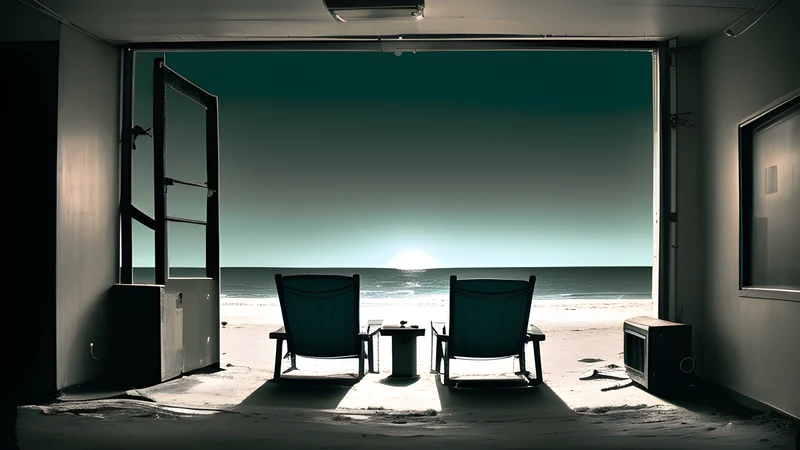
What happens next is the most audacious structural decision in 1990s crime cinema. Kitano takes a taut yakuza thriller, drives it to a stretch of Okinawan coast, and simply leaves it there for something close to half the running time while grown men with pistols invent ways to pass an afternoon.
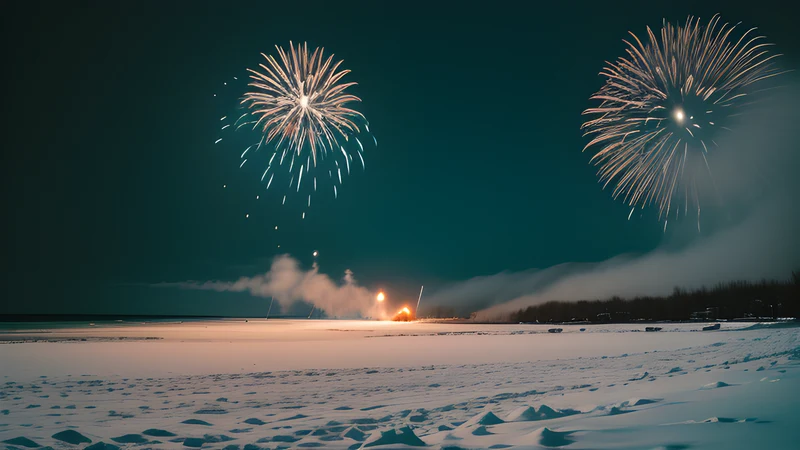
They play paper sumo, flicking little folded wrestlers around a box lid. They mime a full sumo bout, complete with an unseen opponent, with total commitment. They dig a pit in the sand and cover it up and wait for a colleague to fall in. They fight a war with roman candles, firing them at each other across the beach in the dark. They lie about. They watch the sea. And a man who has spent his adult life killing people discovers that he is quite good at digging holes.
This is not an interlude, and calling it one misreads the film’s architecture. The games are the subject. Kitano’s thesis is that these men have been professionals for so long that play is the only unfamiliar thing left, and the beach hands them a childhood they were never issued. The comedy is real — Kitano was Japan’s most successful television comic and the timing is a professional’s timing — and it sits directly on top of something bleak, because every game they invent is a rehearsal. They shoot each other with fireworks. They fall into traps. They point unloaded guns at their own heads and laugh.
The films that get filed alongside this one usually earn their dread through duration and atmosphere; our piece on the slow cinema of dread maps that territory. Kitano gets there by a completely different road: he uses joy. Nothing in horror has ever been as frightening as watching a man discover, at forty, that he likes the beach.
Why it works
The mechanics come down to Kitano’s editing, which he does himself, and which is best understood as a refusal of the approach shot.
Standard screen violence has three beats: the setup, the act, the reaction. Kitano deletes the first and the third. A scene will hold, flat and wide and static, on people talking about nothing. Then a gun goes off inside the same shot, or on a cut so hard it registers as a mistake, and someone is dead. There is no music. There is no close-up on a horrified face. The film simply carries on being a film about people sitting down.
Because the audience is never given the chance to brace, each burst has the texture of an accident, and because the film’s default state is stillness, the violence never accumulates into excitement. Most crime films train you to want the next shooting. Sonatine trains you to dread it, and it does that purely with rhythm, without a single line of dialogue about the tragedy of the criminal life.
Then there is the frame. Kitano composes in flat, symmetrical, frontal wides — men lined up on a sofa, men lined up on the sand, the sea a horizontal band behind them. Faces are small in the frame. Bodies are legible from a distance. It is closer to a photographer’s grammar than a director’s, and it produces the film’s odd, becalmed quality: you are always slightly too far away to intervene. Joe Hisaishi’s score, tender and simple to the point of nursery rhyme, is the only thing in the film that admits any of this is sad.
The ancestor
The real forebear of Sonatine is Seijun Suzuki’s Branded to Kill, the 1967 picture that got Suzuki sacked from Nikkatsu and blacklisted for years. Suzuki was the first Japanese director to work out that the yakuza film’s professional killer is an absurd figure — a man with a ranking, a code and a specialism, doing something that has no meaning whatever — and to film him as a comedian who does not know he is in a comedy. Kitano takes the same insight, subtracts Suzuki’s pop delirium, and replaces it with a very long silence. The two films look nothing alike and they are the same film.
The other branch is Beckett, and I do not offer that as a compliment reflexively reached for. The beach section is two acts of men waiting, in a fixed location, for an event that is coming for them, filling time with games of increasing formality. Kitano has never claimed the influence and does not need to; the structure is there, and it explains why the film’s comedy and its despair are the same material rather than two moods in sequence.
Within Kitano, the line runs Boiling Point → Sonatine → Fireworks. All three go to Okinawa or to the sea. All three stall the plot to watch men play. Sonatine is where the device stops being a tic and becomes the argument.
The case against
The film is inhospitable and it does not care. Roughly forty minutes elapse in which no plot advances and no character develops in any conventional sense, and if the beach does not work on you, you are watching nothing at all for a substantial portion of a feature. There is no defence available here. The film’s entire wager is that you will find the mime sumo unbearable and beautiful at the same time, and if you find it only tedious, the wager is lost and the second half of Sonatine is a man’s holiday snaps.
Miyuki (Aya Kokumai), the woman who attaches herself to Murakawa, is underwritten to the point of transparency. She exists to react and to be looked at, and Kitano’s interest in her is roughly the interest Murakawa’s is, which the film treats as a fact rather than a problem.
And the Okinawa gang politics are deliberately incoherent — Murakawa cannot follow them, so you cannot either — which is a fine idea that also means the film’s engine is a shrug. Compare the Melville-descended crime elegies that make their machinery beautiful. Kitano makes his machinery invisible, and something is lost as well as gained.
The verdict
Sonatine is Kitano’s most complete statement because it is the one where the comedian and the nihilist stop taking turns. In Fireworks the sadness is the subject and the jokes are relief. Here they occupy the same frame, at the same instant, and you laugh at a firework fight while knowing with total certainty what a firework is standing in for.
Kitano crashed a scooter the year after this film and nearly killed himself; he has spoken since about how deliberate that ride may have been. Sonatine was already finished. Watch it without that biography if you can, because the film needs no help — a man who is very good at his job discovers, too late, that he would rather have been digging holes on a beach, and Kitano tells you so in flat wide shots, with a nursery melody, and no commentary at all.
It circulates on disc and turns up in Kitano seasons, usually billed second to Fireworks. Reverse the billing.
Spoilers below
The Okinawa war is a fiction. Murakawa was sent to be used up — the mediation was a pretext, his own organisation’s leadership sold him out, and the beach house was the waiting room for an execution that his side arranged.
When Murakawa works this out, he goes back to Tokyo and settles it, and Kitano stages the assault from outside the building. We stand in the street. The windows flash. Muzzle light stutters against the glass, and the massacre — the payoff every yakuza film in history has trained the audience to expect in full — is a light show seen through a wall. It is the same instinct that makes the ending of Fireworks cut away to the sea. When the violence finally means something to Kitano, he puts it behind a barrier and lets you infer it.
Then Murakawa drives away, alone, along a coast road, with Miyuki waiting somewhere ahead of him. He stops the car. He kills himself.
There is no music sting and no last word. The film has been showing you this ending for two hours: the pit in the sand, the roman candles, the pistol pointed at his own head as a party trick. Every game on that beach was this. Murakawa’s tragedy is that the holiday worked — he found the thing he should have been doing with his life, at the precise moment when it was no longer available to him — and Kitano’s cruellest decision is to let him have those weeks first. A sonatine is a small piece for a beginner. He learned to play it at the very end.
Related Content