Shock Corridor: Fuller's Undercover Asylum
A reporter has himself committed to solve a murder and win a Pulitzer, and Samuel Fuller turns the tabloid premise into the angriest film of 1963
Contents
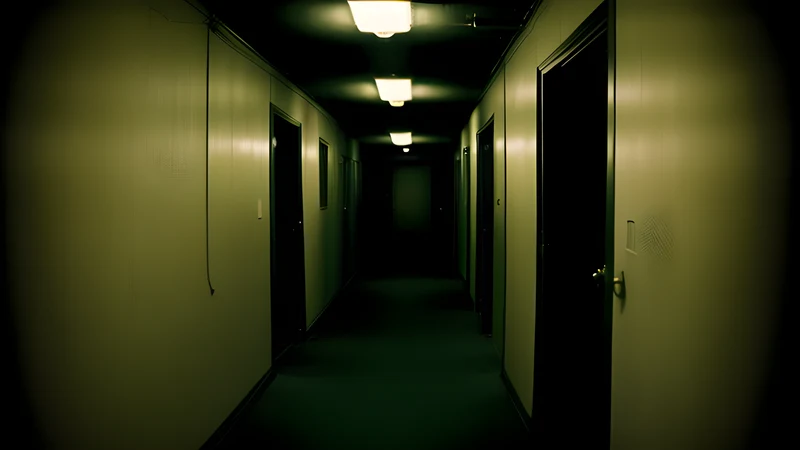
The film opens and closes on the same line, lifted from Euripides: whom God wishes to destroy, he first makes mad. Samuel Fuller puts it on the screen twice, at the top and at the bottom, and between those two cards he runs ninety-odd minutes of pulp so overheated it should collapse into camp and somehow never does. Shock Corridor is a newspaper picture, a murder mystery, a sideshow, and a state-of-the-nation address, and Fuller crams all four into a single hospital ward with a long central passage the inmates call the Street.
The premise is a hook a subeditor would kill for. Johnny Barrett (Peter Breck) is a reporter who wants a Pulitzer badly enough to fake his way inside a mental hospital where a kitchen worker named Sloan has been murdered. Three patients witnessed it. All three are mad. If Johnny can get committed, live among them and coax a name out of one of them, he has his prize. To get through the door he needs a relative to swear he is dangerous, so he recruits his girlfriend Cathy (Constance Towers), a nightclub stripper, to pose as his sister and testify that he has been making incestuous advances. She hates the plan. She does it anyway. That is the film’s first real move, and it tells you Fuller is not interested in the mystery: he is interested in what a man will spend to get famous.
The reporter who would pay anything
Fuller had been a crime reporter in New York from his teens, and he made films about journalism the way a man settles a score. The nearest relative to Shock Corridor is not another asylum picture at all — it is Billy Wilder’s Ace in the Hole, where a stranded newspaperman prolongs a man’s entombment to keep his story running. Both films take the same position: the reporter’s hunger is the crime, and everything downstream of it is consequence. Wilder is the colder of the two. Fuller is the one who thinks the hunger is a symptom of something national.
The other ancestor is older and non-fictional. In 1887 Nellie Bly feigned insanity to get herself committed to the asylum on Blackwell’s Island and wrote it up for the New York World as Ten Days in a Mad-House, and the undercover-in-the-madhouse story has been a reliable circulation engine ever since. Hollywood’s respectable version arrived in 1948 with The Snake Pit, Anatole Litvak’s Olivia de Havilland vehicle, which treated the institution as a problem to be reformed and won itself an Academy Award for sound. Shock Corridor is the disreputable answer to that film, made fifteen years later for a fraction of the money at Allied Artists, with no interest whatsoever in reform. Fuller’s hospital is not a scandal to be fixed. It is a lens.
Three witnesses, three Americas
The film’s structure is a series of interviews, and each witness is a piece of the country broken off and left to talk to itself.
Stuart (James Best) is a Korean War veteran who defected under captivity, came home to disgrace, and retreated into believing he is the Confederate cavalry general J. E. B. Stuart. Trent (Hari Rhodes) is a Black student who was among the first to integrate a Southern university, was ground down by the hatred aimed at him every day, and now marches the ward as a white supremacist, denouncing his own race and trying to recruit the other patients. Boden (Gene Evans) is a nuclear physicist who worked on the bomb, understood exactly what he had helped make, and regressed to the mental age of a six-year-old with a crayon.
Set the three side by side and the design is unmissable: the Cold War, American racism, and the atomic age, each rendered as an individual psychiatric casualty. It is the least subtle allegory in 1960s American cinema and Fuller does not care, because he is not writing an argument — he is shouting a headline. Trent’s scenes in particular still land like a slap. Rhodes plays a man performing the voice of the people who destroyed him, and Fuller shoots it straight, letting the ward’s white patients receive the sermon in bafflement. A more tasteful director would have found a way to soften it. Fuller wanted you to flinch and then work out why.
Cortez, the Street, and the colour that shouldn’t be there
The craft is where the film earns its long afterlife, and it starts with a hire. Fuller shot this thing fast and cheap and gave the camera to Stanley Cortez, who had photographed The Magnificent Ambersons for Welles and The Night of the Hunter for Charles Laughton — an expressionist with a taste for deep, unnatural black. Cortez turns the ward’s central corridor into a perspective trap, a long box that runs away from the lens and swallows figures at the far end. The set is nearly bare; the depth does the work. Every time Johnny walks the Street the geometry tells you he is going further in than he means to.
Then there is the rain. At intervals Fuller cuts to Johnny’s interior weather and it storms inside the ward: water falling on a man in a corridor with a roof over it, no explanation offered, no dissolve to soften the transition. It is a cheap effect done with total conviction, and it works precisely because Cortez lights it as though it were real.
The strangest choice is the colour. Shock Corridor is a black-and-white film that periodically erupts into colour footage — waterfalls, jungle, a Japanese garden — during the patients’ hallucinations. That material is not staged for this picture. It is salvage from Fuller’s own unfinished travel footage, shot for projects that never came together, spliced into a poverty-row psychodrama because he had it in a can and it was free. Under any theory of tasteful film-making it is a botch. On screen it is the most disorienting thing in the movie: the mind of a broken man rendered as somebody else’s holiday reel, unmoored from the story, gorgeous and wrong.
The honest case against
You can dislike this film for reasons that are entirely fair. Breck plays Johnny at one volume, and when the character’s grip starts to go the performance has nowhere left to escalate to. The psychiatry is nonsense of the era, delivered by a doctor character who exists to state the theme aloud. The nymphomaniac ward — a room of women who swarm the hero — is exploitation with the fig leaf off, and no amount of allegory buys it a pass. Fuller writes dialogue in block capitals, and if you need your ideas arrived at rather than announced, ninety minutes of this will feel like being lectured by a man standing on your foot.
The defence is that the crudeness is load-bearing. Fuller is doing to the audience what the ward does to Johnny: no modulation, no relief, every idea shoved into the frame at the same pitch until the accumulation becomes the argument. A subtler version of this film would be a worthy problem picture about mental health provision, and nobody would have watched it twice.
Where it sits
Shock Corridor came out in 1963 and was followed almost immediately by The Naked Kiss, which brings Constance Towers back and turns the same fury on the American small town. Together they are the end of Fuller’s great run, after the Cold War pickpocketry of Pickup on South Street and the syndicate revenge machine of Underworld U.S.A.. He never again had this much room, and he spent it on a film that could not possibly recoup respectability.
The picture has been in and out of the Criterion Collection and turns up regularly in repertory programming, usually double-billed with The Naked Kiss, which is how it should be seen. Watch it for Cortez’s corridor and for the sheer nerve of a man who thought the correct response to American racism in 1963 was a B-movie with a hosepipe in it. Then watch Ace in the Hole and see the same disgust delivered by a colder hand.
Spoilers below
Johnny gets his story. That is what makes the ending unbearable.
He works the three witnesses one at a time, and each of them surfaces into lucidity for a few seconds — long enough to give him a fragment — before sliding back under. Stuart, Trent and Boden between them hand him the name: Wilkes, an orderly, who killed Sloan in the kitchen and had every opportunity to do it because he belongs to the institution and nobody looks twice at staff. It is a solid piece of mystery construction, and Fuller races through it, because the solution is the least interesting thing he has.
The cost has been accruing the whole time. The therapy Johnny submits to in order to keep his cover — the shocks, the hosings, the days of pretending to be someone he is not — do not stay pretence. He is beaten in the ward. He is swarmed in the women’s wing. Cathy, who never wanted any of it, watches him stop being able to tell her from the sister he invented, which is the film’s cruellest joke: the lie he wrote to get in is the lie that finishes him. By the time he has the name, the man holding it is going.
The final scenes give Fuller his headline. Johnny breaks the case, files it, and wins the Pulitzer Prize — the thing he wanted, delivered in full, with no ironic withholding. And he is catatonic when it arrives, seated and silent in the ward he entered as a tourist, while the staff talk over him about the achievement he can no longer understand. The last image is a man in a chair, mute, permanently a resident. Then Euripides again, the same card as the first shot, now meaning something it could not have meant ninety minutes earlier.
Nothing in the plot required this. Johnny could have got out with the story and a shudder. Fuller’s position is that the ward was never a place Johnny visited — it was the place his ambition was always heading, and the three madmen were not obstacles between him and the prize. They were the queue he was standing in.
Related Content