Sheba, Baby: Pam Grier Goes PG
What happens when you take the blood out of a Pam Grier picture
Contents
Every long-running genre eventually produces the film that tells you what the genre was actually made of, and it does so by accident, by removing an ingredient and letting you watch the recipe collapse. For blaxploitation, that film is Sheba, Baby (1975): American International Pictures took Pam Grier, the most bankable figure it had, and made her a PG picture.
I first caught it on a late-night cable run in the early 2000s, hunting for the next thing after Coffy, and I remember the specific confusion of the experience. Everything is in place. Grier is there. The gun is there. The score has the right horns. And the whole thing floats past like a television pilot. It took me another decade and a couple of rewatches to work out that the film is fascinating precisely because of what it fails to do — and that it fails in a way that is more instructive than most of the cycle’s successes.
The commercial logic
By 1975 AIP had a problem it had created itself. Grier’s run of pictures had been so effective, and so specific, that the studio had a star it could only use in one register: the avenging woman, the exploitation-inflected violence, the R rating that guaranteed a ceiling on the audience. Samuel Z. Arkoff’s outfit had spent twenty years reading the drive-in market with a ruthlessness bordering on genius, and the read here was that a PG Grier could play matinees, play television, play the same crowd that turned up for a Saturday double bill without needing an adult in tow — the audience economics I sketched in the drive-in and the teenage audience that built a genre.
The premise was built to fit. Sheba Shayne is a Chicago private investigator who comes home to Louisville, Kentucky, when her father Andy’s loan company is threatened by racketeers squeezing him out of the neighbourhood. Rudy Challenger plays the father. Austin Stoker, who would spend the following year holding a besieged police station in Assault on Precinct 13, plays Brick, the family lawyer and love interest. D’Urville Martin, that indispensable connective tissue of the whole cycle, turns up as a heavy. It is a detective picture with a family-business engine: the most respectable plot AIP ever handed its star.
The Girdler question
The director is William Girdler, which matters more than the credits suggest. Girdler was a Louisville man who made his pictures in and around Kentucky and Georgia, working fast and cheap outside the Los Angeles system — a genuinely regional American film-maker in an era with very few. He is remembered now for Grizzly (1976), the bear picture that outgrossed everything else AIP put out that year, and for The Manitou (1978), an outrageous piece of business in which a spirit gestates as a growth on Susan Strasberg’s neck. He died in 1978 in a helicopter crash while scouting locations in the Philippines, aged thirty. Everything he made carries a slight amateur roughness and a real appetite.
Louisville is the best thing in Sheba, Baby, and it is the thing nobody talks about. Girdler shoots his own city with an affection you can feel: the riverfront, the streets, an amusement park, a marina, a boat chase on the Ohio. The genre’s whole visual identity was built on New York and Los Angeles — the tenement, the boulevard, the precinct. Dropping Grier into a mid-sized river city gives the film an unfamiliar texture that the script never capitalises on but the camera keeps noticing. There is a version of this movie that leans hard into regional specificity and becomes a minor classic of American crime cinema. It is visible around the edges of the one we got.
Why it doesn’t work
The mechanics of the failure are worth being precise about, because “it’s too tame” is a description rather than an explanation.
Grier’s screen power in the AIP pictures runs on a very particular circuit: humiliation, then rage, then retribution that goes further than you expected. The films earn the third beat by staging the first two without flinching. Take away the capacity to depict the first two — and PG in 1975 takes away exactly that — and the third beat has nothing behind it. Sheba shoots people. Sheba wins fights. The film cuts away, keeps it bloodless, and every act of violence lands with the weight of a television detective disarming a suspect in the final five minutes. The star is doing the same work; the film has withdrawn the stakes that made the work mean something.
There is a second, subtler failure. Grier is a reactive performer of enormous power — her best moments in Foxy Brown are the ones where she is listening to something appalling and deciding what it costs her. That requires a script willing to put something on the table. Here she is competent and unruffled from frame one. She arrives already able to handle it. Nothing is taken from her that she cannot get back by the next scene. A protagonist who is never actually in danger of losing is a protagonist without a film around her.
Watch the editing around the fights and you can see the compromise being made in real time. Girdler stages the choreography wide enough to prove Grier is doing it, then cuts on the impact to a reaction, then cuts again to the aftermath. Three cuts where an R-rated version holds one shot. The rhythm is competent enough. It is the standard television grammar of the period, the grammar that let networks air a punch at eight o’clock, and it does exactly what it was designed to do, which is to inform you that violence has occurred while ensuring you feel nothing about it. Monk Higgins and Alex Brown’s score works overtime to compensate, pushing the horns in where the images have gone quiet, and the effect is of a soundtrack for a rougher film playing over the top of this one.
The result is oddly pleasant. It moves, it is well shot for the money, Grier is enormously charismatic, and it evaporates within an hour of watching. That is the diagnosis: an exploitation picture with the exploitation extracted turns out to be a fairly ordinary programme filler, and everything the genre’s detractors called gratuitous was in fact structural.
There is one more structural cost worth naming. The AIP pictures were, whatever else they were, films about institutions failing Black neighbourhoods — the dealers, the cops on the take, the men in offices. Sheba’s antagonists are racketeers leaning on a small loan business, which is a real thing and a genuinely 1975 thing, and the film treats it as a private nuisance rather than a systemic one. Nobody in the picture is compromised. The police are simply absent. Removing the rating removed the anger too, and the anger was the other half of what made the cycle worth arguing about.
The ancestor
The real ancestor here is the private-eye programmer of the 1940s — the second-feature detective picture, an hour and a half, a returning investigator, a family in trouble, a marina, a villain revealed by the third act. Strip the era and the wardrobe and Sheba, Baby is the kind of thing Hollywood produced by the dozen as B-unit fodder, of which the great survivor is something like 99 River Street — modest, regional in feel, powered entirely by its lead. Grier is the star of a 1948 B-picture who happens to be working in 1975.
Set against its sibling, Friday Foster, released the same year, the contrast is sharp. Friday Foster also softens Grier, and gets away with it, because it replaces the missing violence with an enormous cast of character actors and a conspiracy plot with somewhere to go. Sheba, Baby replaces it with nothing.
The verdict
Watch it, but watch it second. On its own it is a mild diversion with a magnificent lead and a lovely sense of place. Paired with Coffy on the same evening it becomes genuinely valuable: a controlled experiment in what the cycle needed to function, run by a studio that thought it was simply broadening the market.
Girdler deserves better than his footnote. The Louisville material here, the regional confidence of it, points at a career that never got to happen. And Grier remains the most compelling reason to sit through any of it — even in a film engineered to keep her at room temperature, you cannot look anywhere else. If you want the version of her the genre was actually built around, the blaxploitation canon has the running order. Prints have circulated on the boutique labels; the transfer matters less here than usual, since the film has no shadows worth preserving.
Spoilers below
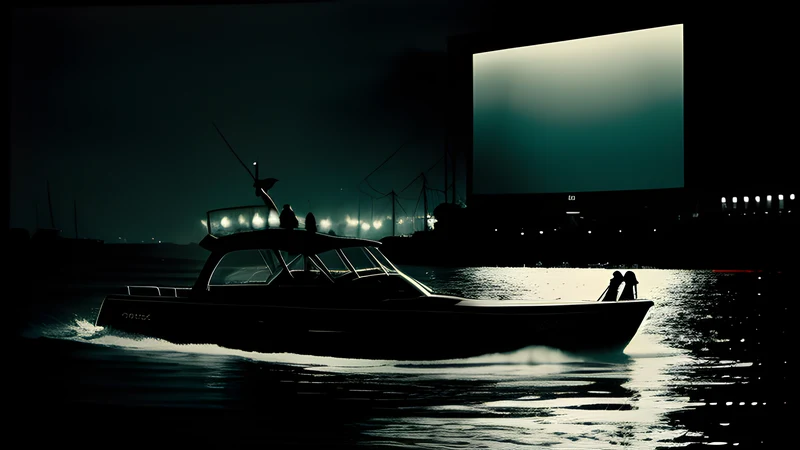
The racket turns out to be organised from above by Shark, the operation’s real principal, and the film’s back half becomes a pursuit that ends on the water — the boat chase and the amusement-park sequence being the two moments where Girdler’s own enthusiasm briefly overrides the PG straitjacket and the picture has some life in it.
Andy dies. That is the film’s one genuinely hard beat, and it is placed correctly, roughly at the midpoint, to convert the plot from a business dispute into a revenge story. And then the film declines to become a revenge story. Sheba pursues, Sheba confronts, Sheba prevails, and the camera stays polite throughout. The moment where Coffy would have detonated, Sheba, Baby resolves with a splash and a cut.
The final scene has Sheba choosing to leave — to keep the investigator’s life over Brick’s offer of the settled one — and it is the closest the film comes to an argument. AIP had built the most physically imposing action star of the decade, put her in a film where nothing could physically touch her, and then let her walk away from the only thing the plot offered as an alternative. There is something almost poignant in it, and something faintly ridiculous, and the two feelings are the whole experience of watching this odd, weightless, thoroughly instructive little picture.
Related Content