Sexploitation Was the Art House of Its Day: The Case of Radley Metzger
How a distributor of European imports built the most elegant erotic cinema America ever produced — and why the grindhouse and the art house were once the same room
Contents
There is a stubborn myth about the 1960s that keeps the art house and the grindhouse in separate buildings, one for Antonioni and one for the raincoat trade. For a decade or so they were frequently the same room. The theatres that imported Bergman and Godard survived on the same audiences that turned up for the racy Scandinavian pictures playing next month, and the men who booked those screens rarely drew a moral line between them. Into that overlap walked Radley Metzger, a New York editor and distributor who understood the overlap better than anyone and made films designed to live inside it.
The room where the two cinemas met
To understand Metzger you have to remember what the American screen looked like before 1968. The Production Code still governed studio output, so anything frank about sex arrived from outside the system — foreign imports carrying a whiff of European seriousness, and homegrown “roughies” and “nudies” playing the exploitation circuit. The two streams pooled in the specialist theatres of Manhattan, Los Angeles and every college town, where a subtitled prestige picture and a lurid import could share a marquee for the same reason: both promised what Hollywood was forbidden to show.
Metzger started in that trade as a distributor. His company, Audubon Films, imported and re-cut European erotica for the American market, most famously the Swedish picture I, a Woman, which became a genuine box-office event in 1965 and financed everything that followed. He learned the mechanics of the business from the buyer’s side first: what a title had to promise, where the audience’s patience ran out, how much you could withhold and still sell a ticket. When he began directing under his own name, he brought that merchant’s eye to the camera.
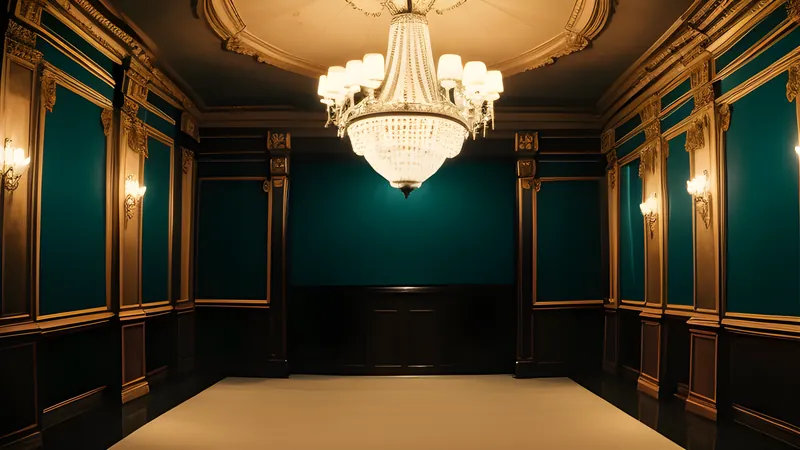
The result reads oddly against the rest of the exploitation field. Metzger’s films are calm, expensive-looking and slow. They are shot in Rome and along the Adriatic, scored with lounge jazz, dressed with genuine taste in furniture and clothes. The nudity is present and the point of sale, and yet the films spend most of their running time on décor, glances and conversation. He was making the art house’s promise literal — the erotic import as an object of design.
Metzger’s method
The craft is what separates the work from its shelf-mates, and it repays a close look. Start with the widescreen frame. Metzger loved anamorphic compositions and used the extra width for distance: lovers placed at opposite ends of a long room, a figure small against an expanse of tiled floor or a modernist wall. Desire in his films is a matter of geography, of two people slowly closing the space of a very wide image. The scope frame turns delay into the subject.
Then the mirrors. Reflections recur across his filmography until they become a signature — characters watched through glass, doubled, framed inside a second frame within the shot. It is partly decoration and partly a thesis about looking, since a Metzger film is always half about the pleasure and the trap of the voyeur. The most sustained version is The Lickerish Quartet, a puzzle-box shot in an Italian castle in which a jaded family watches a stag film and then seems to meet one of its performers in the flesh, the movie folding its own audience into the plot.
His editing withholds. Where the rougher end of the genre cut straight to the goods, Metzger cut away — to a face, an object, a reflection — and let the imagination close the gap. That restraint is the same principle that governs good horror, where the monster half-seen frightens more than the monster fully lit, a discipline I have argued elsewhere in the creature-restraint idea. Metzger applied it to sex, and it made his films feel adult in a way the competition never managed. The dubbing helped by accident: his international casts were post-synced, which gives the dialogue a floating, slightly unreal quality that suits films already halfway to fantasy.
Camille 2000 is the design instinct at full volume — Dumas’s doomed courtesan relocated to a mod Rome of inflatable furniture, op-art interiors and white leather, the tragedy played out inside a magazine spread. Score, adapted from an off-Broadway play, swaps the opulence for wit and turns a tale of a swinging couple’s seductions into something closer to grown-up drawing-room comedy. Different registers, one method: sex staged as style, argued as taste.
What the elegance was actually doing
It would be easy to call the polish a fig leaf, a way of smuggling the same content past the same censors with a better wardrobe. That undersells what the elegance accomplished. By treating erotic material with the full toolkit of art cinema — composition, score, cutting, architecture — Metzger made an argument about seriousness that the films’ own beauty backed up. The care was legible on screen, and it changed how an audience sat in the seat.
There is also a genuine European inheritance at work, and it is worth naming the ancestors. The lineage runs through the continental art film’s frank, unhurried treatment of desire: Buñuel’s Belle de Jour, with its cool surface and its refusal to separate fantasy from fact, is the kind of picture Metzger’s audience had already been trained to read. Later, and further out, Ōshima’s In the Realm of the Senses would push the same territory into explicit art cinema with a rigour that dared the viewer to call it pornography. Metzger sits between those poles — more sensual than the art film was usually willing to be, more composed than exploitation could usually afford.
His American context matters too. He was the elegant end of a spectrum whose blunt, satirical end belonged to the drive-in king across the country, whose desert pictures I have written about in Russ Meyer’s desert blast of attitude. Meyer edited like a cartoonist and wielded caricature as a weapon; Metzger dissolved and glided and trusted atmosphere. Two men reading the same loophole in the culture and answering it in opposite dialects.
The literary alibi and the international shoot
One more habit is worth flagging, because it explains how the films kept their nerve. Metzger reached repeatedly for pedigree source material — Dumas for Camille 2000, the French lesbian coming-of-age novel Thérèse and Isabelle for his 1968 adaptation of the same name, a stage play for Score. The literary alibi was practical, since a title with a respectable author attached travelled more safely through local censorship and gave a reviewer permission to take it seriously. It was also genuine taste: Metzger liked the material and shot it with a straight face, and the seriousness reads on screen even when the plot is thin.
The international production style did the rest of the work. By shooting in Europe with pan-continental casts, he kept costs down, borrowed real palazzos and coastlines no American set could match, and gave every film the automatic gloss of somewhere else. The floating post-synced dialogue that resulted became part of the texture, a permanent low hum of unreality under images of very real Italian sunlight. It is a small industrial fact with a large aesthetic consequence, and it is the sort of thing the elegant surface was quietly built on.
The window closes
What killed the mode was success of the wrong kind. When the X rating arrived in 1968 and the Code collapsed, the loophole Metzger had exploited briefly became a boulevard — and then, in 1972, Deep Throat made hardcore pornography a mainstream curiosity and the “porno chic” moment arrived. The tasteful erotic feature was squeezed from both sides: the studios could now show more skin in a normal release, and the audience that wanted the frankest possible content had somewhere blunter to go.
Metzger read the market, as he always had, and moved. Under the pseudonym Henry Paris he directed hardcore features in the mid-1970s, most notably The Opening of Misty Beethoven, and brought the same compositional care to explicit material — proof that the elegance had been a real aesthetic and not a censorship dodge, since he kept it when the censor was gone. That second career is a subject for another day, and a more careful room; the point here is that the tasteful middle he had invented could not survive the very freedom it had helped win.
The films remain, and they have aged better than almost anything else the exploitation circuit produced, precisely because Metzger built them to be looked at rather than merely consumed. When Criterion’s Eclipse line and later boutique labels restored his work, they were not slumming — they were confirming an argument the films had been making all along. If you want to see what the art house and the grindhouse looked like when they were the same room, start with the puzzle-box of The Lickerish Quartet and the mod tragedy of Camille 2000, and notice how much of what you remember afterwards is furniture, distance and light. That memory is the whole case. The most durable thing a dirty movie can do is care about beauty, and Metzger cared harder than anyone in the room.
Related Content