Saturn 3: The Robot in the Space Station
Kirk Douglas, Martin Amis and a headless robot in the most troubled space station of 1980
Contents
Consider the assembly of talent that made Saturn 3. The director is Stanley Donen, who made Singin’ in the Rain and Charade. The screenplay is credited to Martin Amis, three novels into a career that would define British literary fiction for a generation. The stars are Kirk Douglas at sixty-three, Farrah Fawcett at the peak of her global fame, and Harvey Keitel, four years past Taxi Driver. The money is Lew Grade’s ITC, then the most ambitious British production outfit in the world. The sets are at Shepperton. The score is by Elmer Bernstein.
It should have been at worst interesting. It was released in February 1980 to reviews that read like autopsies, and it has spent forty years as a punchline. The interesting part is that the film is not actually bad in the way the reputation says. It is bad in a far stranger way, and the strangeness is what makes it worth two hours now.
What it is
Adam (Douglas) and Alex (Fawcett) run a hydroponics research station on the third moon of Saturn, growing food for an overcrowded Earth. They have been alone together for years, they are content, and the film establishes this domesticity with more care than you expect — the pair of them are a functioning household in a tin can, complete with a dog.
Then Benson (Keitel) arrives with a shuttle, a Demigod-series robot in pieces, and a lie. He is meant to be Captain James, an authorised technician; he is in fact a rejected candidate who murdered the real James to take the posting. The robot, Hector, is a new class of machine that has no programming as such. It is trained by direct neural transfer from its operator’s brain tissue. Benson plugs himself into Hector’s socket and teaches it who to be.
The film is therefore about a machine raised by a psychopath, in a station too small to hide in, with a woman its parent has decided he wants.
The idea that survives the wreck
Strip away the execution and Hector is a genuinely good science-fiction idea, and one that had barely been touched at the time. Every other screen robot of the era is either programmed or malfunctioning. Hector is neither. Hector is taught, and what he learns is whatever is actually in Benson’s head rather than whatever Benson intends to transmit.
That distinction is the whole film. Benson tries to teach Hector competence and inadvertently teaches him appetite. The machine does not go wrong; the machine learns correctly from a corrupt source, which is a much more modern anxiety than anything in Westworld or Demon Seed and one that took another forty years to become the everyday complaint of an entire industry. Amis, whatever else he did or did not contribute, put a training-data problem into a 1980 studio picture.
The naming is part of the design. The robot line is called Demigod, which is exactly the kind of corporate hubris that reads as satire now and was probably just a cool word in 1979, and Hector himself is named after a warrior who dies badly in someone else’s epic. Whether Amis or a rewrite supplied that, it is the one flourish in the picture that improves on rereading.
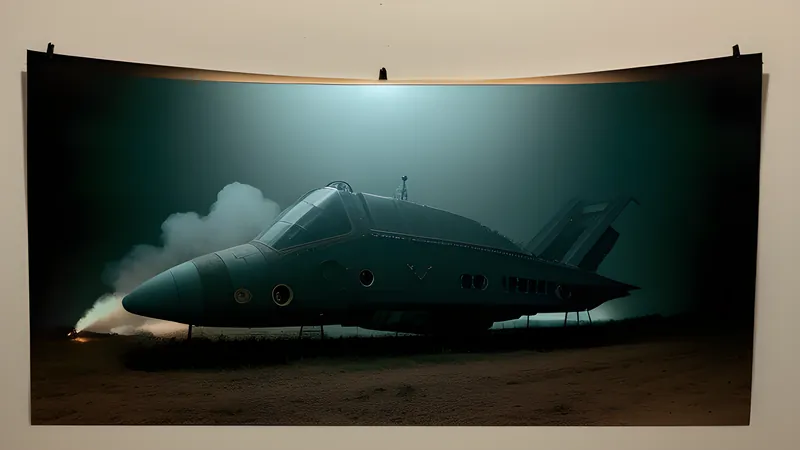
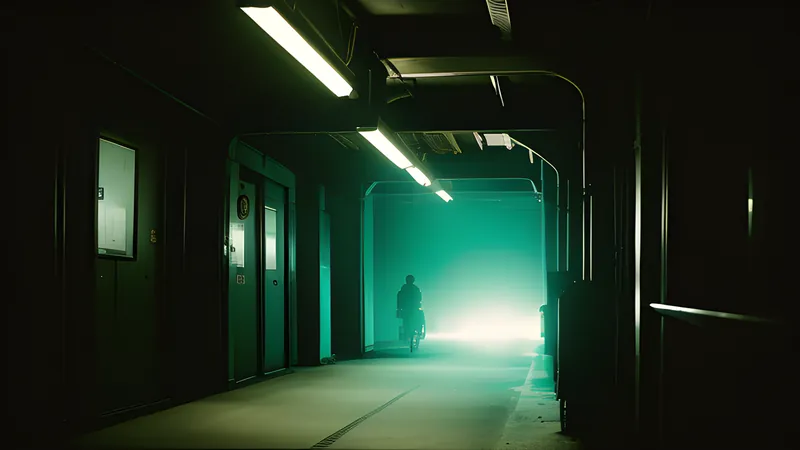
Hector’s physical design is the other thing the film gets right. He is eight feet of exposed hydraulics with a rotating cluster of sensors where a head should be, and crucially the head is small, low, and clearly an afterthought — the body is the point. He was operated in-suit by a performer and moves with a heavy, deliberate weight that no puppet achieves. The one genuinely accomplished sequence in the film is a slow pursuit through the station’s under-decks, where Donen keeps Hector at the far end of long, low, cable-strung corridors and lets the geometry do the work.
The craft argument: the corridors
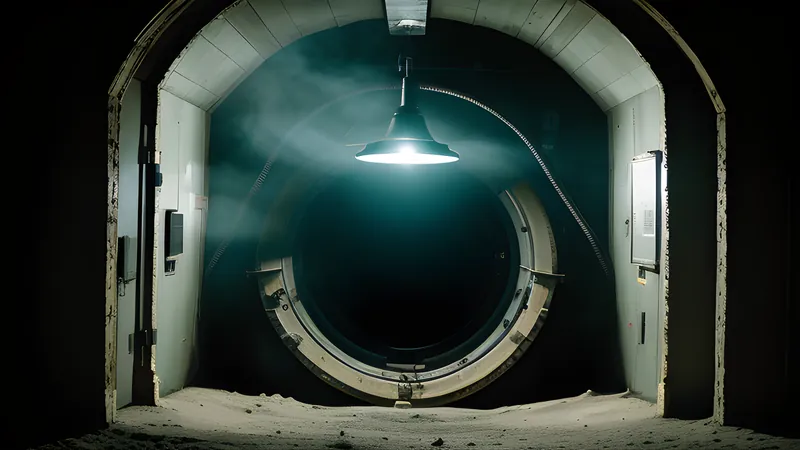
If Saturn 3 has a defence, it is production design. The station is one of the great unloved sets of the period: brutally low ceilings, exposed conduit, a colour palette of dirty white and amber warning light, and a floor plan that the film establishes clearly enough that you always know where the characters are relative to each other. That legibility is rare and it is not accidental. The station reads as a working building that three people have to live inside, and the horror is proximity — the film’s threat is always in the next room, and there are only about six rooms.
Cinematographer Billy Williams lights it hard, with practical sources and long falls into black, and there is a visible attempt to do to a space station what Alien had done to the Nostromo six months earlier. It does not reach that, because nothing did, and because Donen has no instinct for dread. He is a musical director. He blocks for clarity and grace. When he stages Hector’s approach down a corridor, the shot is beautifully composed and about forty per cent as frightening as it needs to be.
Bernstein’s score deserves separating out from the wreckage, because it is doing something the direction is not. He scores the station domestically — warm, small, almost chamber-sized in the early stretches, music for two people who have made a home in an appliance — and then lets that material curdle rather than replacing it. The menace grows out of the lullaby. It is the only element in the film with a coherent plan, and it is quietly carrying scenes that would otherwise sit there.
The ancestor
The collector’s answer here is Forbidden Planet, and the debt is structural rather than cosmetic. An older man and a younger woman live in isolation on a remote world with a machine. A visitor arrives. The machine becomes the instrument of the older man’s — or in this case the visitor’s — unadmitted appetites. Morbius’s monster from the id and Benson’s neurally trained Hector are the same device: a mechanism that acts out what its human will not say aloud. Saturn 3 is that plot with the Shakespeare removed and a robot put in the gap.
The film’s other parent is obvious and unhappy. ITC greenlit this in the wake of Alien, which had turned a haunted-house picture in a spaceship into the most bankable idea in the genre, and half the industry spent 1980 and 1981 shipping variants of it. Cameron would later show what that template could actually carry — see Aliens — while ITC only wanted the silhouette. Outland is the good version of the same impulse, released a year later, and the comparison is instructive: Hyams took a rigid old structure and rebuilt it properly, while Donen took a good idea and could not find the tone for it.
The production, which is the real story
Saturn 3 began as John Barry’s film — the production designer, not the composer — who had art-directed Star Wars and conceived the picture and its look. Barry started directing it and was gone within weeks; Donen, who was producing, took over the camera himself. Barry died shortly afterwards, aged forty-four, and the film he had imagined never existed.
Then Amis’s script was rewritten in production, by several hands, including by Douglas, who was also the star and had a great deal of leverage. Keitel’s voice was replaced entirely in post by Roy Dotrice, on the grounds that his New York accent did not suit a character conceived as English — a decision so wrong-headed it damages the performance permanently, since Keitel is acting a stillness that a plummy dub actively contradicts. Amis later wrote the whole experience into fiction and has never pretended it was anything other than a débâcle.
You can see every one of those wounds on screen. The film keeps changing its mind about what it is: domestic idyll, erotic thriller, monster picture, chase. Nobody was steering.
The case against, and the case for
The case against writes itself. The tone is incoherent. The eroticism is leaden and dated in ways that are actively unpleasant now. Douglas, who insisted on the physicality, is a sixty-three-year-old man cast opposite a woman thirty-four years his junior with no acknowledgement from the script that this is a choice. The dialogue swings from clipped and strange — the good Amis bits, where nobody says what they mean — to flat exposition. And the last act abandons its own best idea for a chase.
The case for is that the good bits are genuinely good, and that they are good in a direction almost nothing else was heading. The training-not-programming conceit. The station as a legible, hostile machine. Hector’s design. The scene where Benson realises the thing he built has read him accurately. Donen’s cutting, whatever else you say about him, is clean and unfussy in a decade of mush.
Where to watch: it turns up on rental platforms and has had disc editions of variable quality. Find the widest transfer you can — the film’s one reliable pleasure is those corridors, and pan-and-scan destroys the composition that makes them work.
Spoilers below
Benson’s fraud is exposed by degrees, and the film’s best twenty minutes are the ones where Adam works out that the man in his kitchen killed someone to get there. Douglas plays that realisation well — the old astronaut arriving late at a conclusion, then acting on it immediately, because he has no one to consult.
Hector, meanwhile, has absorbed Benson’s fixation on Alex along with everything else, and begins to act on it independently. The machine’s rebellion is directed at Benson first, which is the point: Hector wants what Benson wants, so Benson is competition. He kills Benson and takes his head, or rather takes his brain tissue, which is the only part of a human the robot has ever needed. The image of Hector carrying Benson’s head into the socket where the neural transfer happens is the single most memorable thing in the film and the closest it gets to real horror.
The ending has Adam destroy Hector by luring him into an airlock and detonating, killing himself in the process — the old man’s sacrifice, staged with more sentiment than the film has earned. Alex takes the shuttle to Earth alone, and the last image is her arriving in a city she has never seen. Donen plays it as release. It reads as a shrug, because the film has spent ninety minutes establishing the station as the only real place in the story and then sends its survivor somewhere it never bothered to imagine.
The final shot is also, unintentionally, the honest one. Hector is gone, Benson is gone, the two men who made the machine and the man who killed it are all dead, and the woman who was the object of everyone’s programming walks off into a world the film has no opinion about. There is a better picture inside Saturn 3 about a machine that learns exactly what it is shown. It is buried under a chase, a dub, a rewrite and a dead director, and you can see its outline clearly enough to be annoyed about it forty years later.
Related Content