Ringu: The Well, the Tape, and the Slowest Dread in Horror
Hideo Nakata turned a cursed videocassette into the patient nightmare that conquered the world
Contents
Watch a lot of horror and you develop a tolerance to speed — to the cut, the sting, the sudden face in the mirror. What breaks the tolerance is patience, and Ringu is the most patient horror film that ever became a global phenomenon. Hideo Nakata’s 1998 picture moves at the pace of an investigation, quiet and procedural, a journalist chasing a rumour about a videotape that kills its viewers seven days after they watch it. For most of its length nothing leaps at you. The dread accumulates like cold water rising in a well, and by the time it reaches your throat you have forgotten you were ever safe.
Ringu did something no Japanese horror film had done at that scale: it travelled. It set off a decade of J-horror export, spawned a Hollywood remake in 2002 that was itself a substantial hit, and made a wet-haired ghost climbing out of a television one of the most recognisable images in the genre. All of that success has slightly obscured how strange and restrained the original is. It is worth returning to before the icon, back when the tape was just a tape and the fear was new.
The architecture of patience
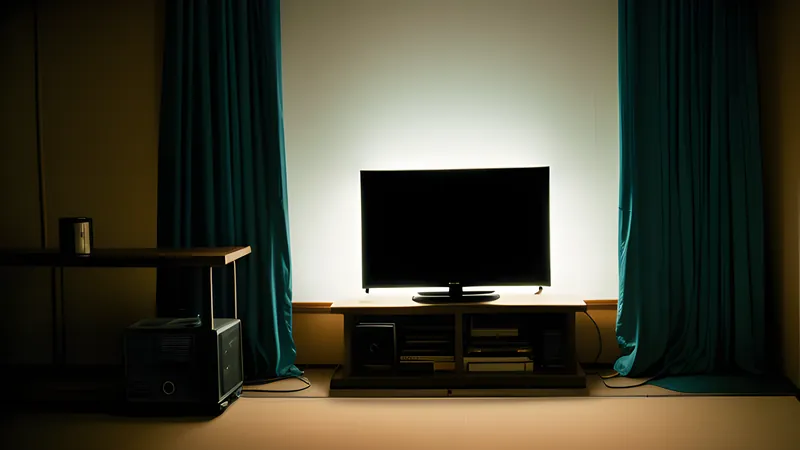
Nakata builds Ringu out of stillness, and the craft is in what he refuses to do. Where a Western horror film of the same era would cut fast and score every beat, Nakata holds shots long past the point of comfort, keeps the camera locked and low, and drains the colour toward a blue-grey pallor that makes every interior feel damp. Kenji Kawai’s score is sparse to the point of near-silence, all groans of processed metal and long troughs of nothing, so that the ambient sound of a room — a clock, a tap, the hum of a television left on — becomes the thing you strain against.
The engine of the film is a deadline, and it is a brilliant one. The curse is a countdown: watch the tape, receive a phone call, die in seven days. That structure turns the whole film into a ticking procedural, which is why it can afford to be slow — the audience is always aware of the clock even when the screen is calm. Reiko, the journalist played by Nanako Matsushima, and her ex-husband Ryuji, played by Hiroyuki Sanada, are racing a timer, and the film lets us feel every hour of it. Horror usually generates urgency by accelerating. Ringu generates it by counting down while refusing to hurry, which is a far more unbearable sensation.
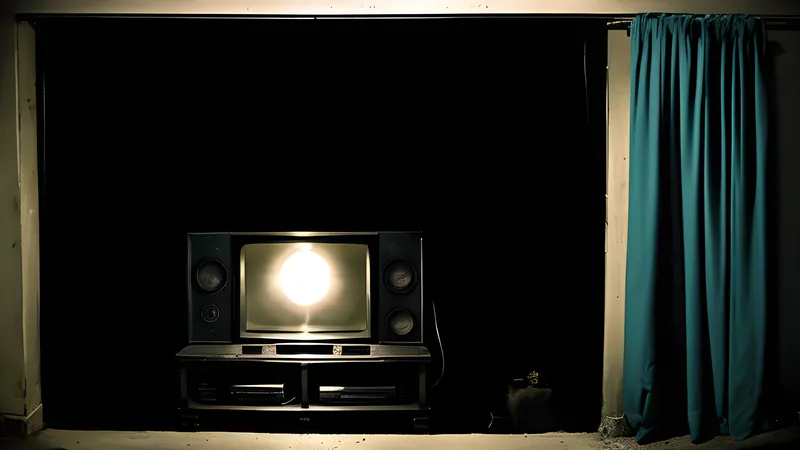
The cursed videotape itself is a masterpiece of low-tech unease — a reel of disconnected, degraded images with no sound, a woman brushing her hair in a mirror, a well, characters written across the screen, an eye. It looks like something genuinely unearthed, a transmission from a mind rather than a place. Nakata understood that a home-made curse object is scarier than a polished one, because its crudeness implies a maker, and the maker is the real ghost.
The well and the woman in it
At the centre of Ringu is Sadako, and Nakata’s decision to keep her mostly offscreen until the very end is the film’s masterstroke. For nearly two hours she is a rumour, a history to be reconstructed, a tragedy the investigators piece together from records and testimony — a girl with strange powers, a mother destroyed by public exposure, a death at the bottom of a well. She is a case file before she is an apparition, and that reconstruction is where the film generates its melancholy. Sadako is a wronged child. Her curse is grief turned into a chain letter.
When she finally moves, the film has earned an image that has now been copied so many times it takes an effort to see it fresh. The stillness of the preceding two hours is the whole reason the movement lands. A ghost that has been static in a frame for two hours and then walks violates a physical law the film has quietly established, and the violation is the terror. Nakata weaponises editing rhythm: he trains your eye to expect held, composed shots, and then breaks the contract exactly once, at the exact moment it will do the most damage.
The tradition it climbs out of
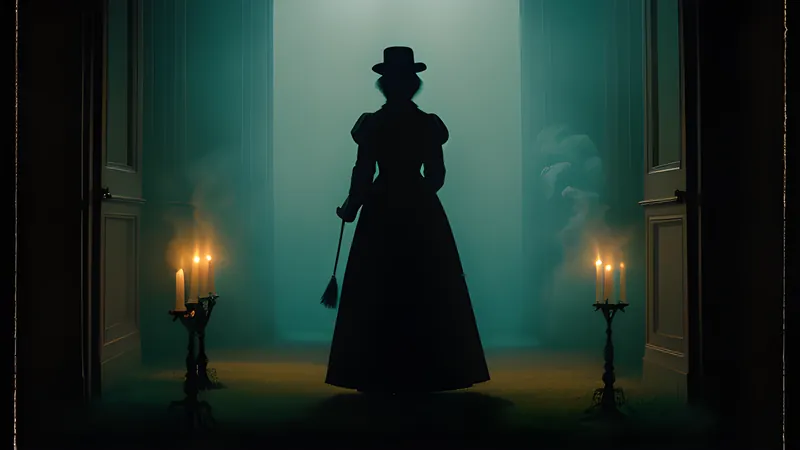
Ringu feels modern — it is a story about media, about a curse that spreads by copying, a plague of information a decade before anyone used that phrase about the internet — but its roots run deep into Japanese tradition. The real ancestor of Sadako is the onryō, the vengeful female ghost of kaidan, the classical ghost story: a woman wronged in life, usually by men or by society, who returns as an implacable spirit, white-clad, black-haired, beyond negotiation. This is a lineage centuries old, carried through kabuki and woodblock prints and the great ghost cinema of the mid-twentieth century.
The clearest cinematic grandparent is Masaki Kobayashi’s Kwaidan, the 1964 anthology that fixed the classical Japanese ghost in the language of art cinema — painted skies, ritualised stillness, dread built from composition and pace rather than shock. Ringu is Kwaidan’s method updated for the age of the VCR: the same patience, the same wronged spirit, the same conviction that a held image can frighten more than a sudden one. The other ancestor is the folk-horror landscape of a film like Onibaba, where the natural world — reeds, water, a hole in the ground — becomes a mouth waiting to swallow, exactly as the well does here.
There is a modern cousin worth naming, because Ringu shares its deepest anxiety. Its true subject is the screen as a carrier of contagion — an image that reaches through the glass to touch the viewer — and that is the same nightmare David Cronenberg dreamed in Videodrome fifteen years earlier, the television as a wound in reality. And released almost alongside Ringu, Takashi Miike’s Audition shows the other face of late-nineties Japanese horror — where Nakata builds dread from a wronged ghost and a countdown, Miike builds it from a wronged woman and a slow domestic betrayal. Two masters, one anxious moment, two very different knives.
The verdict
Ringu is the rare horror film whose influence has not devalued it, though it has certainly worn its images smooth. Come to it now and the shocks may feel familiar, because you have seen their children a hundred times. What has not been copied, because it cannot be faked, is the film’s patience — its willingness to be quiet, procedural, almost mournful for an hour and a half so that the final minutes have somewhere to fall from. This is a ghost story that respects the ghost, that spends its running time understanding her rather than merely deploying her, and the understanding is what makes the ending unbearable.
It is also, quietly, one of the great films about media and its power to reproduce and infect — a theme that has only grown more apt as the tape gave way to the file and the file to the feed. Sadako spreads by being copied. So did Ringu. Watch the original, in Japanese, on the best transfer you can find, and let it take its time. The dread it builds is the slowest in horror, and the slowest dread is the deepest.
Spoilers below
Stop here if you have not seen it, because the ending is the whole moral of the film.
Reiko and Ryuji believe they have solved the curse. They locate the well where Sadako died, drain it, and recover her remains, giving the wronged spirit the rest she was denied. Reiko’s deadline passes and she survives; the investigation appears to have worked, the ghost appeased by an act of decency. It is the ending a Western ghost story would give you — the mystery solved, the spirit laid to rest, order restored.
Then Ryuji’s deadline arrives, and Sadako comes for him anyway. She climbs from the well on the television screen, crosses out of the glass into his apartment, and the sight of her stops his heart. The recovery of her body meant nothing. The curse was never a plea for burial or justice; it was pure, mechanical malice, a thing that simply propagates and kills.
The genius is in what Reiko deduces from her own survival. She lived and Ryuji did not, and the only difference between them is that she made a copy of the tape and showed it to someone else — she showed it to him. The curse spares you only if you pass it on. The film ends with Reiko driving through the night to show the tape to her own father in order to save her young son, choosing to condemn one person to keep another alive. It is a horror of complicity: the curse survives by turning every victim into a carrier, forcing each viewer to inflict it on the next or die. Sadako’s grief has become a self-replicating machine, and the only way to live inside its logic is to become part of its cruelty. That is a bleaker and more modern idea than any jump scare, and it is why Ringu still climbs out of the well and into the room.
Related Content