Rigor Mortis: The Hong Kong Hopping-Vampire Homage
Juno Mak reassembles the cast of a dead genre and puts them in a dying tower block
Contents
Homage is usually a cheap gesture. Cast the old star in a cameo, reuse the theme tune, let the audience clap at their own memory, collect the money. Rigor Mortis, Juno Mak’s 2013 directorial debut, does something considerably harder and more upsetting: it casts the veterans of the Hong Kong hopping-vampire cycle as versions of themselves, thirty years later, and films what happened to them after the genre that employed them stopped existing.
Chin Siu-ho plays Chin Siu-ho. He was, in reality, one of the young leads of Mr. Vampire in 1985, the film that made the jiangshi cycle a going concern; here he is a washed-up actor with a failed marriage and nothing left, moving into flat 2442 of a rotting public-housing estate to hang himself. Around him Mak assembles a roll-call: Anthony Chan, Chin Siu-ho’s co-star from the same films, as Yau, a former vampire-hunter who now runs a food stall on the ground floor; Kara Hui; Nina Paw; Richard Ng; Lo Hoi-pang; Chung Fat; Billy Lau. These are the faces of Hong Kong horror comedy in its boom decade, and Mak has put every one of them in a building that is falling down.
What a jiangshi is, briefly
For the uninitiated: the jiangshi is a Chinese folk revenant — a stiffened corpse that moves by hopping, because rigor mortis has locked its joints. The folklore comes tangled with the practice of “corpse-driving”, the transport of the dead back to their home villages for burial, and it is controlled by yellow paper talismans stuck to the forehead. It detects the living by their breath, so you hold it. Sticky rice draws out the poison. A Taoist priest with an ink line and a peach-wood sword is the professional response.
In the 1980s Sammo Hung and his circle turned this material into a comedy-action engine and Hong Kong made dozens of them. The cycle burned out by the early 1990s and, unlike the vampire or the zombie, the jiangshi has never come back. Rigor Mortis is a film about that fact.
Craft: the colour of a dead genre
Mak’s most-discussed decision is the grade, and it is worth defending, because it has taken criticism for being a fashionable choice.
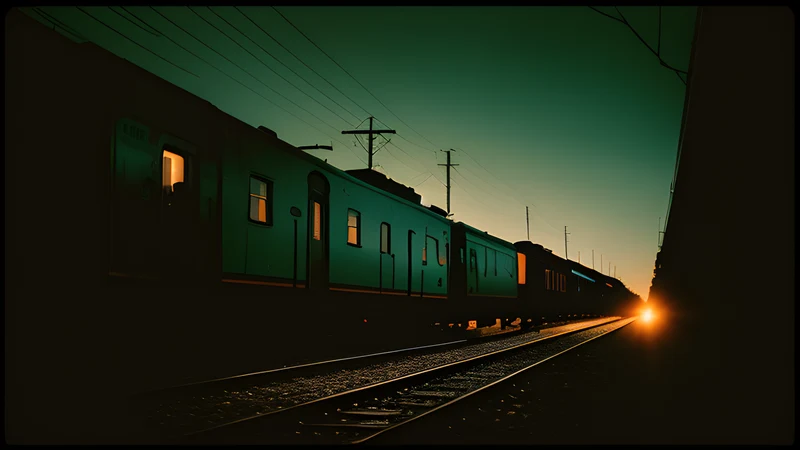
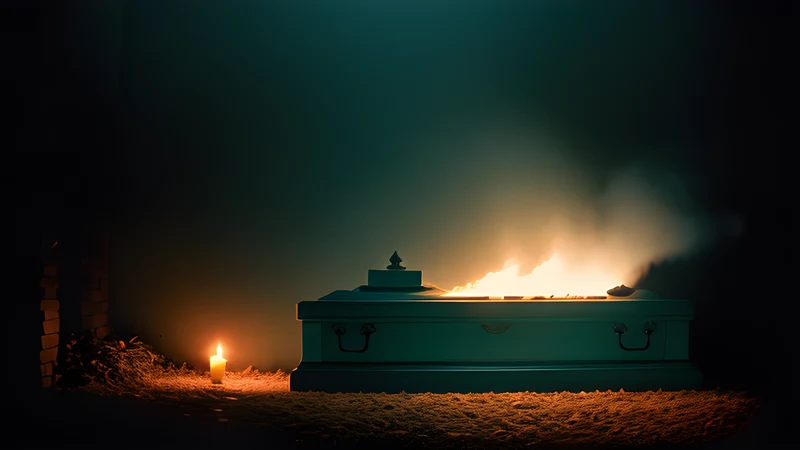
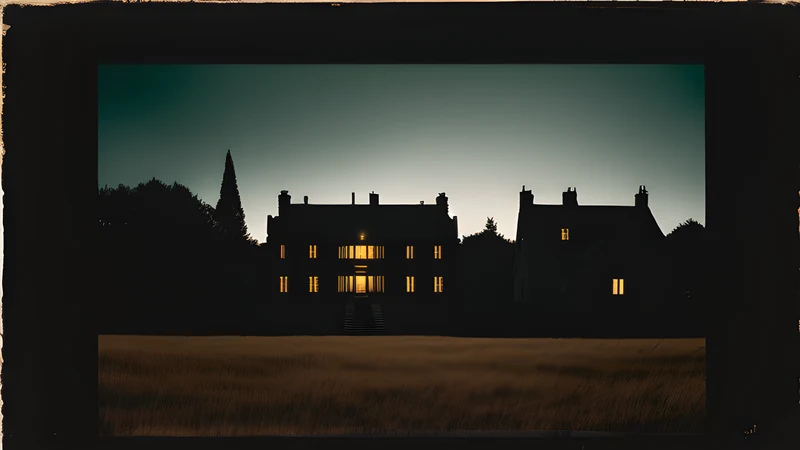
The original jiangshi films are bright. They are Cantonese comedies with primary colours, daylight village exteriors, red talismans, gold trim, broad lighting for broad gags. Rigor Mortis is drained — a sick, desaturated teal-grey wash across the entire picture, in which the only surviving colour is the yellow of a talisman and the occasional red. That is a legible argument rather than a mood board: this is what the genre looks like now, after the money left, after the audience left, after the stars aged out. The colour of the film is the colour of the memory rather than the colour of the thing.
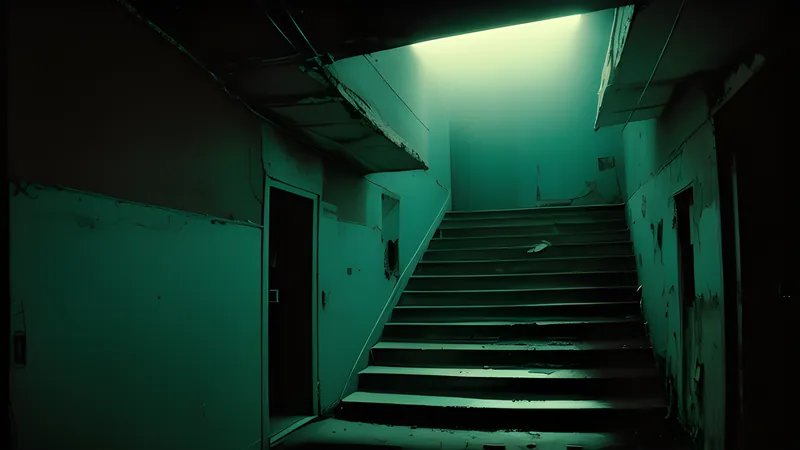
The building does the same work. Public housing in Hong Kong horror is usually shot for density and life; Mak shoots his estate as an ossuary, all wet concrete, dead fluorescents and a stairwell that goes down further than it should. Ng Kai-ming’s production design keeps every corridor identical, which turns the block into a machine for getting lost in.
His producer was Takashi Shimizu, who made Ju-on and understands better than anyone alive how to make a residential building hostile — and the Japanese influence is visible, occasionally too visible. There are long-haired twins. There is a bathroom. Mak is borrowing from the wave that replaced his genre, which is either a clever irony or a lapse depending on how generous you are feeling.
The casting is the argument
Here is why the film is more than a beautiful object. Anthony Chan’s Yau is a former vampire-hunter who has hung up his sword and now cooks glutinous rice for the residents — the same sticky rice that his profession once used to draw poison from a bite, now sold as lunch. That is the whole film in one prop. The magic has become catering.
Chin Siu-ho, playing himself, is introduced hanging. Mak opens his debut feature by attempting to kill the star of the genre he is honouring, and the picture never really recovers its balance afterwards, which is the intent. Every veteran on this cast list is playing someone diminished: a widow, a stall-holder, a caretaker, a man in a flat. The audience that recognises these faces is being asked to hold two images at once — the 1985 version and this one — and the gap between them is where the horror actually lives. Viewers with no knowledge of the cycle report Rigor Mortis as an atmospheric ghost film with a confusing plot. Viewers who grew up on the cycle report something closer to grief.
That is a real limitation and I will not pretend otherwise. The film’s emotional engine requires homework.
Why the genre died
The film assumes you know, and most Western viewers do not, so it is worth laying out — the extinction is the subject, and it has causes.
The jiangshi cycle was a studio product. Mr. Vampire was a Bo Ho / Golden Harvest picture, and its success in 1985 triggered the standard Hong Kong response to a hit, which was to make twenty more immediately. The sequels, the imitations and the crossovers arrived at a rate that exhausted every idea the folklore contained inside about five years. By the time the cycle wound down, the joke was worn through, the gags were being recycled between films, and the audience had moved to the heroic-bloodshed thrillers and then to the wave of the early 1990s.
The other cause is mortality. Lam Ching-ying, the unibrowed Taoist priest who was the cycle’s fixed point and the reason most of these films are watchable, died in 1997 at forty-four. The genre’s central performer was gone, and nobody replaced him, because the role was built on a specific physical authority — Peking-opera trained, Bruce Lee’s former stuntman — that the industry was no longer producing.
Rigor Mortis is haunted by that absence in a way it never states. Anthony Chan’s Yau is standing in a role that belongs to a dead man, doing it badly, from a food stall. Mak’s homage has a hole at the centre of it in the exact shape of the one actor he could not cast, and the film’s melancholy is largely made of that hole.
The case against
The plot is a mess. Mak has two full storylines running — Chin Siu-ho’s haunting and a separate, considerably better thread about an elderly widow attempting to bring her dead husband back — and they are woven together with an editorial rhythm that prioritises image over information. Long stretches are impossible to follow on a first viewing, and the film’s defenders tend to answer this by saying the confusion is the point, which is doing a lot of work.
The action, when it arrives, is over-processed. Mak came out of Cantopop and music video and it shows in a wire-and-CG climax that runs on the era’s worst instincts, all speed-ramping and digital dust. The 1980s films this one is mourning had better fights, because they were performed by Sammo Hung’s people in front of a camera.
And the debt to Japanese horror is a genuine weakness. A film explicitly about the extinction of a Hong Kong genre should probably not reach for J-horror furniture in its scare scenes.
What survives all of it is the atmosphere and the idea. Mak has made only this one feature as director, which is a loss. It streams in most territories under Rigor Mortis; the Hong Kong title translates simply as Jiangshi. For the neighbouring modern Hong Kong horror, Dumplings is the other essential entry; for the wider tradition this film is grieving, start at Mr. Vampire and then read the vampire canon from Nosferatu to Let the Right One In to see how thoroughly the Western form has ignored it.
Spoilers below
The widow’s plot is the good one. Auntie Mui (Nina Paw) has lost her husband, and she takes the corpse to Gau (Chung Fat), a Taoist who still practises, and pays to have him raised. Gau’s method requires a fresh soul to anchor the resurrection, and he uses the twins who died in the building years earlier. What comes back is the film’s real monster: a jiangshi made out of love, by a woman who simply could not accept a death, and Mak’s decision to give the creature a devoted wife is what separates the film from its models. The 1985 films had corpses as obstacles. This one has a corpse as a marriage.
Chin Siu-ho’s strand runs in parallel: the ghost of the flat, the twins, Yau’s reluctant return to a trade he abandoned, and a final fight in the stairwell in which the old hunter picks up the sword again. It is the scene the entire film has been promising, and it is the scene the film is least able to stage, because Mak shoots it as spectacle when it needed to be shot as an old man’s last effort.
Then the reversal. Chin Siu-ho’s hanging worked. He died in the noose in the first scene, and everything since — the flat, the ghosts, Yau, the fight, the whole apparatus of the genre coming back to life around him — happened in the minutes while he was dying, assembled from the films he used to be in. The neighbours cut him down. Paramedics arrive. The block is an ordinary block full of ordinary people, and the man on the floor is an actor nobody recognises.
It is a divisive ending and I will defend it. The point is that the jiangshi film could only be resurrected inside the head of someone who was in one, at the moment of his death, and that when the lights come up the genre is still gone. Mak spent a whole feature raising a corpse to demonstrate that it stays down. That is a considerably braver thing to do with an homage than the alternative, which is to pretend the audience is still out there.
Related Content