Resolution: The Film That Argues With Its Own Narrative
Two friends, one cabin, and a story that wants a better ending than they can give it
Contents
Justin Benson and Aaron Moorhead made Resolution for approximately no money and premiered it at Tribeca in 2012, and it took most of a decade for the film’s reputation to catch up with what it had done. The reason for the delay is that the film is almost aggressively unmarketable. It has two people in it. It is set in one location. For about forty minutes it presents itself as a rather good, rather harrowing indie drama about addiction, and viewers who wanted a horror film spent that stretch wondering whether they had loaded the wrong disc. Then it turns, and what it turns into is one of the very few genuinely original horror ideas of the century.
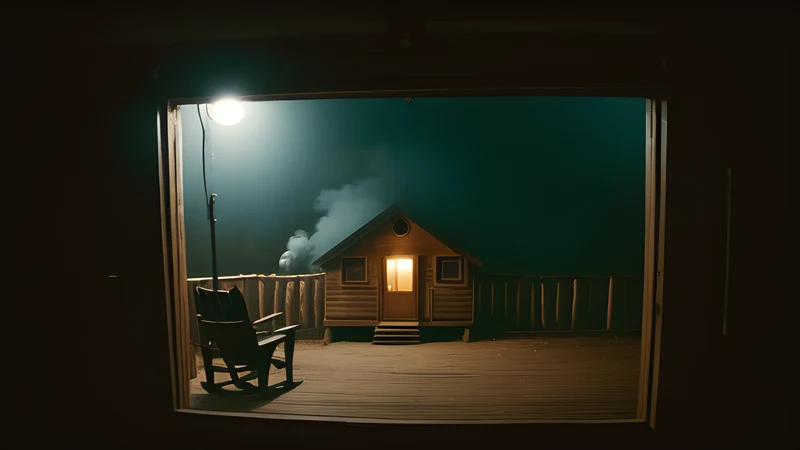
The premise is a vice. Michael Danube, played by Peter Cilella, receives a video of his old friend Chris Daniels smoking crack in a derelict cabin in the California scrub. Michael has a pregnant wife and a life; Chris, played by Vinny Curran, has a filthy shack on tribal land and perhaps a few months left. So Michael drives out, incapacitates him, handcuffs him to a pipe in the cabin and informs him that he is going to be there for a week, detoxing, whether he likes it or not. Chris disagrees. The film is then two men in a room, one of them chained to a wall, arguing.
The two-hander is the foundation
Everything the film later achieves is paid for here. Cilella and Curran are extraordinary together, and Benson’s script gives them the correct relationship: these two have known each other since they were boys, which means they can be vicious with total fluency. Chris is funny, charming and manipulative, and Curran plays him without a single beat of movie-junkie pathos — he is a man running a con on someone who loves him, and he is good at it because he has had twenty years of practice. Michael, meanwhile, is doing an obviously monstrous thing for obviously decent reasons, and Cilella lets you see him enjoying the moral high ground rather more than he should.
That texture is what makes the horror land later, and it is the debut’s most professional decision. Benson and Moorhead had no money for scares, so they spent their entire budget on making you believe in a friendship. By the time the film introduces its real subject, you have two characters you would follow anywhere, which is a luxury most low-budget horror never affords.
The addiction material is handled with a restraint that shames most films built entirely around it. Benson never gives Chris a monologue explaining himself, never supplies an origin wound, and never lets Michael’s intervention be validated. What the script understands is that forcing a man through withdrawal in a shack is an act of violence performed by someone who has run out of better ideas, and that Michael’s certainty is the least trustworthy thing in the film. There is a running argument between the two about whether Michael is helping or merely managing his own guilt, and the film declines to settle it — which turns out to be rehearsal for the much larger refusal coming later.
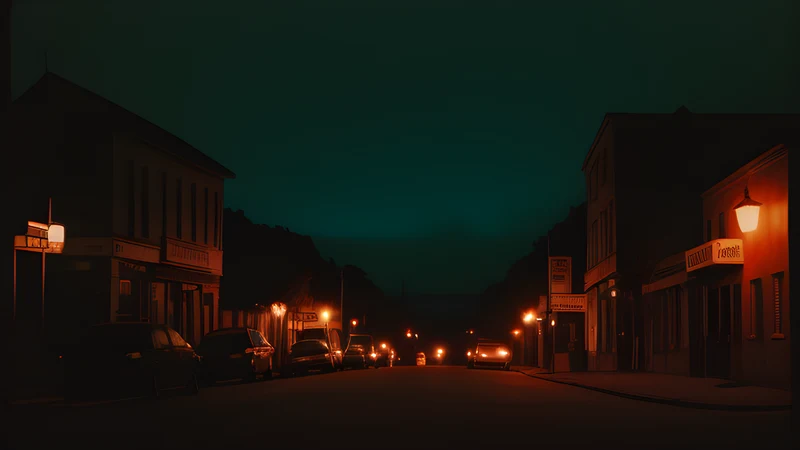
Moorhead shoots it himself, in bright, dry, unflattering daylight. There is very little night in Resolution and almost no traditional horror lighting. The scrubland is sunlit and open, the cabin is squalid and well-lit, and the film’s threat operates in full visibility — which is both an economy and a thesis, since the thing hunting these men has no interest in darkness.
The found media
Then Michael starts finding things. A photograph. A slide carousel. A record. A reel of film. A cassette. Each one is discovered somewhere on the property, each contains a fragment of a story, and each story is about people who came to this place and ended badly. The formats advance chronologically — the further Michael digs, the more recent the medium — and eventually he finds footage of himself.
This is the film’s great structural invention and it is beautifully cheap. Benson and Moorhead cannot afford a monster, so they build one out of editing. The antagonist is present in the film only as media: it does not appear, it does not speak, it curates. And because the formats escalate from Victorian photographic plates through to digital video, the film is quietly telling you that the thing has been doing this for a very long time and has kept up with technology, which is a more chilling idea than any creature design could manage.
The mechanics of the reveal are handled with real discipline. Michael, being a man who likes solving things, treats the artefacts as a puzzle to be assembled — and the film lets him assemble it, correctly, and shows that solving it changes nothing. Every fragment he finds is more recent than the last. He is not investigating a story. He is catching up to it.
The entity as critic
What emerges is the conceit that makes Resolution singular. The presence at the cabin is a storyteller. It has been collecting narratives from this land for centuries, and it wants a good one. It shows Michael the drafts. It offers him alternatives. It is, functionally, a hostile audience with editorial authority, and its dissatisfaction is the film’s engine — the thing does not want Michael dead, it wants a satisfying ending, and it will keep rewriting until it gets one.
Horror has flirted with metafiction before, and the desk has covered the high-water mark in In the Mouth of Madness, where Carpenter builds a world that a novelist’s readership has voted into existence. Benson and Moorhead invert it. Carpenter’s horror is that fiction can become real; theirs is that reality is already fiction, and something is unhappy with the draft. The closest cousin is Videodrome, which understood before anyone that a recording could be an organism with intentions toward its viewer.
The other useful comparison is Coherence, made around the same time on a similarly invisible budget, and for the same reason: both films prove that a high-concept genre idea executed by good actors in one location can outclass anything with a second-unit crew. The Lovecraftian strand — the vast indifferent thing that regards humans as material — puts Resolution squarely in the tradition the desk mapped in cosmic dread and adapting the unadaptable Lovecraft, and it is arguably the most faithful Lovecraft film never adapted from Lovecraft.
The case against
The film is a machine with visible seams. The supporting characters — a squatter, some dealers, a group of researchers in the woods, a man from the reservation who tells the pair to leave — exist to deliver information and are written at roughly the level of a competent short story. Several of them arrive, explain a rule, and depart. When the film cuts away from Cilella and Curran, its quality drops noticeably.
The larger complaint is the one Benson and Moorhead invited. A film whose antagonist demands a satisfying ending has set itself a test in public, and Resolution declines to sit it. The final movement is a shrug — deliberate, coherent with the film’s argument, and genuinely frustrating in the room. If you feel cheated, the film has an answer ready, and “the film anticipated your objection” is a defence that some viewers reasonably regard as a dodge.
I think it is the correct choice and I think it also cost them the audience for five years. The film’s whole point is that the thing wants closure and closure is the one commodity nobody in this story can produce. The pair later revisited the same land in The Endless, which functions as sequel, companion and partial answer, and they built a romance out of the same cosmology in Spring. Watching Resolution first is strongly advised; it makes The Endless detonate.
It streams and has had a disc release. Watch next: The Endless, immediately. In the Mouth of Madness, eventually.
Spoilers below
The rules become explicit late. The presence has been running this cycle for a very long time — the stories it has collected include a cult that went into the woods and a set of researchers who tried to document it, and every group that has attempted to understand the thing has ended as another artefact on the shelf. It cannot be fought because it is not in the room. It is the room.
The escalation Michael experiences is the entity workshopping. He finds media showing his own death, in various configurations, and the configurations change as he reacts — because they are proposals rather than prophecies. When he refuses one, another appears. Benson and Moorhead stage this without a single visual effect: a man looking at a photograph, and then at a different photograph. The horror is entirely in the implication that something has been in the room and has revised.
The best sequence in the film is the moment Michael grasps that the thing is offering him choices with the friendliness of a collaborator. He tries to negotiate. He is, briefly, a screenwriter taking notes from a producer he cannot see, and the tonal control there is remarkable — it is funny, and being funny makes it worse.
The ending is the fight. Michael frees Chris; Chris, detoxed enough to be lucid, does not leave. That is the film’s actual emotional payoff and the reason the whole exercise works: the addict stays. Whatever the entity wanted, the two of them stand together outside the cabin, refusing to supply a third act, and the camera assumes the presence’s point of view and moves toward them. Cut to black.
There is no resolution, which is the title landing as a joke and a thesis simultaneously. The entity gets nothing. Michael’s week of enforced sobriety has produced no clean redemption, Chris’s addiction is not cured by a plot, and the two men’s friendship is the only thing in the film that is not a draft. Benson and Moorhead’s argument is that a life does not have an ending shaped like a story, and that anything demanding one is a monster. Then they made The Endless, which reveals what happens to people who refuse the ending: they get the same day, forever, on the same land, and Michael and Chris are still out there in it.
Related Content