Raw Deal (1948): Mann and Alton's Shadow Symphony
A prison break, a theremin, and the only classic noir narrated by the woman who loses
Contents
The voice that opens Raw Deal belongs to a woman, and this is so unusual that it is worth stopping on before anything else. The classic noir narrator is a man explaining how he got here — the insurance salesman bleeding into a dictaphone, the private detective reconstructing a job. He is telling the story because it is his. Anthony Mann’s 1948 picture hands the narration to Pat Cameron, played by Claire Trevor, who is the woman in love with the protagonist and who is going to lose him over the course of the film, and who tells us the entire story in the past tense knowing exactly how it ends.
She is not the hero. She is not the femme fatale either, which is the more interesting refusal. She is the loyal one, the one who waits, the one whose devotion the genre normally rewards with a small scene near the end — and Mann gives her the microphone and makes us watch her own defeat through her eyes. Paul Sawtell scores her theme with a theremin, that wavering electronic whine borrowed from science fiction and psychological melodrama, and the effect is to make her narration sound like a transmission from somewhere slightly outside the film. It is the strangest sound in the classic cycle and it belongs to the person nobody was listening to.
Eagle-Lion, and the poverty that made it beautiful
The film came from Eagle-Lion, a small outfit with small money, and it is the middle panel of the finest triptych in American genre cinema: Mann and cinematographer John Alton made T-Men in 1947, this in May 1948, and much of He Walked by Night by the end of the same year. Three films, almost no budget, and between them a visual vocabulary that the entire genre has been quoting ever since.
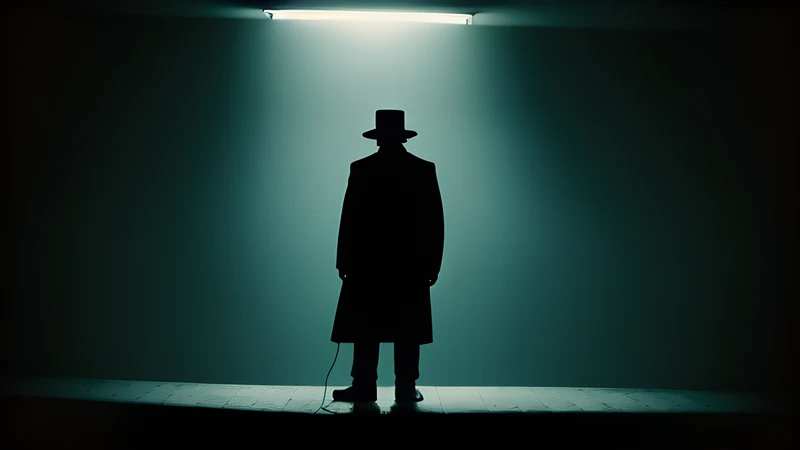
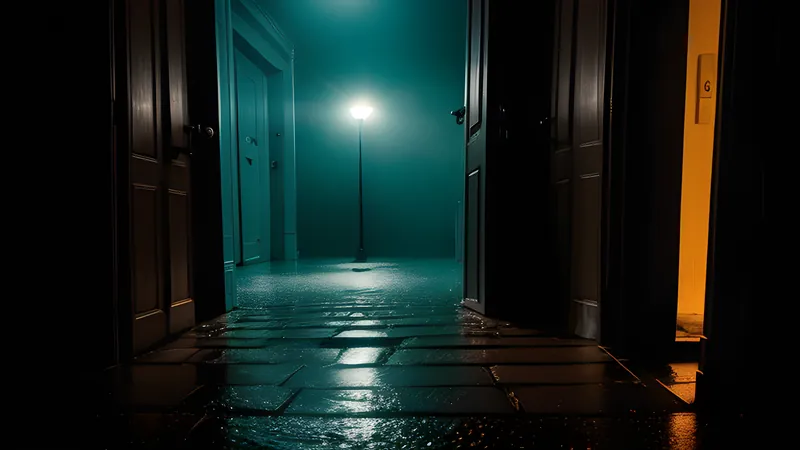
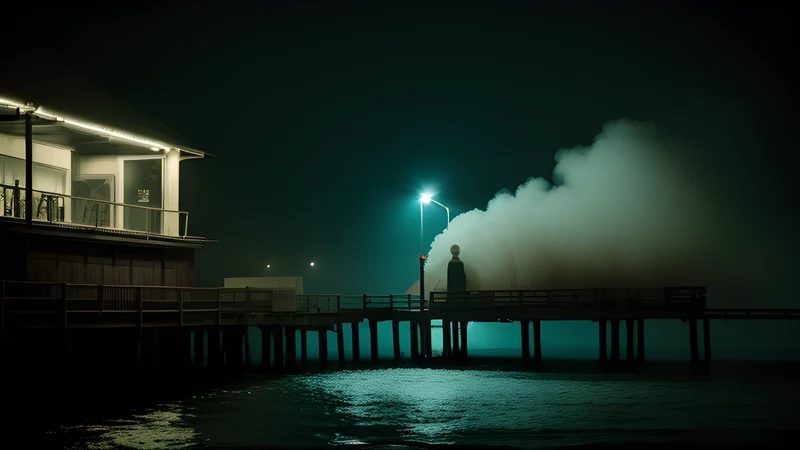
Alton’s technique was subtraction. He lit with one hard source and let the rest of the frame go to true black, which was partly aesthetic conviction and partly the only way to shoot a film when you cannot afford to build or light a set. If the background is invisible, it does not need to exist. So Alton photographs Raw Deal in fog, in doorways, in single-lamp rooms, and the film’s world becomes a series of small illuminated islands with nothing between them — which is a perfect description of what the story is about.
The screenplay by Leopold Atlas and John C. Higgins is a straight-line pulp construction. Joe Sullivan is in prison, taking the fall for Rick Coyle. Coyle owes him fifty thousand dollars and has arranged a prison break, and the break is designed to get Joe killed on the wire, which would settle the debt with admirable economy. Joe gets out. Dennis O’Keefe plays him with a heavy, blunt physicality — O’Keefe was a light comedian before Mann started casting him as slabs of grievance, and the miscasting is the making of him. He looks like a man who has never had an idea that was his own.
Why it works: two women and a black frame
The film’s engine is a triangle, and Mann builds it with real cruelty. Pat springs Joe and expects to run with him. Also in the car is Ann Martin, a legal aid worker played by Marsha Hunt, who has been visiting Joe in prison out of a decent, slightly naive belief that he can be salvaged — and who is taken along as a hostage and stays as a conscience. So Joe drives towards the coast with the woman who broke him out and the woman who wanted to reform him, and Pat narrates.
That structure lets Mann do something the genre almost never attempted. Every scene between Joe and Ann is filtered through the voice of the woman watching them, so the film’s romance arrives pre-poisoned by the jealousy of its own narrator. When Pat describes Ann, we cannot trust the description, and we can hear her failing to be unfair, and Trevor’s performance — she had won an Oscar the same year for Key Largo — is a study in a woman being decent against her own interests, out loud, on the soundtrack, in the past tense.
Marsha Hunt’s Ann has the film’s hardest arc, because the script requires her to discover that she is capable of violence, and Hunt plays the discovery without any of the theatricality that would make it comfortable. Her performance has a further shadow over it now: Hunt was blacklisted within a few years of this film and lost most of a career, and there is something bleak about watching an actress play a woman who believes in due process.
Then there is Raymond Burr. Rick Coyle is one of the great screen sadists, and Burr plays him as a soft, fat, luxurious man with a genuine enthusiasm for fire. The scene everyone remembers involves a flaming dessert and a woman who has annoyed him, and Mann stages it so quickly that the audience is still processing the gesture when the film has moved on. It is not a set-piece. It is a man reaching for the nearest thing, which is what makes it obscene. Burr’s Coyle establishes an entire lineage of soft, indoor, appetite-driven villains, and he is the direct ancestor of the type Burr himself would keep playing until television made him a lawyer.
The craft high point is the taxidermist’s shop. Mann sends his characters into a room full of glass-eyed dead animals, lit by Alton with a single source, and the composition does the review for him: this is a film about people being preserved in an attitude they cannot escape. Joe is a stuffed man. He has been dead since before the picture started and is walking around because someone posed him that way.
Where it sits in the cabinet
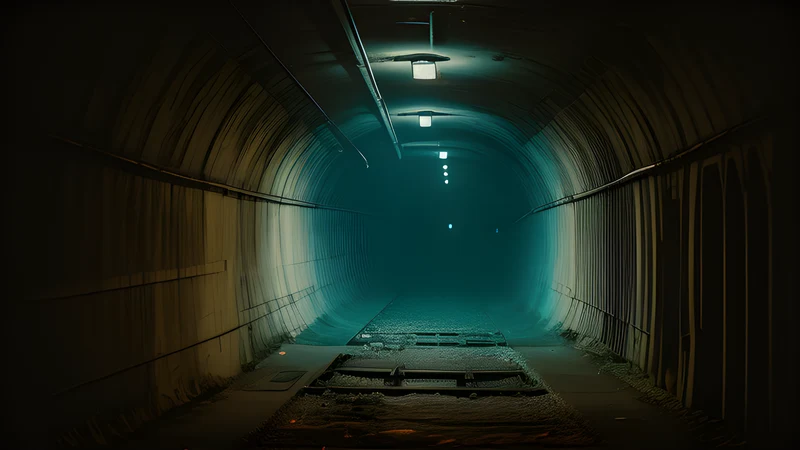
The obvious partner is He Walked by Night, shot months later, where Alton’s blackness gets a concrete tunnel to fill and produces the most audacious sequence of the decade. Watch the two together and the method is unmistakable — the same ambushes out of pure black, the same conviction that a torch beam is more information than a lamp.
Alton took the technique upmarket to Allied Artists seven years later for The Big Combo, whose fog-and-void finale is Raw Deal’s docks with a proper budget. If you want to see what Alton would have done at Eagle-Lion with money, that is the film.
The tonal cousin is Out of the Past, released the year before, and the comparison flatters neither and illuminates both. Tourneur’s fatalism is romantic — his doomed people are eloquent about their doom and half in love with it. Mann’s is mechanical. Joe Sullivan has no poetry, no wit, no self-knowledge, and the film’s despair is the flatter, truer kind: he is going to die because of an arithmetic error made by someone else years ago.
For the poverty-row lineage, the ancestor is Detour — a man in a car with a woman he cannot get rid of, made for nothing, salvaged by a director who understood that cheapness is a style if you commit to it. Mann committed harder than anyone, and then walked away from the whole genre: within two years he was making Westerns with James Stewart, applying this same understanding of landscape and violence to the open country, which is why his Westerns feel like noirs with weather.
The verdict
Raw Deal is the most beautiful cheap film ever made in America, and its beauty is inseparable from its meanness. Alton’s photography gives a fifty-cent revenge plot the visual gravity of tragedy, and Mann uses the gap between the two as the whole argument — these are small, stupid people with no interior life, photographed as though they were figures in a myth, and the mismatch is the point. Trevor’s narration is the masterstroke, and it remains, three-quarters of a century on, the only classic noir that lets the losing woman describe her own loss while it happens.
The film has fallen in and out of public domain limbo and the circulating copies vary wildly. Alton’s blacks turn to porridge in a bad transfer and take the film with them; a restored print is worth hunting.
Spoilers below
Coyle’s plan holds all the way through. He never intended Joe to survive the break, and when Joe does survive, Coyle simply moves to the next arrangement: he sends men after him, he strings him along about the fifty thousand, and he uses Joe’s own need for the money to keep him in reach. Joe is a man walking towards a payment that does not exist, and every step is one Coyle scheduled.
The triangle resolves through Ann. She shoots one of Coyle’s men to save Joe — the legal aid worker who believed in the system kills a man in a room — and Hunt plays the aftermath as a genuine breakage, someone discovering that her principles were untested rather than strong. Joe’s decision to go back for her at the end is the film’s one moment of free will, and Mann has arranged the entire picture so that free will arrives too late to be worth anything.
Pat’s great scene is her betrayal, and it is the reason the narration exists. Coyle’s people telephone with a message for Joe: Ann has been taken, and if Joe wants her he must come to Corkscrew Alley. Pat takes the call. She can pass the message and lose Joe to the other woman, or say nothing and sail to Panama with him, and she says nothing. Then she carries the lie for a stretch of the film while narrating it to us, and then she tells him anyway — knowing that telling him is a death sentence for them both, delivering the man she loves to a burning building because she cannot bear to be the reason another woman dies. Trevor plays the reversal with almost no dialogue, and the theremin does the rest.
The finish is fire, which Coyle has been promising since the dessert. Corkscrew Alley, fog, a burning building, and Joe going up after Ann. He gets her out and takes Coyle out of a window with him, and then he dies in the street, and Alton lights the death in the smoke with a single source so that the whole frame is a grey nothing with one man in it. The last shot belongs to Pat, standing at the edge, and the narration closes over her: she has kept him, in the only way the film was ever going to allow, which is that Ann does not get him either. That is the deal of the title. Nobody wins, one woman tells you about it, and the theremin does not resolve.
Related Content