Pulse (Kairo): Kiyoshi Kurosawa's Lonely Apocalypse
A ghost story that arrives through the modem and ends the world by attrition
Contents
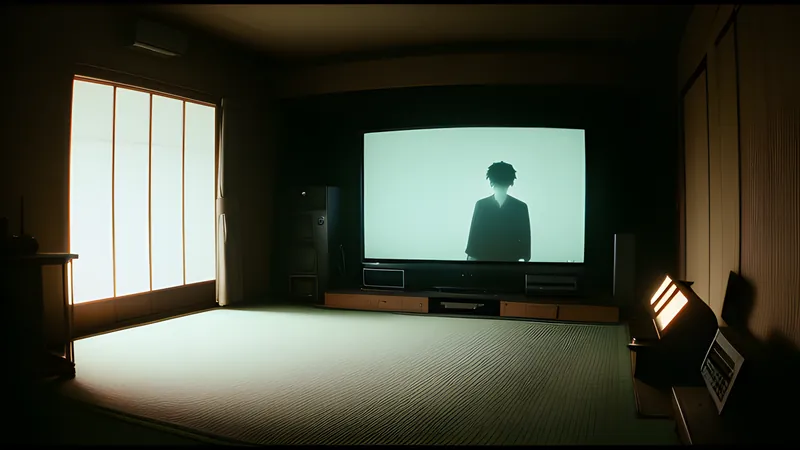
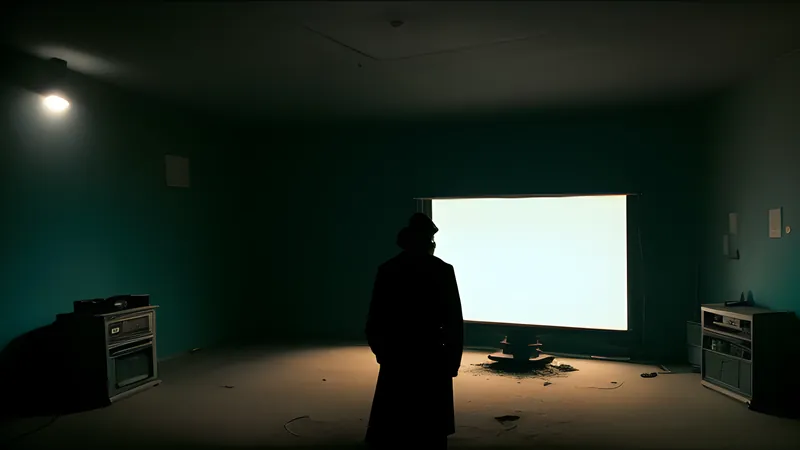
There is a moment in Pulse — you will know it when you reach it — where a figure walks toward a young man in a vast empty room, moving with a slowness that should be harmless and is instead one of the most frightening things I have ever seen on a screen. The ghost does not lunge. It does not scream. It shuffles, unhurried, the way something moves when it knows you have nowhere to go. That gait is the whole film in a single image: an apocalypse that arrives with the terrible, unhurried patience of loneliness.
Released in 2001 as Kairo, Kiyoshi Kurosawa’s Pulse is the strangest and most ambitious film the J-horror boom produced, and the one that has aged into prophecy. It is nominally about ghosts spilling into the world of the living through the internet. It is actually about isolation — about a society of people who have stopped being able to reach one another, and a death that spreads through screens because the screens were where the loneliness already lived. Twenty-odd years on, watching people fade out of existence one glowing monitor at a time, it plays less like a period piece than a diagnosis.
Two strands, one dread
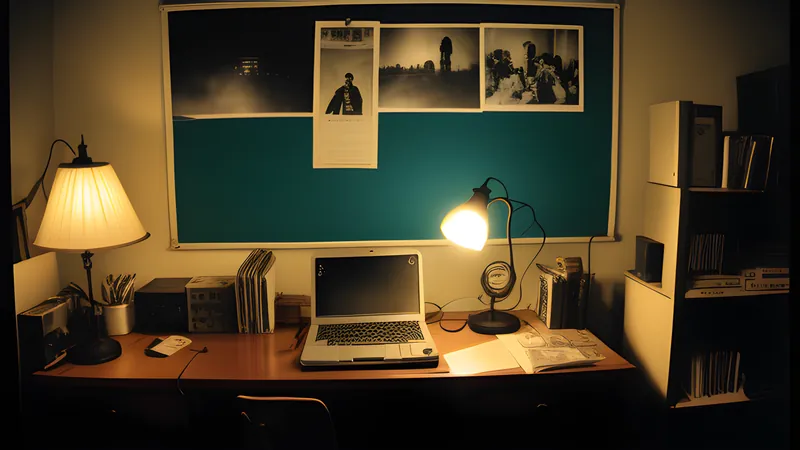
Kurosawa braids two storylines. In one, a group of young plant-shop workers in Tokyo begin losing colleagues to sudden, unexplained despair and disappearance, the vanished leaving behind only faint sooty stains on the walls where they last stood. In the other, a student named Kawashima connects to the internet for the first time and is met by a site that asks, softly, whether he would like to meet a ghost, then shows him grainy webcam images of people alone in rooms, doing nothing, radiating dread.
The film moves between these threads without hurrying to fuse them, and Kurosawa deliberately withholds conventional explanation. There is talk of the realm of the dead having filled up, of the boundary weakening, of loneliness as the medium through which the contagion travels. None of it is nailed down. The vagueness frustrates viewers who want ghost-story mechanics, and it is precisely the source of the film’s power: this is a horror of atmosphere and idea, closer to a waking depression than a haunted-house plot. Kurosawa is a director of unease rather than shocks, the same sensibility he brought to Cure, where an empty, hypnotic evil spreads through a city like a rumour. Pulse is Cure’s despair scaled up to the end of the world.
The most frightening use of empty space in horror
Kurosawa’s signature is the long, static, wide shot in which almost nothing happens, held until the stillness itself becomes a threat. He composes deep, murky frames — a warehouse, a stairwell, an ordinary flat — and places his figures small within them, so that your eye is forever scanning the dim margins for the thing that might be there. When something does move, it moves wrong: too slow, too smooth, at an angle a living body would not choose.
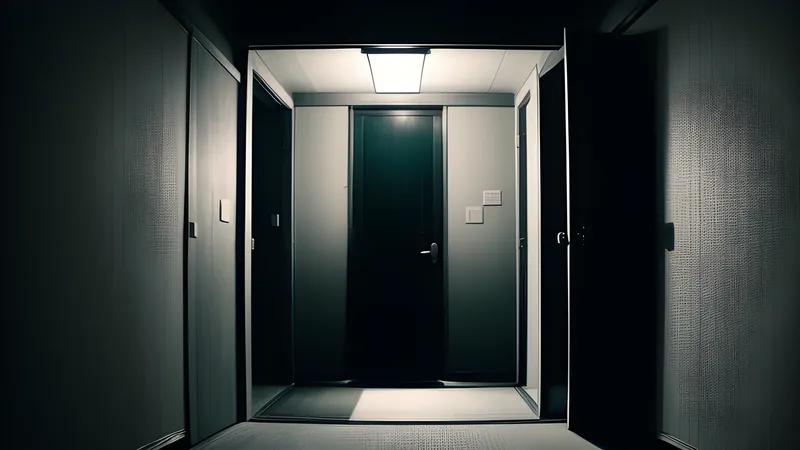
The film’s most infamous rooms are sealed with red tape across the door, a warning and an invitation, and behind those doors the geometry of ordinary space seems to curdle. Kurosawa lights for gloom, drains the palette to greys and sickly greens, and lets the sound design carry a low industrial hum that never resolves. He almost never cuts in for a jump. He lets the wide shot do the work, trusting that a human figure standing motionless at the far end of a dark room, watched long enough, is worse than any close-up. That patience aligns him with the whole slow-dread lineage the genre later argued about, a debate I get into in elevated horror and the backlash against the slow burn. Kurosawa was making elevated horror before the label existed, and doing it with more nerve than most of its named practitioners.
The craft lesson is that fear scales with duration and space. A quick fright is a reflex; it passes. Kurosawa’s dread accumulates because he refuses to release you — he holds the shot, denies the cut, and makes you sit inside the room with the thing until the sitting becomes the horror. It is the opposite instinct to the busy, over-edited scares of the era, and it is why Pulse still works when louder films have dated.
The apocalypse of loneliness
What makes Pulse singular is its scale. Most ghost stories are intimate — a family, a house, a curse. Kurosawa’s ghosts are ending the world. As the film progresses the disappearances multiply, the city empties, planes fall out of the sky, and the human race quietly winks out through a spreading conviction that connection is impossible and existence is unbearable. The ghosts do not kill so much as confirm a despair the living were already carrying.
The prescience of this is what unsettles most on a revisit. Made at the dawn of mass internet adoption, Pulse intuited the specific modern ache of being perpetually connected and completely alone, of watching other people’s lives through a screen and feeling further from them for it. Those grainy webcam figures — solitary people in rooms, staring, doing nothing — look uncannily like a premonition of the feeds we now scroll. Kurosawa reached the anxiety two decades early, and dressed it as a ghost story because a ghost story was the only form roomy enough to hold it.
It sits, tonally, at the far end of the J-horror spectrum from its contemporaries. Where Nakata’s Dark Water grieves a single mother and child, and Shimizu’s Ju-on traps you in one cursed house, Kurosawa widens the aperture until the haunting is civilisational. The intimacy of the others is a strength; the vastness of Pulse is a different and rarer achievement.
Where to watch, and the verdict
Pulse was remade in America in 2006, a version that missed the point so completely it became a cautionary tale — it treated the ghosts as monsters to be fought and stripped out the metaphysical loneliness that was the entire film, exactly the flattening I trace across the J-horror wave and what the American remakes lost. The original streams in various territories and has excellent Blu-ray editions from boutique labels; the film lives in shadow, so a transfer that preserves deep blacks matters more here than almost anywhere.
The verdict before spoilers: Pulse is the most intellectually ambitious and quietly devastating film the J-horror movement produced, a ghost story that is really a study of despair and a horror film that predicted the texture of our online lives. It asks patience, and it repays it with images you will not shake. Watch it alone, which is both the ideal condition and, the film would gently suggest, the whole problem.
Spoilers below
Everything from here assumes you have seen it.
The film never fully explains its mechanics, and that is deliberate, but its logic becomes clearer on a rewatch. The ghosts are not attacking the living in any ordinary sense. The realm of the dead has overflowed — there is no more room for the dead — so they leak back through the one channel loneliness has left wide open, the network. To encounter one is to be infected with its condition: an absolute, immobilising despair that ends either in disappearance or in suicide. The sooty stains left on the walls are all that remains of those who fade, human beings reduced to a shadow-smudge, the imprint of a person who could not bear to keep existing.
The genuinely bleak turn is that the film offers no cure and no reversal. Characters we follow and care about succumb one by one, walking into the despair or simply ceasing to be, and the two survivors, Kawashima and Michi, are left crossing a Tokyo that has essentially ended — buildings burning untended, streets empty, the human world depopulated by attrition. There is no final confrontation that saves the day. There is only the slow subtraction of everyone.
The closing stretch is where Kurosawa’s despair curdles into something almost tender. Kawashima himself fades, dissolving into the same grey stain, and Michi is left aboard a ship with a tiny handful of other survivors, sailing an emptied ocean toward an uncertain refuge, holding on to the one companion she has left because company — any company — has become the only thing that means anything. The apocalypse turns out to be a loneliness so total it consumes the species, and the sole grace the film permits is two people choosing to stay near each other while the world ends. It is a horror film that diagnoses the disease as isolation and offers, as its only medicine, the frail act of not being alone. Few films in the genre reach for something this large, and fewer still land it.
Related Content