Prisoners: Villeneuve's Faith, Torture, and the Maze
A missing-child thriller that traps everyone in it, and asks how far a good man will go
Contents
Two families share Thanksgiving dinner in a grey Pennsylvania town. The two youngest daughters go outside to play and do not come back. Within twenty minutes Prisoners has activated the single most reliable panic button in cinema — a child gone, a parent helpless — and then it does the thing that separates it from the disposable abduction thrillers it superficially resembles: it refuses to let the panic burn off. Denis Villeneuve’s 2013 English-language debut runs two and a half hours and spends every one of them tightening. It is the most sustained piece of dread a major studio released that decade, and it is also a genuinely serious film about what fear licenses a decent person to do.
Two men, two methods
The film splits its attention between two responses to the same catastrophe. Keller Dover, played by Hugh Jackman at a pitch of raw-throated fury, is the father who cannot wait. A survivalist carpenter who has taught his children to be ready for the worst, he is destroyed to discover that readiness bought him nothing, and his grief converts almost immediately into action of the ugliest kind. When the police release the obvious suspect — a young man with the mind of a child, played with unnerving blankness by Paul Dano — for lack of evidence, Dover abducts him and begins to beat a confession out of him in a derelict building.
Against Dover stands Detective Loki, played by Jake Gyllenhaal with a repertoire of tics — the blink, the neck tattoo, the twitch of controlled temper — that suggest a man holding a great deal down. Loki is the procedural intelligence of the film, working the case by the book while Dover tears the book up. The screenplay by Aaron Guzikowski sets the two men on converging tracks and makes the audience complicit with both: we want Loki to be right that the law will get there, and we understand, in our reptile brain, exactly why Dover reaches for the pipe wrench. The film’s cruelty is that it never lets you fully disown either impulse.
The film is careful, too, about the people orbiting the two central men. The second set of parents, Franklin and Nancy Birch, played by Terrence Howard and Viola Davis, become Dover’s reluctant accomplices, and Villeneuve uses them to widen the moral question past one furious man: Howard’s Franklin is a decent person talked, by increments, into standing guard over a torture, and Davis lands a single scene of appalled complicity that says more about how ordinary people slide into atrocity than any speech could. Dover’s own wife, Grace, played by Maria Bello, meanwhile retreats into sedated collapse, a portrait of the other response to unbearable news — the shutdown Dover cannot allow himself. Around the edges the town fills with plausible suspects and red herrings, each one a fresh corridor, so that the ensemble itself becomes part of the maze.
Why the dread is so total
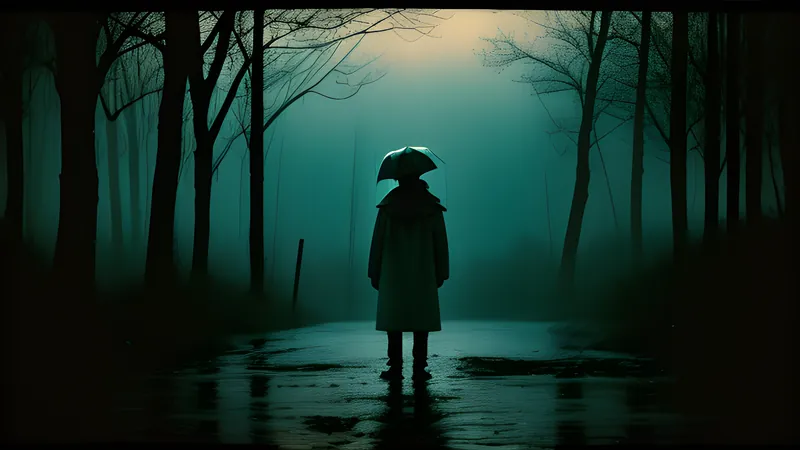
The engineering here is worth studying, because Prisoners generates its atmosphere through craft rather than shocks. The single largest contributor is Roger Deakins, whose photography drowns the film in perpetual rain, low winter light and a palette of wet slate and dead brown. There is scarcely a warm frame in the picture. Deakins shoots the town as a place where the sky never lifts, and Villeneuve holds shots a beat longer than comfort allows, so that the film seems to be pressing down on the characters from above. The famous opening image — a deer in the sights of a hunting rifle, a prayer murmured over it — sets the terms: everyone in this film is prey to something, and the hunters are not sure they are on the right side of the scope.
Villeneuve’s control of information is the other engine. He hands the audience small, ambiguous clues — a suspicious figure at a vigil, a house that feels wrong, a priest with a corpse in his basement — and lets them accumulate into a genuine maze. The maze is not a metaphor the film is shy about; it recurs as a literal motif, drawn and scratched by more than one character, and it names the film’s structure precisely. Every lead is a corridor that turns back on itself. The score by Jóhann Jóhannsson works the same way, a low drone of strings and industrial texture that rarely resolves, keeping the nervous system braced for a release that keeps not arriving.
What lifts this above competent misery is the moral seriousness Villeneuve brings to Dover’s torture. The film does not stage the beatings as catharsis; it stages them as degradation, filming Dover’s cruelty with a queasy, averted discomfort that implicates his desperation and refuses to cheer it on. Jackman plays a man watching himself become something monstrous and unable to stop, because stopping would mean admitting his daughter is gone. That is the review’s central claim: Prisoners is one of very few mainstream thrillers that takes torture seriously as a moral catastrophe for the torturer, and it is the reason the film outlasts its own plot mechanics.
The company it keeps
The obvious ancestor is the grim American procedural of missing persons and small-town rot, and the closest sibling is David Fincher’s Zodiac, which shares the fixation on investigation as a corrosive act and the refusal of a tidy solution — Loki is a close cousin of that film’s exhausted, consumed men. Prisoners also belongs to a small run of thrillers about the terrible certainty of people who believe they know the truth, and it plays as a darker companion to Christopher Nolan’s Memento, where a man builds his whole purpose on a conviction he has manufactured, and to the Coens’ No Country for Old Men, where the universe answers human confidence with pure, indifferent violence. All three understand that the scariest thing in a crime film is a person who is sure.
The verdict, then, before the line: Prisoners is that rare studio thriller that earns its length and its bleakness, a superbly built machine of dread that also has something uncomfortable and real to say. It occasionally over-plots — the maze has one or two corridors too many, and a couple of late coincidences creak — but the performances and Deakins’s photography carry it past its own excess. It is the film that announced Villeneuve as a major director before Sicario and Arrival confirmed it, and it remains his most punishing work.
Spoilers below
Everything from here assumes you have seen the film.
The solution, when it comes, is domestic and horrible. The abductor is not the disabled young man Dover has been torturing, who turns out to be a former victim himself. It is Holly Jones — the mild, elderly aunt figure played by Melissa Leo, hiding in plain sight the entire film. She and her late husband, having lost their own son to cancer, waged what she calls a war on God by abducting other people’s children, breaking parents’ faith in a loving deity by inflicting the same loss on them. The revelation reframes every scene: the whole apparatus of suspects and corridors was misdirection, and the monster was the person offering coffee at the vigil.
Villeneuve then delivers two endings, one savage and one exquisitely cruel. Loki, wounded, finds the surviving girl and gets her to hospital in a white-knuckle drive that is the film’s only burst of conventional heroism. Dover, meanwhile, has been drugged and dropped by Holly into an underground pit beneath her property — the same kind of hole he might have dug for someone else — trapped and unheard, his phone gone, no one aware he is there. His daughter is recovered; he is not.
The final shot is one of the great withheld resolutions in modern thrillers. Loki returns to the Jones house as the crime scene is being processed, standing in the cold, and hears — faintly, almost subliminally, buried in the sound design — the sound of an emergency whistle. Dover, in the pit, has been blowing the small whistle he once gave his daughter. Villeneuve cuts to black before Loki reacts, before anyone digs, before we learn whether the sound registers. It is a masterstroke of restraint. The film has spent two and a half hours arguing that certainty is the enemy, and it ends by denying us the one certainty we crave — that the father who became a torturer will be pulled out of the hole he helped the world dig. Whether he is saved is left to the whistle and the dark, and the film is far stronger for refusing to say.
Where to watch: Prisoners streams and discs widely; watch it on the largest, darkest screen you can, because Deakins’s photography does much of the work and a phone in a bright room throws most of it away.
Related Content