Predestination: The Heinlein Loop, Filmed Faithfully
A review of the Spierig Brothers' time-travel film, and the impossible short story it dared to adapt straight
Contents
Robert A. Heinlein published a short story in 1959 that has haunted science fiction ever since, a piece of clockwork so tightly wound that most writers regard it as unfilmable. It runs a single character through a time loop of such perfect closure that adapting it would seem to require either butchering the mechanism or losing the emotion. In 2014 two Australian brothers, Michael and Peter Spierig, made Predestination and did the almost unthinkable thing: they filmed Heinlein’s story nearly straight, kept the machinery intact, and found the human ache the original had always implied. It is one of the most faithful, and one of the strangest, science-fiction adaptations of its decade.
The setup, kept clean
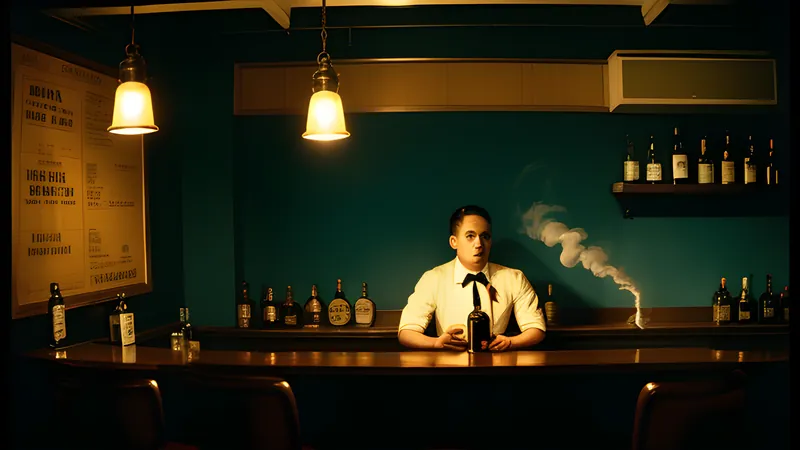
Ethan Hawke plays a Temporal Agent, an operative for a bureau that travels through time to prevent crimes before they occur. On what is meant to be his final assignment, he is hunting a terrorist called the Fizzle Bomber, an elusive figure who has evaded the bureau for years and is fated to kill thousands in 1970s New York. Working undercover as a bartender, the agent falls into conversation with a customer who claims to have the most unusual life story anyone has ever heard, and offers to tell it in exchange for a bottle.
That conversation is the engine of the film, and it belongs almost entirely to Sarah Snook. Years before Succession made her a household name, Snook carries the middle third of Predestination on a monologue of extraordinary difficulty, playing a character whose history is far more complicated than it first appears. To say much more above this line would collapse the film, because Predestination is a machine designed to spring exactly one trap, and half its pleasure is watching the parts move toward the click. The Spierigs know this, and they structure the first hour as a patient, almost stagey act of storytelling, trusting two faces in a bar to hold you. It is a bold thing to ask of a modern genre audience, a long conversation in a single room with the plot apparently on pause, and the film gets away with it because the story being told is so peculiar that you lean in without noticing the stillness. The Spierigs treat the monologue as their main event, and they are right to.
Why the faithfulness works
The temptation with a story this cerebral is to open it out — chases, spectacle, a bigger canvas to justify a feature running time. The Spierigs resist almost entirely. They add a framing thriller about the Fizzle Bomber and a few years of pursuit to give Hawke’s agent a spine of motive, and otherwise they let Heinlein’s structure stand. The decision pays off because the story was already a perfect closed circuit, and tampering with a closed circuit only breaks it. By keeping faith with the source, the film preserves the vertigo that made the story famous.
The craft is quietly precise. The Spierig Brothers, who had made the vampire film Daybreakers with Hawke a few years earlier, shoot 1970s New York and mid-century America with a warm, slightly unreal period sheen, the light always a touch too golden, as though the whole film is a memory being retold across a bar. The time-travel device is a plain violin case rather than a glowing gadget, a deliberately unshowy choice that keeps the focus on people. And the editing withholds and repeats information with real discipline, planting images early that only detonate once you understand what you have been watching. On a modest budget the film achieves its effects through structure and performance, which is the right instinct for material this interior. The score and sound work with the same restraint, favouring a plaintive, recurring melodic figure over any bombast, so that the emotional temperature stays low until the reveals arrive to raise it. Even the makeup and prosthetics, which have real work to do given the story’s demands, are handled with a tact that keeps the eye on the eyes.
Snook is the reason it lands. The role demands a range of register that would defeat most actors, and she plays every stage of the character’s life with a wounded, watchful intelligence that makes the eventual revelations feel earned rather than clever. Hawke, generous as ever, spends much of the film listening, and his stillness gives her room. The performances turn what could have been a dry logic puzzle into a story about loneliness and fate. That emotional undertow is what separates the film from a mere feat of engineering; you finish it moved as much as impressed, which is a difficult trick with material this schematic.
Where it belongs
Predestination sits in a rich modern tradition of small, brain-bending time-travel films that value idea and structure over spectacle. It is warmer and more classical than Shane Carruth’s Primer, which buries its mechanism in deliberate opacity and dares you to keep up, and it is more emotionally direct than Nacho Vigalondo’s tight Spanish loop Timecrimes, though it shares that film’s fascination with a character trapped in the geometry of their own choices. Where those films treat the paradox as a cold engine, Predestination treats it as a wound, which is the Heinlein inheritance the Spierigs understood best.
The film also honours the deepest ancestor of the form, the idea that time travel is finally a story about identity and memory folding back on themselves, the terrain Chris Marker mapped in La Jetée decades earlier. That lineage is worth chasing after this one.
The verdict, argued
Predestination is a genuine oddity: a mainstream-looking thriller that is really a chamber piece, a puzzle film that is secretly about grief and belonging. It will frustrate anyone who wants their science fiction loud, and its final act asks you to hold several impossible things in your head at once. Meet it on its terms and it is one of the most satisfying time-travel films of the last twenty years, anchored by a performance that announced a major talent before the world had noticed. It respects both its source and its audience, and it is that rare adaptation that improves on nothing and diminishes nothing. Snook’s work here reads even better in hindsight, now that her range is common knowledge; this was the film that proved it first, and it carries a weight of feeling most puzzle-box cinema never reaches for. Watch it cold, having read no further than this line, and let the machine do its work.
Spoilers below
Everything that follows gives away the loop.
The customer in the bar, the one who claims the strangest life story ever lived, was born a baby girl left at an orphanage, raised as a young woman named Jane, and later — after a pregnancy and a botched surgery following complications — transitioned and lived as a man. The child Jane bore was stolen from the hospital by a mysterious stranger. That stranger, it emerges, is the Temporal Agent himself, taking the infant back in time and leaving her at the very orphanage where the story began. The agent then recruits the man Jane became into the Temporal Bureau. And the young soldier who fathered Jane’s child, in an earlier encounter the agent arranges, is Jane’s own younger self.
The full closure is staggering when it lands: the character is their own mother, their own father, and the agent who engineers every step of their existence. There is no external origin anywhere in the chain — the person creates themselves, an ontological paradox with no first cause, the tightest bootstrap loop in the genre. Heinlein’s story ends on the agent’s lonely recognition of exactly this, and the film honours it.
The Spierigs then add their one significant flourish. The Fizzle Bomber the agent has hunted his whole career is revealed to be a future version of the agent himself, aged and unstable after too many jumps, arguing that his atrocities somehow prevent worse ones. Confronting him, the agent kills him, thereby stepping onto the path that will one day make him the very man he just destroyed. The loop reproduces itself and perpetuates its own violence, and the film’s last image leaves the agent alone with the knowledge that he is every point on his own circle. It is a bleaker coda than Heinlein wrote, and it fits.
If the closed loop leaves you hungry for its cousins, Timecrimes offers the same trap sprung with lean thriller mechanics, Primer offers the version that refuses to hold your hand, and La Jetée offers the quiet masterpiece all of them descend from.
Related Content