Possession (1981): Zulawski's Divorce as Apocalypse
A marriage ending, filmed as the end of the world
Contents
There is a kind of film you cannot recommend without a warning and cannot forget once you have seen it, and Andrzej Zulawski’s Possession (1981) is the reigning example. For decades it was hard to see at all, banned in Britain during the video-nasty panic, circulated on grey-market tapes cut to ribbons, mythologised by the people who had endured it. Time and a proper restoration have done it justice, and the film that emerges is not the exploitation curio its reputation suggested. It is one of the most harrowing accounts of a marriage ending ever committed to film, and it happens to contain a monster.
The set-up is domestic. Mark, a spy of some kind, returns to West Berlin from a job to find his wife Anna wants to leave him. There is another man, Heinrich, a preening spiritual narcissist. Mark spirals; Anna spirals harder; their small son drifts through the flat while both parents come apart. So far, so European art-house. Then the film discloses that Anna is keeping something in a derelict apartment across the city, a thing she is feeding and, in a scene the film does not blink from, making love to, a tentacled creature that is slowly taking the shape of a man.
The performance that broke the meter
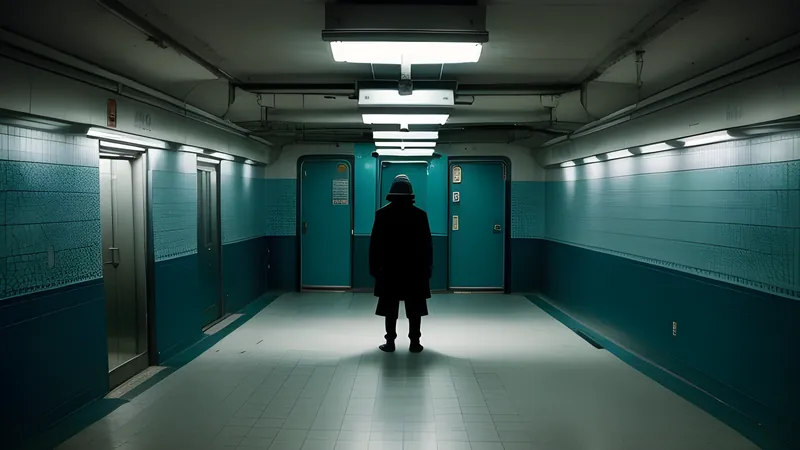
You cannot write about Possession without writing about Isabelle Adjani, whose work here won her the Best Actress prize at Cannes and remains one of the most extreme performances the cinema has on record. She is asked to play emotion at a pitch that would look ridiculous in almost any other film, and she commits so totally that it stops being acting you assess and becomes weather you shelter from. The film’s most notorious set piece is the underground passage sequence, in which Anna suffers a kind of miscarriage of the spirit in a tiled U-Bahn corridor, thrashing, keening, spilling milk and blood, for minutes on end. It should be unwatchable. It is unwatchable. It is also the truest thing in the film, because it externalises the moment a person’s interior collapses in a way no dialogue could.
Zulawski, a Polish director working in exile, wrote the script during the wreckage of his own divorce, and the film burns with that specific autobiographical fury. He does not dramatise a break-up so much as suffer one at you. His camera never rests; it circles, lunges, stalks the actors around the flat in long restless takes that keep you as unmoored as the couple. Bruno Nuytten’s photography drains West Berlin to concrete and cold light, and Zulawski keeps framing the couple against the Wall itself, so that the divided city becomes the divided marriage without a word of underlining. A relationship splitting in the one place on Earth built entirely around a division; the metaphor is right there in the location, and Zulawski trusts you to see it.
Body horror as the language of separation
The creature, designed by Carlo Rambaldi, the Italian effects master who built E.T. and the Alien head the year before, is the film’s masterstroke and its greatest provocation. On the page, a woman leaving her husband for a tentacled thing she is growing in a secret flat sounds like a bad joke. On screen it is the most literal possible rendering of an emotional truth: that when a marriage dies, the person leaving becomes unknowable to the one left behind, and the new thing they are becoming looks, from the outside, like a monster. Anna is not possessed by a demon in the exorcism sense. She is possessed by her own becoming, by whatever she needs to grow in secret in order to leave, and the horror is that Mark cannot follow her there.
This puts Possession at the fountainhead of a specific and enduring genre: body horror as the language of intimate collapse, and here the collector’s map gets interesting. The obvious sibling is David Cronenberg, and the timing is uncanny. Two years before Possession, Cronenberg made The Brood (1979), his own divorce film, in which a woman’s rage literally gestates into murderous children, born from external wombs on her body. Cronenberg and Zulawski, working continents apart, arrived at the same terrible idea in the same few years, that the end of a marriage is a monstrous birth. If you want to see where Cronenberg took the fusion of love, flesh and transformation, I wrote about it in The Fly and Cronenberg’s love story told in meat, a film that runs the same current through a different tragedy. And the paranoia that a loved one has become something alien, broadcasting on a frequency you cannot receive, is the engine of Videodrome and its prophecy about the screen.
What Zulawski adds to the Cronenberg strain is hysteria as a formal principle. Cronenberg is clinical, cold, a surgeon. Zulawski is operatic, drenched, a man screaming into a storm. Possession pushes the body-horror idea past the clinical into the religious, so that a divorce swells past private catastrophe into apocalypse, complete with doppelgängers, a pink-sock-wearing perfect double of Anna, and a final movement that reaches for the end of the world. It is the maximalist wing of the genre, and no one has ever been more maximalist than this.
Why it survives its own excess
The case against Possession is easy to make and worth stating honestly. It is exhausting. The performances operate at a scream for two hours, the plot around the spy business is deliberately incoherent, and the film demands a surrender that some viewers will refuse on principle and be right to. It is not a film you like. It is a film that happens to you, and whether that is worth submitting to is a genuine question, not a snobbish one.
My case for it is that the excess is a form of accuracy. Anyone who has been inside a marriage detonating at close range knows that the experience does not feel proportionate or coherent. It feels like the end of the world, like your partner has become a stranger housing something you cannot name, like the ground is coming up through the floor. Realist cinema, with its measured performances and its tasteful restraint, actually lies about this feeling. Zulawski’s hysteria is a more honest instrument. He filmed the emotional truth of divorce at the scale it feels, and to do that he needed a monster and a screaming woman in a subway and the Berlin Wall in the background, and he got all three.
Thirty-odd years on, its reputation has inverted. Once dismissed as a nasty, it now sits on serious lists of the great films about marriage, alongside its cold sibling in alien coldness, Jonathan Glazer’s study of a thing wearing a human shape, which I covered in Under the Skin and alien cinema at its coldest. Possession is the hot version of the same terror: that the person beside you is not who you thought, and never was.
It is essential, and it is not for everyone, and both of those things are true because of the same quality. Approach it as a horror film and it will overwhelm you. Approach it as the most extreme divorce drama ever made and it will devastate you. Either way it will not let go.
Where to find it: the restoration has finally made it easy, streaming on the arthouse-horror platforms and available on a definitive physical release. Watch it once. You will not need telling twice, and you may not manage twice.
Spoilers below
The film’s apocalyptic reach only becomes clear in its last movement, and it is stranger than any synopsis can carry. The creature Anna has been nurturing continues to develop until it becomes a perfect physical double of Mark himself. Her monster, the thing she left her husband to grow, resolves into a flawless copy of the husband, an idealised Mark without the failures of the real one. This is the film’s cruellest and most brilliant stroke: what Anna wanted was never another man at all but a version of Mark she could bear, and she had to build it from scratch in a secret room because the real one could not become it.
Mirroring this, there is a double of Anna abroad in the film, Helen, the boy’s schoolteacher, identical to Anna but serene where Anna is torn apart, wearing green eyes and pink socks, a corrected wife to match the corrected husband. The couple have each, in effect, been replaced by improved copies, which is exactly what a person feels watching an ex build a happier life with someone else: that they simply swapped you for a better-functioning version and carried on.
The ending detonates all of it. Mark and Anna die together in a stairwell, shooting it out, their bodies collapsing as the real marriage finally dies. The doubles remain. In the final scene the Mark-double comes to Helen’s door for the son, and the boy, terrified, drowns himself in the bathtub rather than open it, while outside the window the sky fills with what look like bombers, the apocalypse the film has been threatening arriving at last. Whether it is literal war, nuclear end, or the child’s private end of the world, Zulawski leaves open. What is not open is the meaning: the divorce and the apocalypse have become the same event, the personal cataclysm and the end of everything filmed as one, because to the family inside it there is no difference. That is the vision the film’s reputation as a video nasty buried for years, and it is why the restoration matters. Underneath the shocks is one of cinema’s most unbearable truths about how love ends.
Related Content