Pickup on South Street: Fuller's Pickpocket Cold War
A three-time loser lifts the wrong wallet, and Samuel Fuller refuses to wave the flag about it
Contents
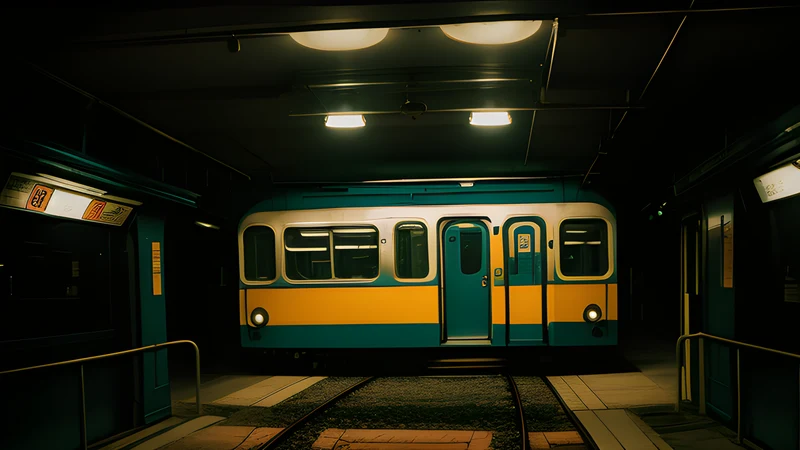
The first four minutes of Pickup on South Street contain almost no dialogue. A subway carriage, packed, swaying. A woman standing with a handbag. Two men watching her from a distance with the flat, patient faces of policemen. And a third man, close, whose eyes never meet hers, whose hand is doing something below the frame line while his face does nothing at all. Samuel Fuller directed the sequence in 1953 at Twentieth Century Fox, from his own screenplay, and it remains the best pure piece of silent filmmaking in the American sound cinema’s second act.
What the pickpocket takes out of Candy’s purse is a wallet. What is inside the wallet is microfilm. What is on the microfilm is a government secret, and the boyfriend who asked her to carry the purse across town works for people in Moscow. So begins a Cold War thriller in which nobody involved cares about the Cold War, which is precisely why the film is still worth ninety minutes of your evening and why J. Edgar Hoover reportedly wanted it stopped.
Everybody here is for sale
Skip McCoy (Richard Widmark) is a three-time loser. One more conviction and he is finished, and he steals anyway, because he is good at it and because Fuller’s characters do what they are for. Widmark plays him without a shred of the redemptive softening the part invites — Skip is arrogant, physically brutal to women, entirely without politics, and living in a shack on the East River waterfront where he keeps his beer cold in a box lowered into the water on a rope. It is one of the great screen dwellings, and it does the character’s whole biography in one shot.
Candy (Jean Peters) is a woman who has run errands for men her whole life and is running one more. Peters plays her with a terrific weary toughness — she is not innocent and not stupid, she has simply never been offered a job that was not somebody else’s idea. Her boyfriend Joey (Richard Kiley) is a nervy, ordinary man who happens to be a Communist courier, and Fuller films him as a small-time creep with a bad haircut rather than an ideological menace.
And then there is Moe. Thelma Ritter plays a police informer who sells neckties from a case and information from her memory, a small, tired woman who has been doing this so long that everyone in the film — cops, thieves, everybody — treats her with a kind of professional affection. She is saving for a burial plot in a decent cemetery, because the alternative is potter’s field, and she keeps the money in a box. The performance earned an Academy Award nomination and it is the reason the film has a soul. Moe sells people out for money, transparently and without apology, and she is the most morally serious character in the picture.
Why it works: Fuller’s face-first grammar
Fuller had been a crime reporter on the New York tabloids before he was anything else, and the influence is not thematic. It is grammatical.
His method here is proximity. He shoots faces enormous and close, cuts on physical movement rather than dialogue, and repeatedly withholds the establishing shot that would tell you where you are. The subway sequence works because Joseph MacDonald’s camera is inside the crowd rather than observing it — we are pressed against these people, we see the hand and the eyes and nothing else, and the geography of the carriage never resolves. Fuller is doing what a tabloid front page does: the image first, the caption later, and the reader assembling the story from fragments.
The waterfront material extends it. Skip’s shack, the dumbwaiter, the trapdoor, the beer on a rope — Fuller builds a whole physical world for a man who owns nothing, and stages the film’s climactic movement in it through pure spatial logic that he has taught you without ever announcing. He was a director who believed an audience would keep up, and he was right about that far more often than the industry expected.
The violence is the other signature. Fuller hits hard and briefly. A slap in this film lands with a shock that a modern viewer, armoured against forty years of choreographed brutality, still feels, because Fuller’s blows are ugly, off-balance and physically plausible, and because he cuts on the impact rather than through it. A man being dragged up a staircase in this picture looks like an actual man being dragged up an actual staircase.
The flag, and the trouble it caused
The film’s politics are the reason it survives, and they are entirely a matter of tone. This is an anti-Communist picture made at the height of the blacklist, released the year the Rosenbergs were executed, and its hero is a criminal who is invited to help his country and asks how much it pays.
Fuller’s screenplay gives Skip a line about waving the flag that is the film’s thesis in eight words, and the whole picture backs it. Skip does not care. Candy does not care. Moe’s objection to Communists, when she finally states it, is not ideological — it is that she has her limits and this is one of them, expressed as a matter of personal taste rather than doctrine. The state, represented by a federal agent and a police captain, is an irritant that keeps interrupting these people’s work.
Fuller told the story for the rest of his life of being summoned to a meeting where Hoover objected to the film’s portrayal of an FBI-adjacent world in which patriotism has no purchase, and of Darryl F. Zanuck backing his director. The details have been polished by decades of retelling, as Fuller’s stories were. The picture itself is the evidence that matters: the House Un-American Activities Committee was in session, and Fox released a film in which the Communist menace is a plot device and the actual subject is a woman saving up for a grave.
The French, when they released it, could not stomach the politics from the other direction and dubbed the Communists into drug smugglers, retitling it Le Port de la drogue. That a film could offend both the FBI and the French left in the same decade is a fair summary of Fuller.
Where it sits
For the collector, this is the film that shows what Fuller could do inside a major studio before he went independent. Pair it with Shock Corridor, made ten years later on his own money, and you can watch the same sensibility with the guardrails removed — the tabloid instinct, the enormous faces, the blunt social fury, all of it louder and stranger without Fox’s supervision. Then go to Underworld U.S.A. for the version where the tenderness has been surgically removed.
Its Cold War sibling is Kiss Me Deadly, two years later, which takes the same structure — a small-time operator stumbling onto a national secret he is too greedy to hand over — and drives it off a cliff into apocalypse. Aldrich blew the genre up. Fuller just declined to salute it.
And for Widmark, the essential companion is Night and the City, where Jules Dassin gives him another hustler with no future and lets him run through London until his legs give out. Widmark spent a decade playing men whose intelligence is entirely tactical, and Skip McCoy is the most complete version.
The verdict, with the machinery below the line: Pickup on South Street is the best film Samuel Fuller made and one of the most subversive pictures the studio system ever released without noticing. It is fast, ugly, superbly constructed, and completely uninterested in the ideology it is nominally selling. Its greatness rests on a stool pigeon in a tie case who wants a decent burial, and on a director who understood that the only patriotism his audience would believe in was the kind that costs somebody something. The Criterion edition is the standard.
Spoilers below
The film turns on Moe. Joey, hunting the microfilm, works his way down the same chain of informers the police used, and arrives at Moe’s room, and offers her money for Skip’s name. She has sold Skip’s name to the police already, for fifty dollars, cheerfully, as a business transaction. She will not sell it to Joey. Ritter plays the scene sitting on her bed, exhausted, past caring about her own safety, and tells him she is too tired to run and that she has reached the end of what she is willing to do. She asks him to make it quick, turns on her gramophone, and Joey shoots her.
It is the pivot of the film. Fuller has spent an hour establishing that everyone in this world is transactional, that Skip’s only value is price, and then he kills the one character who priced everything — and she dies refusing a sale. The scene is played almost entirely in Ritter’s face, with the record playing, and Fuller shoots her death without any of the brutality he applies elsewhere. It is the only gentle thing in the picture.
What follows is the film’s real argument. Skip does not turn patriot. He turns because Moe is dead, and because Moe’s burial money is now the only thing he can do for her — he pays for the plot, which is the single unselfish act in his life, and then he goes after Joey for reasons that are entirely personal. The state never persuades him of anything. A dead woman does.
The last act is Fuller’s spatial thinking paying off. Skip retrieves the microfilm, uses his waterfront shack’s geography against the men who come for him, and takes the fight into the subway — where the film began, and where Skip’s professional advantage is total. He beats Joey nearly to death on a station platform, in a fight staged with the same ugly plausibility as everything else, and hands him to the police along with the film.
Then Fuller closes on the joke. The police captain warns Skip that he will be back inside within a month, and Skip and Candy walk out into the street with their arms around each other, and Skip’s grin is exactly the grin of a man already thinking about the next wallet. Nobody has been reformed. Nobody has been converted. The country got its microfilm back and Moe got her cemetery plot, and Fuller lets the audience decide which of those was the point.
Related Content