Phenomena: Argento, Insects, and a Chimpanzee
A sleepwalking teenager who can talk to flies, a Scottish entomologist in a wheelchair, and the strangest film Dario Argento ever made
Contents
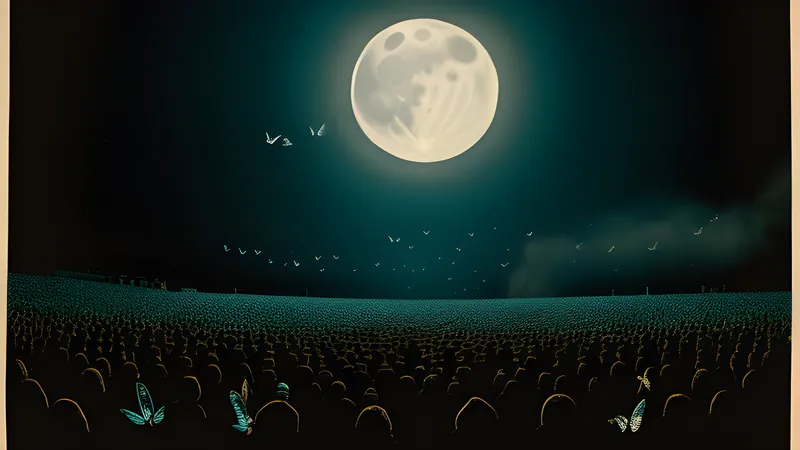
There is a moment, somewhere around the halfway mark of Phenomena, when you realise Dario Argento has stopped negotiating with you. A fourteen-year-old girl is standing in a Swiss meadow at night, arms slightly raised, summoning a cloud of insects to do her bidding, while Donald Pleasence — playing a forensic entomologist in a wheelchair whose research assistant is a chimpanzee — explains the emotional lives of flies in a Scottish accent. The film has an Iron Maiden track in it. The film also has a Goblin track in it. These two facts are not in conversation with each other, and Argento does not care.
Released in 1985 and hacked down by roughly half an hour for its American release under the title Creepers, Phenomena is the film where Argento’s dream logic finally slipped its leash entirely. It is a giallo, technically — there is a killer, there are murders, there is a solution. It is also a fairy tale, a school story, a forensic procedural and a piece of pure delirium. Coming after the glassy control of Tenebrae, it looks like the work of a director who had proven he could build a watertight machine and had decided, immediately and permanently, that he would rather build a dream.
The Swiss Transylvania
Jennifer Corvino, played by Jennifer Connelly at fourteen and already possessed of the grave, watchful stillness that would carry her career, is the daughter of a famous American film actor. She is deposited at the Richard Wagner Academy, a girls’ boarding school in a Swiss alpine valley where a killer has been at work. The valley has a reputation. The wind that comes down it is said to drive people mad. Jennifer sleepwalks, and on one of these night wanderings she witnesses something she should not have.
She also has an ability, which the film introduces with a complete absence of ceremony: insects love her. She can feel them, communicate with them, direct them. This is treated by the film as roughly as remarkable as being good at maths. Professor John McGregor, the entomologist played by Pleasence, is delighted rather than astonished, and recruits her — because a forensic entomologist who can ask the insects is a considerable professional advantage. Together they set about locating a corpse using the migratory instincts of a sarcophagus fly.
That premise deserves a moment of respect. Phenomena is built on forensic entomology — the reading of insect life cycles on a body to establish time and place of death — more than a decade before television procedurals made the idea common currency. Argento and co-writer Franco Ferrini took a genuinely obscure forensic science and made it the engine of a horror film, then attached it to a telepathic child. The research is real. The application is insane. That collision is the whole film.
Romano Albani’s wind
The craft argument for Phenomena rests on its photography, and specifically on how Romano Albani shoots air. Albani had lit Inferno for Argento five years earlier, and he brings the same instinct here: the sense that the space between things is charged and moving. The alpine exteriors are shot with a restless, gliding camera that treats the valley as a live antagonist — grass flattening, curtains breathing, the wind arriving before anything else does. The prologue, in which a young woman misses her coach and walks into the wrong house, is staged almost entirely as weather. Fiore Argento, the director’s daughter, plays her, and the sequence establishes the film’s rule before a word of plot lands: in this valley the landscape is already looking at you.
Then there is the score, which is the most deliberately incoherent thing Argento ever authorised. Claudio Simonetti and Bill Wyman supply the melodic material — the main theme is a lovely, aching thing, closer to a lullaby than a stinger. Against that, Argento drops in needle-drops from Iron Maiden and Motörhead, unmixed and unblended, at full aggression. The metal does not underscore the horror in any conventional sense; it arrives like a door being kicked open and then leaves. Watched now, it plays as a prophecy. Argento was using heavy metal as a texture of hostility years before the American horror soundtrack discovered the same trick, and he was doing it with the confidence of a man who thought the collision itself was the point. The film’s emotional register swings from Simonetti’s lullaby to Motörhead inside a single reel, and the whiplash is load-bearing — it keeps you off balance in exactly the way the plot needs.
Sergio Stivaletti handled the effects, his first job for Argento and the beginning of a long collaboration that would run through Opera and beyond. His work here is practical, wet and committed, and it earns the film’s most infamous sequence.
The ancestor nobody names
Everyone reaches for Suspiria when they discuss Phenomena, because both films involve a young woman sent to a European institution full of women who mean her harm. The comparison is fair and largely useless. Suspiria is an exercise in colour as assault; Phenomena is shot in cold naturalistic greens and greys, and its horror is biological rather than chromatic.
The real ancestor is older and stranger: the Val Lewton tradition of the heroine whose uncanny affinity marks her out as monstrous to everyone around her. Watch Cat People and then watch Phenomena, and the shape rhymes hard. Both films are about a young woman whose connection to the animal world is the truest thing about her and the reason she cannot be integrated into polite society. Jennifer’s classmates torment her precisely because her gift is real. The Lewton film keeps its transformation off-screen and lets suggestion do the work; Argento shows you a building coated in flies. The underlying proposition — that the girl’s link to the non-human is her dignity and her curse at once — is identical.
The second ancestor is the British boarding-school gothic, the tradition of the isolated institution where adults are useless and children are on their own. Argento almost certainly arrived at it by accident, but the film is structurally a school story with the safety removed, and its cruellest scenes are social rather than supernatural.
The case against, honestly
Phenomena is a mess. The plotting is arbitrary in ways that even a generous viewer struggles to defend — characters make decisions because the film needs a set piece, information arrives by coincidence, and the whodunit machinery is barely operative. The English dub, which is how most of the world met the film, flattens performances that were already being delivered in four different languages on set, a problem endemic to the era and one I’ve written about in the dubbing of Eurohorror. Connelly is asked to carry the film on a performance style — watchful, affectless, slightly sedated — that reads as either haunting or inert depending on your mood. And the chimpanzee, on which the climax partly depends, is a piece of storytelling so brazen that it has become the film’s punchline.
The Creepers cut, which removed around thirty minutes, made all of this worse rather than better. Excising the connective tissue from a film whose connective tissue was already gossamer left something close to abstract. A generation of viewers met Phenomena in that state and concluded, reasonably, that it was incompetent.
Watch the full-length version and a different argument becomes available. The incoherence is the texture. Argento has said this is among his own favourites of his films, and the reason is legible on screen: it is the one where he stopped pretending the plot was the reason he was there. Everything in Phenomena — the insects, the wind, the metal, the sleepwalking — is arranged to produce the sensation of being a young girl to whom the natural world speaks clearly and the human world does not. On that specific ambition, the film is close to flawless. Its defenders and its detractors are describing the same object and simply disagreeing about what a film is for.
Spoilers below
The killer is a child — the deformed son of Frau Brückner, the school’s matron, played by Daria Nicolodi with a performance that spends most of the film in careful, plausible warmth and then detonates. Brückner has kept the boy hidden and has been covering the murders, and the film’s final act reveals the domestic arrangement underneath: a mother’s absolute, unhinged devotion to a son the world would never accept, maintained through slaughter.
Argento delivers this in the sequence that made the film notorious. Jennifer, trapped in the Brückner house, falls into a pit of liquefied human remains — a swimming pool of decomposition and maggots, shot in full and at length, Stivaletti’s effects work doing exactly what it was hired to do. It is one of the genuinely unbearable set pieces of 1980s horror, and its power comes from duration. Argento simply refuses to cut away. The scene is a horror of biology rather than violence, which is consistent with everything the film has been doing: insects, decay, the body as a habitat.
McGregor’s death is the film’s cruellest move, because Pleasence has spent the running time as the one adult who believes Jennifer and treats her gift as a gift. Killing him removes the film’s only source of kindness and leaves Jennifer alone with the valley. Which is when Argento plays his final card: Inga, the chimpanzee, who has watched her master die, takes up a straight razor and comes for Frau Brückner.
It should be ridiculous. It is ridiculous. It is also, on its own terms, the only ending the film could have. Phenomena has spent ninety minutes arguing that the animal world is more perceptive, more loyal and more morally coherent than the human one, and that its heroine’s affinity with it is the thing everyone else calls madness. The chimp with the razor is the thesis discharging itself. Argento closes his most demented film with the animals passing judgement, and the joke is that he has earned it.
Where to watch: seek the full-length Italian cut — Arrow’s restoration presents the complete film with Albani’s cold greens intact and the Creepers butchery reversed. Follow it with Inferno to see the same cinematographer building weather indoors, or with Deep Red if you want the version of Argento who still cared about solving things.
Related Content