Outland: High Noon on Io
Peter Hyams put Sean Connery in a mining town orbiting Jupiter and ran the clock
Contents
Peter Hyams spent years insisting that Outland was not High Noon in space, which is the sort of denial that only works if nobody has seen High Noon. A lawman in a company town discovers a crime. The powerful men who run the town want it left alone. He refuses. They send for killers. Everyone he asks for help finds a reason to be elsewhere. He watches a clock. The film ends when the shuttle lands.
It is the same picture, beat for beat, and the interesting question is not whether Hyams stole it. It is why the theft works, when the genre’s landfill is stacked with westerns relocated to space that do not.
The setting is the argument
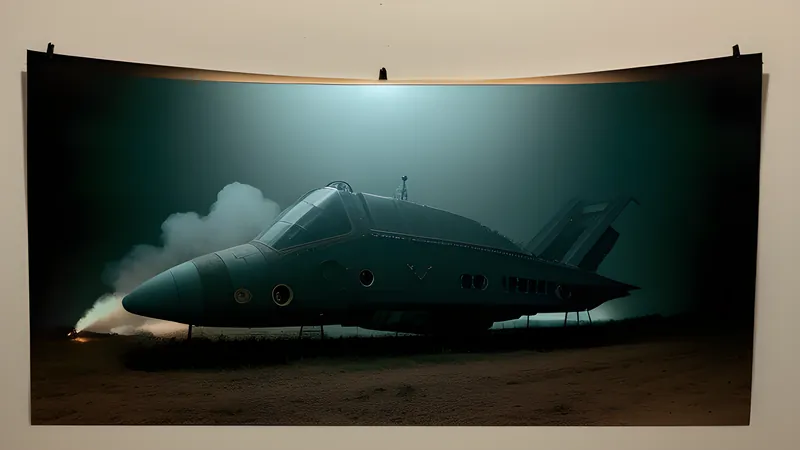
Con-Am 27 is a titanium mining installation on Io, the innermost of Jupiter’s large moons, staffed by contract workers on a rotation that grinds them down and pays enough to keep them coming back. Marshal William T. O’Niel (Sean Connery) is the station’s entire law enforcement — one man, one deputy who does not want the job, and a jurisdiction of a few thousand people who are all counting days.
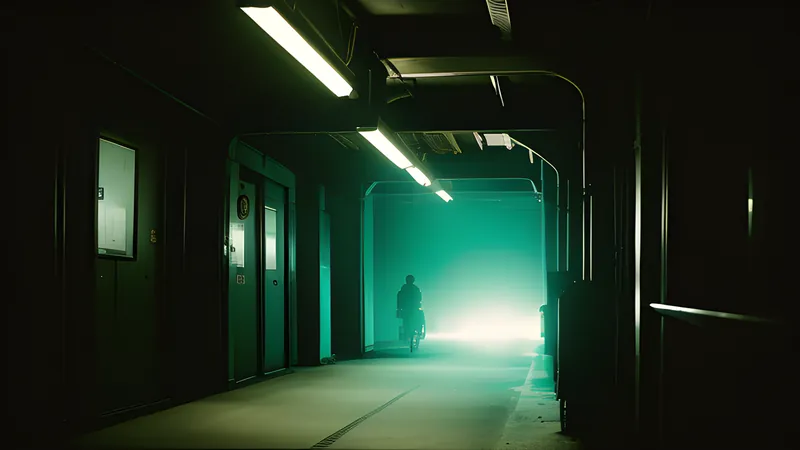
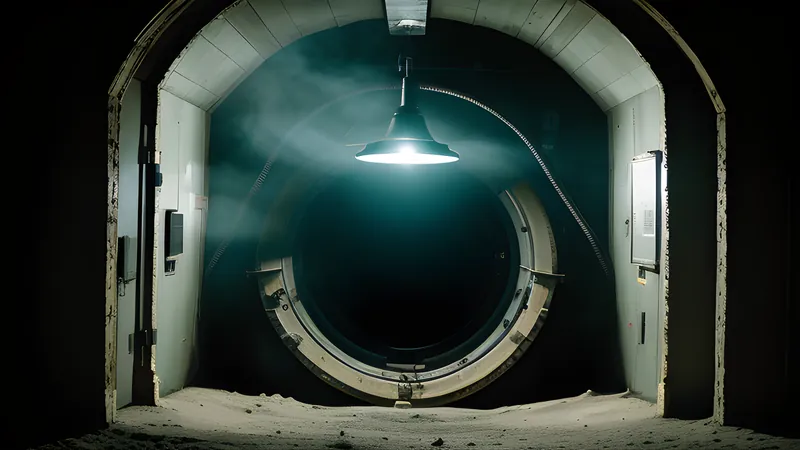
This is the thing Outland gets right before it gets anything else right. The station is not a wonder. It is a workplace, and a poor one. The corridors are grubby, the fittings are institutional, the recreation consists of a canteen, a gymnasium, a brothel and a bar. Production designer Philip Harrison built it at Pinewood as a real industrial plant — pipe runs, grating, wet floors, warning stripes — and it is dressed with the specific squalor of a place where nobody owns anything and everything is bolted down. The reason it reads as a frontier town rather than a set is that it is doing the same work a frontier town did: extracting a mineral, badly, for someone who is not there.
Hyams shot it himself, as he shot almost everything he directed. He lights the station in sodium and shadow, keeps the camera at head height, and refuses the wide establishing spectacle almost entirely. You never get a sense of Con-Am 27 as an object in space. You get it as a series of rooms, which is what a working life in one feels like.
The crime
Workers are dying. One rips his suit open on the surface and walks into vacuum. One climbs into a kitchen and screams about spiders that are not there. O’Niel, who is a competent policeman and nothing more, does what a competent policeman does: he asks for records, walks the ground, and has the bodies examined.
The drug is the film’s best invention. The station’s general manager, Sheppard (Peter Boyle), has been supplying the workforce with a stimulant that lets a man work fourteen-hour shifts at three times the pace. It raises productivity, it makes Sheppard’s quarterly numbers, and after ten or eleven months it induces psychosis. The company knows. The union knows — the union rep is on the payroll. Everybody knows. The arrangement is stable and profitable and the deaths are within tolerance.
That is a sharper piece of writing than the film is usually credited with. The villain is not a criminal conspiracy hiding from the law. It is a policy, operated in the open by a middle manager who is genuinely puzzled that anyone would object. Boyle plays Sheppard as a man with a job to do who has never once considered himself a bad person, and the scene where he explains this to O’Niel — reasonably, with figures — does more damage than any of the shooting that follows.
The craft: what the clock does
The reason High Noon’s structure keeps getting reused is that it is the most efficient suspense engine ever built, and the reason most reuses fail is that they take the clock and leave out the town.
Hyams keeps the town. Once O’Niel learns that two contract killers are on the next shuttle, the film becomes a series of refusals: he asks the station’s other authority figures for help, and each one declines for a reason that is entirely sympathetic. They have contracts. They have families rotating out in six weeks. They have a functioning arrangement with Sheppard that O’Niel is about to break. The deputy is not a coward; he is a man who has calculated the odds and prefers his pension. Cowardice in High Noon was a moral failure of a community. Cowardice in Outland is rational behaviour under an employment contract, and the update is precise.
The clock itself is handled with real discipline. Hyams cuts to the shuttle countdown on station displays, and — the good detail — he lets the numbers be boring. There is no urgency in the graphics. The station’s own systems are counting down to O’Niel’s death with the same indifference they count down to a meal service, because the station does not care. Jerry Goldsmith’s score does the caring instead, working a low, grinding ostinato under the waiting and then getting out of the way entirely for the last movement.
Frances Sternhagen’s Dr Lazarus is the film’s other structural masterstroke and its best performance. She is sour, tired, and openly reluctant, and her arc is the only one that moves: she helps O’Niel because he asks a second time and because she is bad at pretending she does not know what the autopsies mean. She and Connery play their scenes as two professionals doing unpleasant paperwork, and the film’s warmth is entirely contained in the fact that neither of them ever says they are friends.
The ancestor
The stated ancestor is High Noon, and Hyams’s protests notwithstanding, the debt is total. The more interesting ancestor is Alien, released two years earlier, and the debt there is textural rather than structural. Ridley Scott’s insight — that space would be filthy, contracted, and run by a company with a bonus scheme — is the entire physical premise of Con-Am 27, and Outland is one of the very few films of the imitation wave that took the right thing from it. Most of them took the monster. Hyams took the payslip.
The third parent is Silent Running, which established that a science fiction film could be about one man’s stubbornness inside an industrial installation and nothing else, and that the audience would follow him. And for where this lineage goes, the grubby working-class space picture has had a long, quiet afterlife — Prospect is the recent film that understands best that a frontier is mostly a job with poor safety standards.
There is one more comparison worth making. Its near neighbour in the release schedule was Saturn 3, which had more talent, more money and a better idea, and which is a mess. The difference is that Hyams knew exactly which film he was making from the first day. A rigid old structure, honestly rebuilt, beats a good idea with nobody steering.
The case against
The set pieces are the weakest part. Hyams stages his surface action in bulky suits at low speed, which is physically honest and dramatically inert, and the vacuum kills — the film’s one bit of genuine spectacle — arrive with a splashy effect that undercuts a picture otherwise built on restraint. There is a chase through the greenhouse that exists because the film needs one.
Connery is doing less than he could. He plays O’Niel with a granite reticence that suits the part and gives the film very little to hold on to in the quiet stretches, and the subplot with his wife and son leaving on an early shuttle is emotionally underwritten — a video message and a closed door, standing in for a marriage. The film needs that loss to land and it does not.
And the science is soft where it matters. Io is a volcanic hell with a radiation environment that would make a mining town impossible; the film wants the moon for its name and its sky. Fair enough, and it costs nothing, but nobody should be citing Outland as hard SF.
Where to watch: it circulates on rental platforms and has had a solid disc release. Watch it wide, in the dark, and pay attention to the walls. The film is an argument about labour disguised as a shoot-out, and the argument is in the set dressing.
Spoilers below
O’Niel sends his family off the station and stays. The killers arrive — three of them, hired by Sheppard through a broker — and the last third is a hunt through the installation, which is where Hyams’s fastidious geography earns its keep. You know where every corridor goes because the film has spent an hour walking you down them, so the pursuit is legible in a way that almost nothing in the genre manages.
The kills are staged as accidents of the environment rather than gunfights: a man goes out of an airlock, a man is put through a greenhouse wall, a man loses an argument with the pressure differential. O’Niel wins because he knows the building. That is the correct ending for a film about a workplace.
The best scene in the picture comes just before it. O’Niel, having been refused help by every man on the station, walks into the canteen and stands in front of the entire off-shift workforce, and they will not meet his eye. Hyams holds it. He does not have anyone give a speech. It is High Noon’s church scene with the sermon cut out, and the silence is more damning than Zinnemann’s argument was, because these men are not weighing a moral question — they are weighing a job.
Then Lazarus turns up with a shotgun. She is not there because she has been converted. She is there because she is the only person on Io whose contract does not depend on Sheppard’s numbers, and because she has read the autopsy reports and cannot un-read them. The film’s whole theory of courage is in that: nobody is brave, some people are simply less bought.
The last beat is the one that makes the film. Sheppard, cornered, is not arrested and not killed. O’Niel walks up and punches him in the face — once, without ceremony, the way you would hit a man who has irritated you at work — and then walks away to catch the shuttle out. No arrest, no trial, no justice. Con-Am 27 will hire a new marshal and a new manager and the drug will be back within a year. O’Niel got two months and a black eye out of it. Hyams lets the film end with the mine still running, which is the most honest thing about it.
Related Content