Onibaba: The Reed Field and the Demon Mask
Kaneto Shindo's 1964 folk horror grows terror out of the grass
Contents
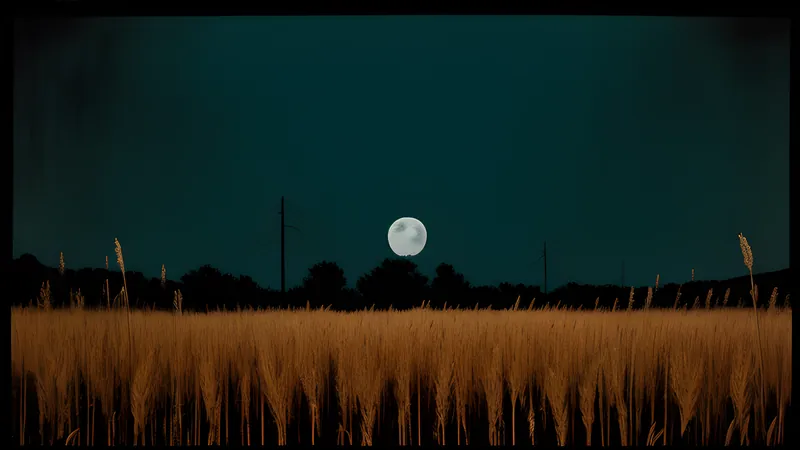
There is a shot Kaneto Shindo returns to throughout Onibaba — tall susuki reeds filling the frame, rippling in wind, hissing, going on forever with no horizon and no landmark. It is one of the most oppressive settings in horror, and Shindo grows almost his entire film out of it. Released in 1964, Onibaba is a Japanese folk-horror fable set during the medieval civil wars, in which two starving women murder stray soldiers in the grass and sell their armour to survive, until a demon mask enters the story and turns their arrangement inside out. It is lurid, ferocious, and among the most physically sensual horror films ever made.
Hunger in the grass
The premise is stripped to the bone. A middle-aged woman and her younger daughter-in-law live in a hut hidden in a vast field of reeds, waiting for the son who has been conscripted into a war that has scorched the country. To eat, they ambush lost or fleeing samurai, drop the bodies into a deep black hole in the earth, and trade the stripped armour and weapons to a merchant for millet. This is subsistence by predation, and Shindo, a director with a lifelong socialist streak and a horror of war rooted in his own experience of a Japan flattened by conflict, never lets you forget that the horror here begins in hunger. The women are monstrous because they are starving, and they are starving because men elsewhere decided to make war.
When a neighbour named Hachi returns from the front with news that the son and husband is dead, the fragile economy of the two women fractures. Hachi wants the young widow; the young widow, alive with a desire the war and the reeds had suppressed, begins slipping through the grass at night to his hut. The older woman, watching her ally and her livelihood walk away — and stirred by her own unspoken hungers — grows desperate to stop it. Into this three-body problem of appetite and dependence, Shindo introduces a mask.
The mask and the hole
Two objects organise the film’s terror, and both are simple enough to be primal. The first is the black pit in the reeds, into which the bodies go — a bottomless dark that the camera peers into and that comes to feel less like a hole in the ground than a hole in the moral world, an entrance to something. The second is a hannya mask, the horned demon face of Noh theatre traditionally worn to represent a woman consumed by jealousy and rage. When a samurai wearing such a mask blunders into the older woman’s ambush, claiming he wears it to keep his beautiful face from being scarred, the mask passes into her possession, and she conceives of using it to frighten the young widow away from her nightly journeys to Hachi.
The choice of a hannya mask is not decoration; it is the film telling you what it is about. In Noh, the hannya is the outward form of a woman’s inner torment, the point at which jealousy curdles into the demonic. Shindo takes that theatrical convention and makes it literal horror: the older woman, eaten by a jealousy she cannot name, puts on the face of the demon her feelings have already made her. The collector’s pleasure of Onibaba is watching a filmmaker reach back into his own culture’s oldest performance tradition and weaponise it for the cinema, so that a mask which had meant one coded thing on the Noh stage for centuries becomes, on the screen, a device of genuine terror.
Why it works
The craft is astonishing, and it starts with the cinematography of Kiyomi Kuroda. The reed field is shot in high-contrast black-and-white with the grass in constant motion, so that the frame is never still — the reeds hiss and sway and hide things, and the wind through them is a sound the film uses like a score. Shindo and Kuroda place the camera low, inside the grass, so that the world has no wider geography; there is only this claustrophobic sea of vegetation, the hut, the hole, and the sky. The effect is to make an open field feel more enclosed than any haunted house. There is nowhere to go and nothing to see but grass, which means anything could be a step away in the swaying green.
The film is also frankly, insistently physical. Sweat, mud, bare skin, heat, the animal urgency of hunger and desire — Shindo shoots the body with a directness that was startling in 1964 and remains bracing. The eroticism is inseparable from the horror; the same appetite that drives the young widow to Hachi drives the whole grim machine of survival, and Shindo refuses to separate the desire to live, the desire to eat, and the desire for another body. That fusion is the film’s engine. The horror does not arrive from outside the human; it grows out of the most ordinary human hungers pushed past their limit by war and want.
Onibaba stands near the head of a great tradition of Japanese horror that draws on folklore, theatre and the ghost story, and the collector’s move is to place it beside its kin. It shares a year and a sensibility with the painterly, theatre-derived ghost stories of Kwaidan, Masaki Kobayashi’s anthology from the same period, which likewise mines the Noh and kabuki traditions for cinematic dread — the two films together map how mid-sixties Japanese cinema turned its classical performance heritage into horror. And its deep folk-horror logic, in which an isolated community’s beliefs and appetites breed their own monsters, connects it forward to the Western folk-horror canon, to films like The Witch, where a family cut off in a hostile landscape generates a terror out of their own repression and fear. Onibaba is what folk horror looks like when it grows from the reeds of medieval Japan rather than the forests of Puritan New England, and the family resemblance across that distance is the pleasure of watching them side by side.
If there is a limit, it is that the film’s fable structure keeps its characters at the level of archetype. These are figures in a parable — the old woman, the young widow, the man — more than fully rounded psychologies, and viewers who want interiority may find the film schematic. But the schematic quality is the point of a fable, and Shindo’s images supply an emotional and sensory density that the archetypes alone could not. You do not watch Onibaba for character study. You watch it to be pulled down into the grass and the heat and the hole.
The verdict
Onibaba is essential world horror and one of the films that should be pressed on anyone who thinks the genre is a Western invention or a recent one. It has been championed for decades by critics and filmmakers — its imagery of the demon mask and the reed field has echoed through horror ever since, and directors who came up on it have paid it back in homage. It arrived at a moment when Japanese cinema was doing extraordinary things with its own folklore, and it remains the fiercest and most physical of those achievements.
Watch it in the best black-and-white transfer you can find, on the largest screen available, and let the sound of the reeds fill the room, because the wind in the grass is half the film. Come to it for the demon mask and stay for the discovery that the demon was never in the mask at all. It is a folk tale with the heat turned all the way up, and it has lost none of its power to disturb.
Where to watch: the film has been restored and circulates on the arthouse and world-cinema streaming services and on premium physical media from the classic-film labels; the restoration matters, because the entire film is a study in what black-and-white can do with grass, skin and shadow.
Spoilers below
Stop here if you have not seen it.
The older woman’s scheme is to terrify her daughter-in-law out of visiting Hachi, and the mask is her instrument. She waits in the reeds along the young woman’s night path, wearing the hannya demon face, and leaps out — a demon in the grass — and the terrified widow flees back to the hut, convinced that her desire is being punished, that the demon is a judgement on her lust. Night after night the old woman does this, and it works: the widow’s guilt and fear begin to break her nerve. The film sharpens the irony to a point, because the older woman has literally become the demon of jealousy that Noh drama uses the hannya to depict. Her inner state and her disguise have merged.
Then the scheme turns on its author, and the turn is the film’s masterstroke. After a night of rain, the older woman finds she cannot remove the mask. It has fastened to her face — swollen to her skin, fused there. She begs the young widow to help pry it off, the alliance briefly restored by shared terror, and when at last it is wrenched away, the flesh beneath is revealed to be ruined, pitted and disfigured, ambiguously by disease and by the punishment the mask has enacted on her. The samurai who wore it, we recall, claimed the mask hid a beautiful face from harm; on the old woman it has done the opposite, hiding and then destroying the face beneath.
The final image sends the woman leaping across the black pit, her ruined face bared, crying out that she is not a demon — a human being, she insists, even as she looks like the thing she pretended to be. Shindo freezes on the leap, over the hole that has swallowed so many bodies, and leaves her suspended there between the human and the monstrous. It is a perfect closing figure for the film’s whole argument: the mask did not make her a demon, and taking it off did not make her human again. The demon was the jealousy and the hunger all along, and the mask only gave her true face a shape she could no longer take off. The reed field goes on hissing, indifferent, ready for the next lost man.
Related Content