Ms. 45: Ferrara's Mute Avenger of the Lower East Side
A seamstress, a stolen pistol, and the most controlled film Abel Ferrara ever made
Contents
The tape came to me the way most of the good ones did: mislabelled. My copy was a UK release under the title Angel of Vengeance, which is how the film travelled through a lot of Europe, and the cover promised something far stupider than what was on it. I was expecting a Death Wish knock-off with a woman in the Bronson role. What arrived instead was eighty-odd minutes of a film that has been thinking about its own premise harder than I was.
Ms. 45 came out in 1981. Abel Ferrara directed it from a script by Nicholas St. John, the schoolfriend who wrote almost everything Ferrara made for twenty years, and the two of them had already put out The Driller Killer two years earlier. The lead is Zoë Tamerlis — later Zoë Lund — who was seventeen when it was shot and who plays Thana, a mute seamstress in the garment district. She is attacked twice on the same day by two different men. She kills the second one in her own apartment, takes his .45, and begins carrying it out into the city at night.
That is the whole engine. What Ferrara does with it is the reason the film survived the video shelf.
The city does most of the work
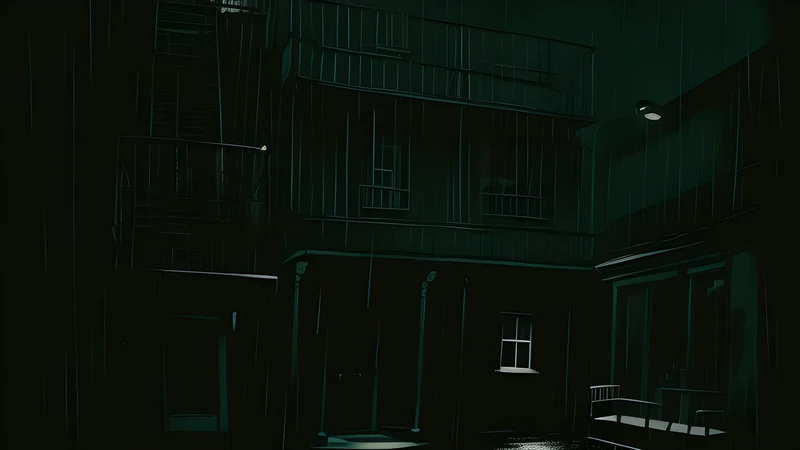
Ferrara shot in the streets he lived in, and the film is soaked in a New York that has been thoroughly demolished since. The garment district is a place of low ceilings, sewing machines, a leering boss, and a stream of unwanted commentary from the pavement. Thana walks through it silently while everyone else talks at her. The film establishes the harassment as ambient weather before it escalates to violence, which is a much better piece of construction than it gets credit for: by the time the plot proper starts, the audience has already spent a reel understanding that the city talks and Thana does not.
The pacing after that is where it gets interesting. Ferrara refuses to let the killings settle into a rhythm you can enjoy. Some are dispatched in seconds. Some go on long enough to curdle. One is set up as a straightforward predator-meets-predator beat and then swerves into something genuinely sad. The film keeps adjusting the moral temperature so you never get comfortable in the seat, and that discomfort is deliberate rather than accidental.
James Momel’s photography deserves more attention than it usually gets. He shoots the exteriors flat and grubby and then finds real depth in the interiors, particularly Thana’s apartment, which the film slowly turns from a refuge into a crime scene she is living inside. Joe Delia’s score is doing something similar — it starts as functional low-budget synth work and gradually becomes the only voice in the film that speaks for its protagonist.
Why the silence works
The mutism is the film’s single best decision, and it works on three separate levels at once.
Mechanically, it strips out every scene the genre normally uses to justify itself. There is no monologue where the heroine explains her philosophy of vengeance. There is no confrontation with a detective where she articulates her rage. There is no friend she confides in over coffee. All the connective tissue that a revenge film uses to keep the audience on side has been surgically removed, so Ferrara has to earn everything through blocking, framing and Lund’s face. He mostly does.
Performatively, it forces Lund into a style that is closer to silent cinema than to 1981 acting. She plays enormous emotional swings using her eyes, her posture, and the speed at which she moves through a room. Watch her get faster as the film goes on. In the first act she edges around obstacles; by the third she cuts straight through crowds. Nobody says a word about it, and it is the clearest character arc in the picture.
Thematically, the silence closes off the exit. A talking avenger can be argued with. The film can put a sensible person in front of her and let the audience side with the sensible person, which is exactly how Death Wish protects itself. Thana cannot be argued with because she cannot be spoken to, only spoken at, which is what got her here. Ferrara has built a machine that will not let you resolve the film’s politics on the film’s behalf.
One more piece of craft deserves the credit it never gets: the film’s handling of time. Ms. 45 covers a few weeks and it tells you so entirely through Thana’s clothes, her make-up and the state of the fridge. There is no calendar, no caption, no helpful line of dialogue about how long this has been going on. Ferrara measures the descent in wardrobe, and the transformation from a woman who dresses to disappear into a woman who dresses to be looked at is the film’s whole second act, delivered without a word of exposition. Shot on the money this film had, that is a genuinely elegant solution to a structural problem most directors would have thrown a montage at.
There is one more thing worth noticing: Ferrara casts himself as the first assailant, under his old pseudonym Jimmy Laine. Read that however you want. It is at minimum an unusual amount of self-implication for a director working in a genre that normally keeps its hands clean.
The real ancestor
Everybody files this next to I Spit on Your Grave (1978), and the shelving is understandable — same decade, same shape, same arguments in the letters page. It is the wrong ancestor. Meir Zarchi’s film is a wilderness picture built around endurance and duration. Ms. 45 is an urban picture built around invisibility.
The better line of descent runs through the mute-woman-in-peril thriller and the Polanski of Repulsion (1965): a young woman alone in an apartment, a world of male attention pressing on the walls, and a slow slide where the film’s grip on reality becomes indistinguishable from hers. Ferrara has taken Carol’s apartment from Repulsion and handed the occupant a firearm. Once you see that, the last act’s dream logic stops looking like a budget compromise and starts looking like the point.
If you want the descendants, they are everywhere and they are usually softer. The whole strand of stylish, sympathetic, well-lit revenge cinema that runs to the present day owes this film a structural debt it rarely pays, and it almost always restores the thing Ferrara removed — the explanatory dialogue that lets everyone off the hook. For the wider argument about what that genre does and does not manage, I have written about the rape-revenge film and its uneasy politics elsewhere; Ms. 45 is the film that makes the hardest case for the defence.
For the New York of it, the closest sibling is Basket Case, shot the following year in the same city on comparable money, and burdened with the same problem: how to make a cheap film look like it is about something. Both solve it by pointing the camera at streets that were already a subject.
The case against
It is not airtight, and pretending otherwise does the film no favours.
The film’s first reel is its weakest. Ferrara needs to establish the garment district, the harassment, the boss and the neighbours before he can start, and the establishing is broad enough that a modern viewer may check out before Thana does anything. The second assault is also staged with a lack of care that sits uneasily against how precisely everything after it is handled.
The Halloween party climax is a tonal lurch that some viewers never recover from, and the film’s grip on plausibility loosens badly in the last twenty minutes. The supporting characters are thin — the landlady and her dog are broad comic relief that belongs to a different picture, and the boss is a cartoon. Zoë Lund is doing genuinely remarkable work, and much of the cast around her is doing something closer to what you would expect from a film shot this fast for this little.
And there is the persistent charge that the film has it both ways: that Ferrara’s camera is drawn to Lund in a manner that undercuts the critique. I do not think that objection is stupid. I think the film is more aware of it than its detractors allow — the final act specifically dresses her in the most loaded costume available and stages the men’s reaction to it as the joke — but a viewer who finds the whole thing leering has evidence, and I would not try to argue them out of the room.
What survives all of that is the control. Ferrara made a lot of films after this, several of them better-funded and one or two of them better. He never again made one this economical. Every shot in Ms. 45 is doing a job.
Where to find it: boutique labels have kept it in print on disc in restored form for years now, and it surfaces on the horror-leaning streaming services in rotation. Avoid the old pan-and-scan tapes if you can — the framing is half the argument. Pair it with The Driller Killer if you want to watch a director find his footing between two films, and read Grindhouse double bills and the death of 42nd Street for the exhibition world it was built to play in.
The verdict is straightforward. This is the most disciplined film Abel Ferrara ever made, and it is the rare revenge picture that leaves the audience holding the bag rather than the gun.
Spoilers below
The ending is what people argue about, so here it is.
Thana’s spree escalates until she arrives at the office Halloween party dressed as a nun, with the .45 under the habit, and starts shooting the men in the room. The costume is the film’s thesis stated out loud for the only time: the culture has exactly two available shapes for her, and she has put on the sanctioned one in order to use the other.
She is stopped by her colleague Laurie, who stabs her in the back. Thana’s last word — the only word she speaks in the entire film — is “sister”. Then Laurie is left standing over the body while the surviving women in the room look on.
That final beat is the reason the film outlives its genre. The vigilante picture normally launders its violence by sending the avenger down under police fire; Ferrara has a woman kill her. Thana is stopped by another victim of the same city, and the film ends on her face rather than on any kind of resolution.
Whether that is a critique of the revenge fantasy or simply the most upsetting way to end one is a question the film declines to answer, and it is the better for the refusal.
Related Content