Mother (2009): Bong's Ferocious Maternal Thriller
Bong Joon-ho cast Korea's most beloved television mother and then asked her how far she would actually go
Contents
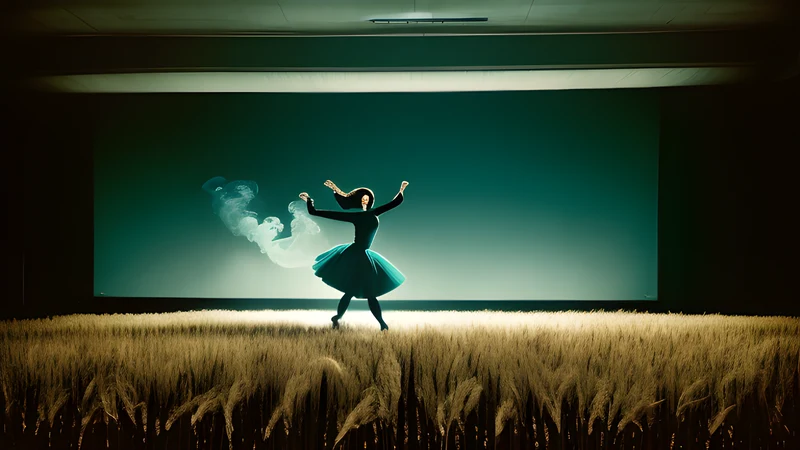
Mother opens with a woman walking into a field of dry reeds, stopping, and beginning to dance. There is no music at first. She is middle-aged, alone, in the middle of nowhere, and her face is doing something that is not quite joy and not quite grief. It goes on far too long. Then the title card arrives and the film has not explained a single thing.
Bong Joon-ho has said the image came first and the film was built to reach it, which is a very Bong thing to say and, unusually, appears to be true — the whole picture is engineered so that by the time you understand the dance you will wish you did not. It is the best cold open in his filmography, and it is doing something a lot more precise than atmosphere. It is telling you that this film’s subject is a woman’s face, and that you will not be able to read it.
The setup
An unnamed woman — credited only as Mother, played by Kim Hye-ja — lives in a small provincial town where she sells medicinal herbs from a cramped shop and performs unlicensed acupuncture on the side. Her son Do-joon (Won Bin) is twenty-seven and mentally impaired; she watches him constantly, sleeps beside him, feeds him, and cannot stop.
A schoolgirl is found dead. The local police, working with the enthusiasm of men who would like the paperwork to end, arrest Do-joon on evidence that would not survive an afternoon’s thought. His mother, who knows he did not do it because she cannot survive the alternative, sets out to prove it herself.
That is a detective story, and Bong shoots it as one — the interviews, the legwork, the golf ball, the sequence of small deductions. What he has changed is the detective. She has no authority, no resources, no training, and a disqualifying interest in one particular answer.
The casting is the argument
To understand what Mother is doing you need one piece of context that does not travel automatically outside Korea. Kim Hye-ja was, for decades, the most famous mother in the country — a television actress who had spent something like thirty years playing warm, self-sacrificing, endlessly forgiving maternal figures in the national broadcaster’s domestic dramas. She was an institution. Casting her here is roughly equivalent to building a film around a beloved children’s presenter and then asking the audience to watch her do this.
Bong knew exactly what he was buying. Kim’s performance works by drawing continuously on the goodwill she brings with her and then spending it. Her devotion is played straight, without irony, in a register audiences had been trained on for a generation — and the film’s method is to hold that register steady while the situation curdles underneath it. She is never revealed to be a monster. She is doing, at every moment, what a mother in one of her old dramas would do. The film’s horror is that she never stops.
Won Bin, meanwhile, was a beautiful matinee star, and Bong casts him as a young man whose face is empty. Do-joon’s impairment is not played for pathos or tics; he is petulant, occasionally cruel, easily led, and possessed of a terrible eagerness to please. The two performances are locked together — she reads emotions into him that his face does not contain, and the film lets us see her doing it.
The craft: Bong’s tonal gearbox
The standard line on Bong is that he changes tone constantly, and the standard line is right but under-specified. What he actually does is refuse to let any single scene commit to a genre, so the audience is never given a stable emotional posture.
Watch the police interrogation. It is broadly comic: the officers are lazy and dim, the procedure is a farce, and a lesser director would let you laugh. Bong keeps the camera on Do-joon’s incomprehension, so the laugh is available and it curdles in your mouth. The joke and the atrocity are the same shot. He does this over and over — the ludicrous lawyer in a karaoke room, the golf-club business, the drunk detective — and every time the comedy is real, which is what makes it unbearable.
Hong Kyung-pyo’s cinematography does something similarly disciplined. The town is shot in flat greys and browns, in weather, with a lot of horizontal frames — a place with no vertical ambition. Then, at intervals, Bong grants a single overwhelming composition: the reed field, a rooftop, a bus window at dusk. The film rations beauty, and it gives it to the mother at exactly the moments when she is furthest from deserving it.
The other craft point worth naming is the withholding of the crime. Bong’s structural rule here is that we are never given a scene the mother has not earned access to. Her investigation is our investigation, and her blind spots are our blind spots. This is the opposite of Blood Simple, where the Coens hand the audience the complete picture and let us watch the characters flail beneath it. Bong locks us inside a single head, and the head is not a reliable place to be.
The real ancestor
The obvious pairing is Bong’s own Memories of Murder, and the films rhyme deliberately: incompetent provincial police, a dead girl, a suspect who cannot defend himself, a rural Korea the state has stopped visiting. But Memories of Murder is a film about institutional failure. Mother is a film about a single person’s love working exactly as designed, and the difference is the whole point. The police in Mother are useless, which is the premise, and the film is not interested in indicting them. It is interested in what rushes into the vacuum.
The more useful ancestor is older and further away: the amateur-detective tradition in which the investigator is disqualified by their own stake. Hitchcock ran this repeatedly, and Klute reversed it by handing the film to the witness rather than the detective. What Bong adds is the corruption of motive at the root. Most compromised detectives discover their bias partway through. The mother’s bias is not a flaw in her method. It is her method.
If you want the full map of the desk’s Bong coverage, Bong Joon-ho: genre as scalpel lays out the pattern across the filmography, and Korean genre cinema: ten to start with puts Mother in its national context.
The case against
Mother is a slower film than its reputation, and the middle hour sags in a specific way: the mother’s investigation produces a sequence of leads that function more as tonal set pieces than as deductions, and a viewer engaged with the mystery as a mystery will feel the film losing interest in it. Bong is using the detective structure as a delivery mechanism, and there are stretches where the mechanism is visible.
There is also a real question about Do-joon. The film needs his impairment to be legible and unspecified at the same time — legible enough that the police arrest him, unspecified enough that the audience cannot form an independent judgement. Won Bin plays it without condescension, and Bong avoids the worst traps, but the character is finally a device. He exists to be unreadable, and a person who exists to be unreadable is not quite a person.
And the film’s use of the schoolgirl, Ah-jung, is thinner than the film’s ambitions. She is a body and a set of rumours. Bong gestures at her circumstances late, and the gesture is powerful, but the film has spent ninety minutes treating her as the mother treats her — as an obstacle.
Where it leaves you
Mother premiered at Cannes in 2009 in Un Certain Regard and has settled into the odd position of being the Bong film that people who love Bong name when they want to be taken seriously. It is on the usual services, and there is a Criterion edition worth having for the interviews with Kim Hye-ja, who talks about the role like someone describing a place she visited once and would rather not discuss.
Watch it second, after Memories of Murder. The two films are one argument.
Spoilers below
Do-joon did it.
That is the fact the film is built to withhold and then deliver without ceremony. He killed Ah-jung — clumsily, in a rage, over an insult he half-understood — and the mother learns it from the one witness: Jong-pal, the junk dealer, who saw the whole thing and tells her about it plainly, without malice, in his shack. He is not blackmailing her. He is an old man explaining something.
She beats him to death with a wrench and burns the shack down.
This is the film’s actual hinge, and it is why the detective structure had to be so scrupulous. Every deduction she made was real. Her investigation worked. She found the truth, and the truth was unusable, so she destroyed the only person carrying it — and the film’s cruelty is that the murder is committed by the same love, in the same register, with the same total sincerity, that made her admirable in reel one.
Then the state completes the joke. Another young man, Jin-tae’s acquaintance — an orphan with no family, no advocate and no mother — is arrested for Ah-jung’s murder on evidence as bad as the evidence against Do-joon. The police are delighted. The mother goes to visit him in custody and asks, weeping, whether he has anyone. He does not. She has bought her son’s freedom with a boy who has no one to do for him what she has done, and she knows it, and she leaves.
The dance is the last piece. On a bus with a group of older women, drunk, on a day trip, she takes out her acupuncture needles and finds the point on her own thigh that she has told us, earlier in the film, will unlock the knot of a terrible memory and let it go. She uses it on herself. Then she gets up and dances, in silhouette, in a bus full of dancing women, as the sun goes down.
Which sends you back to the opening. The woman in the reed field was not dancing in grief or in madness. She was dancing in the specific, chemical, self-administered absence of a thing she has chosen not to carry. Bong put the ending at the beginning and dared you to look at it before you could read it. Kim Hye-ja’s face in that first shot — the thing you could not name for two hours — is a woman who has successfully forgotten what she did, and the forgetting has not taken.
Related Content