Millennium Actress: Kon's Love Letter to Cinema
A revisit of Satoshi Kon's 2001 feature, in which an interview becomes a filmography becomes a life
Contents
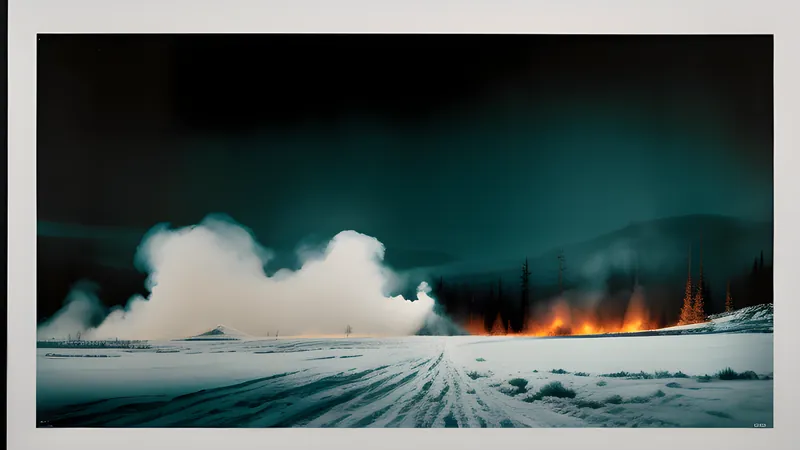
An old woman sits down to be interviewed about her career. She begins to talk. Within a minute the room is gone and she is a teenager in the snow, and the documentary crew who came to record her are standing in the snow too, holding their camera, in a memory they were never present for. Millennium Actress establishes its entire method in about ninety seconds and then spends eighty minutes proving it can sustain it. Satoshi Kon made it in 2001, between the paranoid nastiness of his debut and the firework display of his last film, and it is the warmest, most generous thing he ever put his name to.
The interview that will not stay in the room
Chiyoko Fujiwara was one of the great stars of Japanese cinema and has lived as a recluse for decades. Her old studio is being demolished. Genya Tachibana, a documentary filmmaker who has waited his whole life for this, arrives with his cameraman Kyoji Ida to record an interview, and he brings her a gift: a key, long lost, that she recognises instantly.
She starts talking, and the film never returns to the interview as an interview. Her account of her life runs continuously through her memories and through the films she made, with no seam between them. A period drama she starred in and the actual Japan of the 1930s occupy the same shot. A running figure in a costume picture becomes a running figure in a war, then in an earthquake, then on a soundstage, and the film declines to tell you which of these is real because Chiyoko’s account has stopped distinguishing.
Genya and Ida are dragged along. This is the film’s best joke and its best structural idea: the interviewer physically enters the story he is recording, complete with camera and boom, occasionally in costume, occasionally intervening. Ida spends the film in a state of professional bewilderment. Genya spends it in bliss.
The chase, and the man who is barely there
The engine underneath all this is simple to the point of fable. As a girl in the 1930s, Chiyoko shelters a young man on the run from the authorities — a painter, wanted for what the state of the day considered dangerous thinking. He is wounded. She hides him. He leaves before she wakes, and he leaves the key behind, telling her it opens the most important thing there is.
She takes an acting job in Manchuria because it will take her towards where she believes he has gone. She takes the next job for the same reason, and the next, and a career of extraordinary range and length turns out to be a single pursuit conducted by other means. The man himself is scarcely a character. He has no name that matters, barely a face, almost no dialogue. He is a direction.
That thinness is deliberate and it is the film’s most contested choice. Kon is not writing a romance in any conventional sense. He is writing about the shape a life takes when it is organised around a promise, and he keeps the object of the promise blank so that you look at the woman doing the running instead.
Why the cutting works
Kon’s match cuts are the most discussed thing about his cinema and Millennium Actress is the purest demonstration of the technique, because here they are carrying emotion rather than vertigo.
The mechanism: Chiyoko runs. She runs in a kimono across a snowfield; the cut lands on her running in a different costume across a burning street; the cut lands again on her running down a corridor in a studio picture, then across a rope bridge, then up a flight of temple steps. The action is continuous. The eras, genres, film stocks and decades are not. Kon holds the movement identical across every cut, so your eye tracks one unbroken run while your brain registers that forty years have passed.
The reason this is more than a stunt is that it makes an argument no dialogue could. Chiyoko’s life and her filmography are the same object because she made them the same object; every role was chosen for one reason, so the roles genuinely are her biography. A conventional biopic would cut from a scene of her life to a clip of her film and let a voice-over explain the parallel. Kon abolishes the gap and makes you feel the fusion in your body, at the speed of a running woman. It is the single best piece of editing in animation, and it works because animation lets him keep her stride length constant across images that share nothing else.
The other precision worth naming is the ageing. Chiyoko is drawn across roughly six decades, and Kon’s team give her a continuous face — the girl in the snow and the old woman in the armchair are legibly one person at every stage in between, which sounds obvious and is fiendish to achieve in drawing. Susumu Hirasawa’s score, driving and choral, treats the pursuit as heroic rather than sad, and that decision keeps the film from tipping into pathos it has not earned.
The film about films
The other pleasure is Kon’s affection for the industry Chiyoko passed through. Her filmography is a compressed history of Japanese cinema: the period pictures, the war films, the postwar rubble dramas, the studio system at its height, a science-fiction picture, the whole apparatus of a national cinema rendered lovingly and with a collector’s accuracy about how each era looked and lit itself.
This is where the film earns the phrase everyone attaches to it. Kon is documenting a craft as it dies — the studio in the frame is being demolished, and the demolition is what prompted the interview. He never says a word about it. The nostalgia lives entirely in the density of reference, and the film trusts you to notice that a whole way of making pictures is being narrated by one of the last people who worked inside it.
The collector’s cross-reference is Sunset Boulevard, which is the other great film about a reclusive actress and her lost era — and the comparison is instructive because Kon inverts Wilder completely. Wilder’s star is trapped by her filmography and rotting inside it. Chiyoko’s filmography is the record of a woman who kept moving. Same premise, opposite verdict on what a life in pictures does to a person.
The same tools, pointed the other way
Kon’s debut, Perfect Blue, came out in 1997 and used reality-slippage as a weapon. It was a thriller about a pop idol turned actress losing the ability to distinguish her performances from her life, and every technique in it — the match cut, the mirrored identity, the scene that turns out to be a scene — was calibrated to make an audience feel hunted.
Millennium Actress uses an almost identical toolkit and produces the opposite sensation. The same collapse between a woman and her roles that destroyed the protagonist of the debut is here the source of a life’s meaning. The same cut that made you feel unsafe now makes you feel carried. Kon changed nothing about his grammar and inverted the emotional result entirely, which is the clearest evidence anyone could want that his technique was a genuine directorial language rather than a signature effect.
That progression matters for how you watch the four films he finished. It is tempting to file him as the anime director who did mind-bending — the trickster with the transitions. The two features either side of this one support that reading. This one demolishes it, because a trick can only do one thing and Kon’s cutting does whatever he asks of it. Madhouse gave him a modest budget and eighty minutes; he came back with a demonstration that his obsession was a tool and that the tool had a soul.
The verdict, argued
The case against is fair. The romance at the centre is an abstraction, and viewers who need a love story to have two people in it will find the film hollow at the exact spot where it should be fullest. Chiyoko’s devotion to a man she met once for a few hours is a fable’s logic imposed on a psychologically detailed character, and the film asks you to accept the join without argument. It is also, structurally, a single trick performed with dazzling variation for eighty minutes; if the trick does not take, nothing else will.
The case for is that this is Kon with his defences down. The technical mastery is identical to Paprika, and here it is aimed at something kinder — a portrait of a woman who organised an entire life around a single afternoon, and whom the film regards with total admiration for it. It is eighty minutes long, it moves like nothing else, and it contains a final line that reorganises everything preceding it. Of Kon’s four features it is the one to give someone who thinks animation cannot do adult feeling.
Spoilers below
The key never opens anything, and Chiyoko never finds him.
The painter died in custody, decades before the interview, and Genya knows this from the start. He has known throughout the recording. The film has let Chiyoko narrate a lifelong pursuit of a man who was already dead through most of it, and Genya — who worked as a young hand at her studio and has adored her since — sits there and lets her, because the alternative is to take it from her.
The reveal is placed with tremendous care. It arrives near the end, quietly, without accusation, and it retroactively converts every one of those exhilarating cross-genre chases into something more painful and more impressive: she was running the whole time towards a door that had already closed. The film’s structure — the seamless, joyful, unstoppable forward motion — has been an argument for the value of a pursuit whose object was gone.
Then Kon delivers the last line and detonates the whole thing. Chiyoko, dying in a hospital bed, says that what she really loved was the chasing — the pursuing of him is the part that mattered. It is a line that could read as consolation and does not, because the entire film has already demonstrated it. Everything she made, every era she moved through, every image the audience has just enjoyed exists because she was running. The pursuit produced a body of work, a life, and this film. The object of it produced nothing.
Kon’s generosity is what makes this land instead of stinging. He does not present her as deluded, and he does not present Genya’s silence as a betrayal. Two people agree, without ever saying so, that a beautiful reason to keep moving is worth more than an accurate one. Given that Kon had nine years left when he made this, the ending has acquired a weight he could not have intended and cannot now be watched without.
Go next to Paprika, where the same collapse of dream and film is turned into a thriller, and to Sunset Boulevard for the version of this story with no mercy in it at all.
Related Content