Michele Soavi: Argento's Heir
The apprentice who inherited the eye and then found something his masters never had
Contents
Italian horror died slowly and in public. Through the eighties the money drained toward television, the great names slid into self-parody or ill health, and the films got cheaper every year until the cycle that had begun with Bava’s castles finished on a video shelf. In the middle of that decline one director made four features in seven years that got better each time, ending on a film that a great many people now consider the best Italian horror picture of the last forty years. Then he stopped, for the most human reason there is, and the genre never got its final chapter.
Michele Soavi was born in Milan in 1957 and came into film as an actor, which is unusual for the Italian horror line and shows up everywhere in his direction. If you have watched much of the period you have already seen his face. He is in Fulci’s City of the Living Dead, in Argento’s Tenebrae, in Lamberto Bava’s A Blade in the Dark, and he is the masked figure handing out cinema tickets at the start of Demons — a small role that became one of the most reproduced images of eighties Euro-horror.
The best apprenticeship in the business
What he did between acting jobs is the real training. Soavi worked as assistant director for Dario Argento on Tenebrae, Phenomena and Opera, for Lamberto Bava on both Demons films, and for Terry Gilliam on The Adventures of Baron Munchausen, returning to Gilliam nearly two decades later as second-unit director on The Brothers Grimm. He also made Dario Argento’s World of Horror (1985), a feature-length documentary on his mentor, which meant he spent a year taking Argento’s method apart on camera and asking him how it worked.
Very few genre directors get that combination. From Argento he took the moving camera, the willingness to break physical logic for a shot, and the conviction that colour is an argument. From Gilliam he took something Italian horror had never had: an appetite for the absurd that sits comfortably next to horror rather than cancelling it. That inheritance explains why Soavi is the only Argento protégé whose films stop feeling like Argento films.
StageFright: the exercise
StageFright (1987), released variously as Deliria and Aquarius, is a first feature that behaves like a fourth. A theatre company rehearsing a lurid musical about a serial killer is locked into the building overnight with an actual escaped murderer, who puts on the show’s giant owl head and works through the cast.
The idea is a stunt, and Soavi shoots it as one. The owl mask is the single best design object in the Italian slasher — impassive, faintly comic, and unreadable at any distance — and the film’s most famous sequence has the killer sitting on stage among the arranged bodies, feathers drifting down through a shaft of light, the camera pulling slowly back and up to reveal the tableau he has composed. It is a killer staging a scene for an audience of nobody, and it makes the aestheticised murder that the giallo had always practised into the film’s actual subject. The full argument for StageFright rests on that shot, and it holds up: at twenty-nine, with a Roman theatre and a fortnight, Soavi produced a set piece Argento would have been pleased with.
The rest is efficient and a bit anonymous. The cast are types, the plot is a corridor, and you can see the American slasher template underneath. That is the honest case against the film. Soavi knew it too, and never made anything so tidy again.
The Church and The Sect: the cathedral years
The Church (1989) started life as Demons 3, was co-written with Argento and Lamberto Bava, and mutated during development into something with no connection to the earlier films beyond a producer’s hope. A Gothic cathedral is built over the mass grave of a massacred village; the seal breaks; everyone inside is trapped with what comes up.
The film is a mess of plot and a marvel of place. Soavi shoots the building as the protagonist — the crypts, the vaults, the machinery in the tower, the frescoes that start moving — and lets the architecture supply the dread that the screenplay keeps mislaying. The Keith Emerson and Goblin music pushes it toward opera. It also contains the strangest image of his career: a woman dragged down through the floor by a fresco of a demon that reaches out of the paint.
The Sect (1991), with Kelly Curtis and Herbert Lom, is the one people skip and the one closest to genuine unease. A German schoolteacher takes in an elderly stranger and finds her house is a machine — there is a well under the floor, a rabbit that watches television, an insect that crawls into a sleeping face, a cult with a plan for her body. Argento co-wrote it, and the surface is very Argento, but the tone is patient and sad in a way Argento’s films are not. The rabbit alone tells you a different sensibility has arrived: it is funny, and it is used to deliver a plot point, and the joke does nothing to reduce the horror around it.
Cemetery Man: the masterpiece
Dellamorte Dellamore (1994) was released in English as Cemetery Man, which makes it sound like a zombie picture. It is adapted from Tiziano Sclavi’s novel, and it shares DNA with Sclavi’s comic Dylan Dog, whose hero was drawn to resemble Rupert Everett before Everett was cast here.
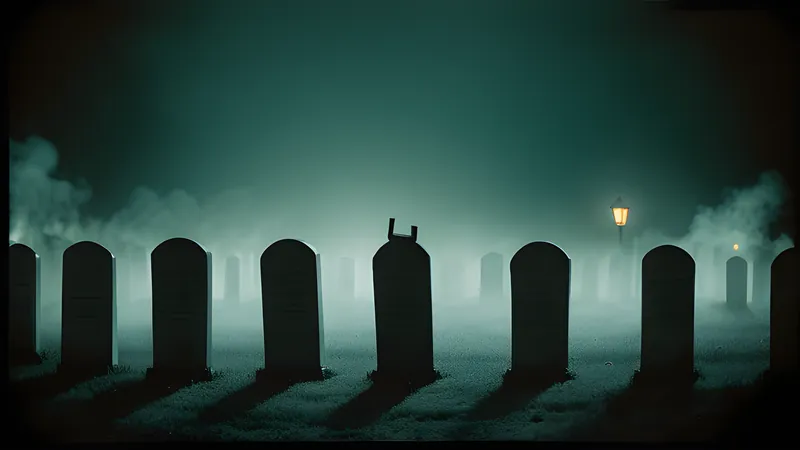
Francesco Dellamorte tends a small Italian cemetery where the dead reliably come back on the seventh night. He shoots them in the head, buries them again, files nothing, tells nobody, and complains that reporting it would only mean paperwork. He falls in love with a widow. It goes badly. It then goes badly several more times in ways that dissolve the film’s grip on reality entirely, until Dellamorte and his mute assistant Gnaghi drive to the edge of the world and find out what is there.
Everything Soavi learned is in it. The Argento camera does a full circuit of the ossuary. The Gilliam absurdity gives Gnaghi a severed head in a television set and a romance with it, and the film plays that straight enough to be touching. And underneath sits something neither master ever attempted — a real melancholy about work, love and repetition, in which the returning dead are a chore rather than a horror, and the real dread is Dellamorte’s growing suspicion that he has no interior life at all. Martin Scorsese has named it among the finest Italian films of the nineties, and the reputation has only grown since the restorations arrived.
The workshop, and the honest case against
Soavi’s films look expensive and were not, and the reason has a name: Sergio Stivaletti, who built the effects on all four features and who was, by the late eighties, the last practical craftsman in Italian horror with a workshop worth the term. The demon in the fresco, the owl head, the drill through the floor, the moment in Cemetery Man where a corpse’s skull hinges open — those are latex, cable and patience, executed by a man who had learned on Phenomena and Opera and who could deliver a gag on a schedule that gave him no second take. Soavi shot Stivaletti’s work the way Bava shot a matte painting, in motion and slightly under-lit, so the illusion is never held long enough to be examined. It is the last flowering of the Italian in-camera tradition before digital arrived and made everything cheaper and worse.
The case against him is real and worth stating. Three of the four films have screenplays that fall apart under any pressure at all. The Church is functionally two films spliced at the hip, and its second half surrenders narrative logic in favour of vignettes. The Sect asks you to accept a conspiracy whose mechanics are never explained and probably could not be. Even Cemetery Man, the masterpiece, loses its footing in the final act in a way that its admirers describe as dream logic and its detractors describe, with some justice, as a writer running out of road. Soavi’s answer was always the image, and a viewer who needs plot to hold will find the image insufficient compensation.
What he had instead was atmosphere with a temperature. Argento’s films are cold and Fulci’s are wet; Soavi’s are melancholy, populated by people who are tired and slightly ridiculous and doomed anyway, and that emotional register is the thing his mentors could not teach him because neither of them possessed it.
Why it works
Soavi’s method is the actor’s method applied to horror. He blocks a scene for what it feels like to stand in it, which is why his spaces — a locked theatre, a cathedral, a house with a well, a cemetery with a leaning gate — read as places you could walk through rather than as sets dressed for a camera move. He inherited Argento’s crane and used it to establish geography, so that when he breaks the geography you notice. He casts faces that carry a whole biography and then gives them very little dialogue. And he lets comedy in, which the Italian gothic tradition had always treated as contamination; the laugh in a Soavi film buys the next scare on credit.
He also had the sense to know what the material was for. The Church is about a building. Cemetery Man is about a man who has stopped being able to tell the difference between grief and boredom. In both, the genre machinery does the arguing itself.
Why he stopped, and where to start
After Cemetery Man Soavi left horror. His young son became seriously ill, and he spent years at home, working in Italian television when he worked at all. He returned to features with Arrivederci amore, ciao (2006), a hard and very good crime film about an ex-terrorist that has nothing supernatural in it whatsoever, and has since moved between historical drama, television and the nasty true-crime piece Rabbia furiosa (2018). None of it is horror. He has said, more than once, that he does not miss it.
Start with Cemetery Man, which needs no context and no tolerance for Italian genre convention. Then StageFright, for the owl and the feathers. The Church rewards a viewer who will accept incoherence as a price for imagery, and The Sect is the one you will end up defending to people who have not seen it. Soavi is the last director Italian horror produced who could have carried the tradition forward, and the fact that the tradition ended when he walked away from it says something about how thin the bench had become by 1994.
Related Content