Messiah of Evil: The Dreamlike Lost Horror of the 70s
A ruined, hypnotic coastal nightmare from the writers who would later script American Graffiti
Contents
Messiah of Evil is the kind of film that convinces you, watching it at two in the morning, that you have wandered into someone else’s dream and cannot find the door out. It was made in 1973 by Willard Huyck and Gloria Katz — a married writing team who, the very next year, would help George Lucas write American Graffiti, and who would later take the blame for scripting Howard the Duck. That biography tells you nothing about the film they made here, which is one of the strangest, most beautiful, and most thoroughly mishandled horror pictures of its decade. It was chopped up, retitled, dumped into grindhouses as Dead People and Revenge of the Screaming Dead, and left to rot in ugly prints for thirty years. Restored and seen clearly, it turns out to be a small, haunted marvel.
A town at the edge of the map
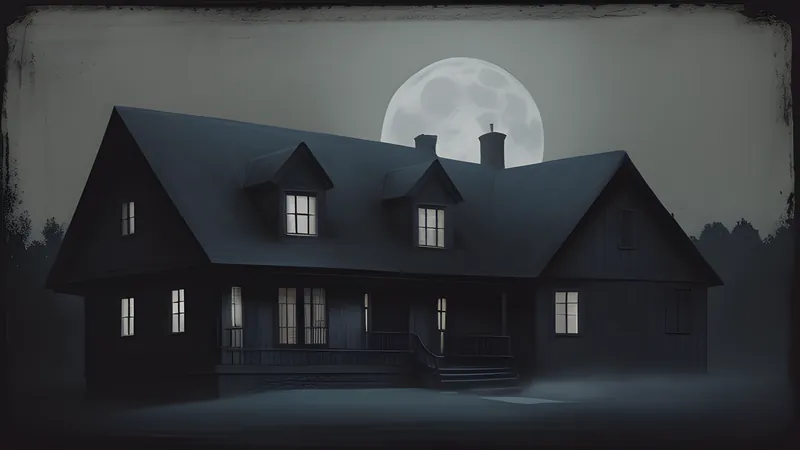
The premise is deceptively simple. A young woman named Arletty (Marianna Hill) drives to the coastal California town of Point Dune to find her father, an artist who has stopped answering her letters and whose last messages read like the diary of a man coming apart. When she arrives, the town is wrong. The streets are too empty; the locals stare too long; a strange, pale calm hangs over the place. Her father’s house is a shrine to his unravelling — the walls covered floor to ceiling with life-size painted figures, people who seem to watch you from inside the plaster, a piece of production design so unsettling it does half the film’s work on its own.
Arletty falls in with a trio of drifters: Thom (Michael Greer), a silky, decadent collector of local legends who treats the whole eerie situation as an amusement, and his two travelling companions, Laura and Toni. Thom is chasing a story — a piece of coastal folklore about a “blood moon” and a “dark stranger” who came to Point Dune a hundred years ago and left something behind. The townspeople are waiting for something. The film never rushes to tell you what, and when it does, the telling arrives sideways, in fragments, the way information arrives in a nightmare.
Why the dread works: geometry and patience
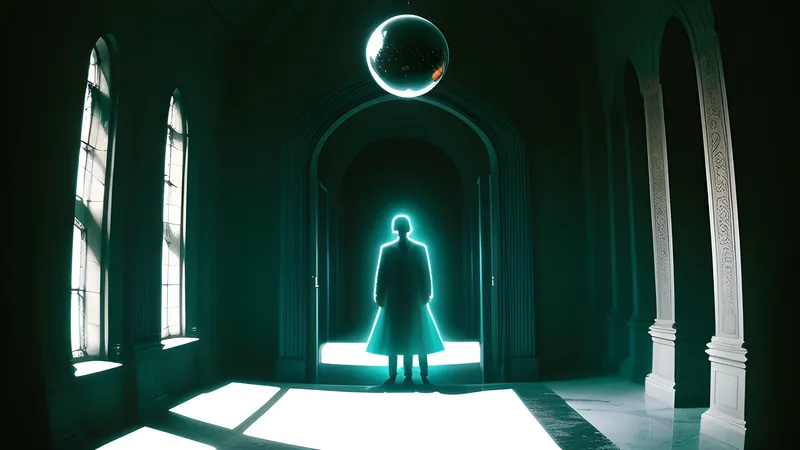
The genius of Messiah of Evil is spatial. Huyck and Katz, working with a tiny budget, understood that the surest route to unease is architecture that feels subtly hostile, and they filled the film with modernist interiors — clean lines, hard edges, huge blank walls — that dwarf the people inside them and leave nowhere to hide. The compositions are wide and cold and deliberate. Characters are placed small in enormous empty frames, and you find your eye drifting to the edges, to the doorways, to the dark, waiting for something to enter. It rarely does when you expect. The film’s patience is weaponised.
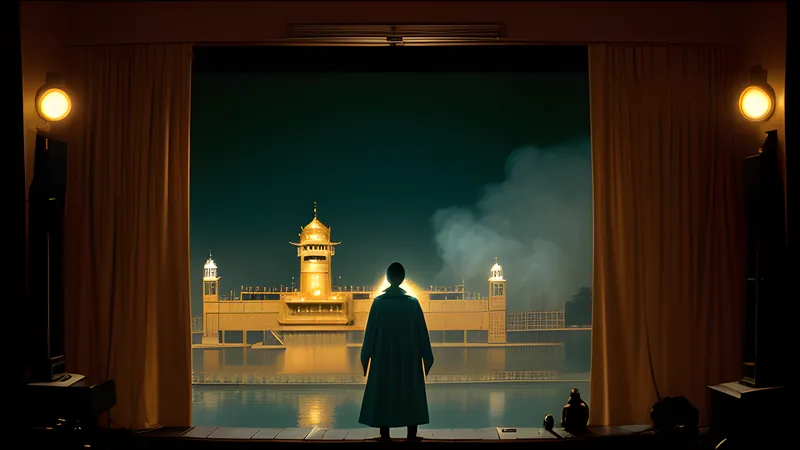
Two set pieces have kept the film alive by word of mouth, and both are masterclasses in the slow-fill scare. In the first, one of the women wanders into a brightly lit late-night supermarket, all fluorescent glare and endless aisles, and finds the townspeople gathered at the meat counter — eating. In the second, a woman sits alone in a near-empty cinema, watching the screen, and behind her, one by one, silent and unhurried, the pale citizens of Point Dune file in and take the seats around her until she is surrounded. Neither scene relies on a jolt. Both work because the horror arrives at the pace of dread itself: gradual, inevitable, and utterly calm about it. That calm is the film’s signature, and it is far more disturbing than frenzy would be.
The dream-logic tradition
Messiah of Evil belongs to a specific and precious strain of 1970s horror — films that abandoned the tidy cause-and-effect of the studio era and reached instead for the grammar of dreams. Continuity frays on purpose; scenes end a beat too early or too late; the plot advances by mood rather than by mechanism. This is the same well that Lucio Fulci would draw from a few years later in The Beyond, where a Louisiana hotel becomes a doorway to hell and the film stops caring whether one scene logically follows the last. Both films operate on the conviction that a nightmare does not need to make sense to be true, and that trying to explain it would break the spell.
Its closest American sibling is the whispering, ambiguous Let’s Scare Jessica to Death, released two years earlier — another film about an outsider arriving in a coastal community that has quietly curdled into something predatory, told in the same waking-dream register, with the same distrust of tidy explanation. Watch the two back to back and you can map an entire lost lineage of American horror: regional, painterly, low on budget and high on atmosphere, more interested in the texture of unease than in the machinery of a plot. And its dream-logic runs forward too, into the fractured, is-any-of-this-real nightmare of Phantasm, which shares the same refusal to draw a firm line between the waking world and the one underneath it.
The look, and where it came from
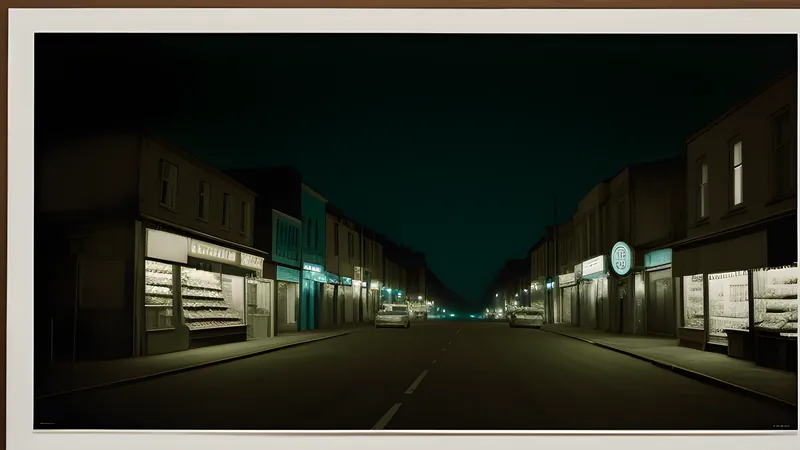
For a film shot on almost nothing, Messiah of Evil is astonishingly designed. Point Dune is a place of mid-century modern houses, chrome and glass and Op-art surfaces, and the decision to stage a folk-horror curse inside that cool, affluent architecture is what gives the film its uncanny fingerprint. The undead do not shamble out of a crumbling gothic ruin; they gather under fluorescent supermarket lights and slip into a plush cinema, the horror threaded through the comforts of modern American consumer life. That instinct — that the truly frightening thing is the familiar, well-lit, everyday space quietly turning against you — is decades ahead of the film’s reputation.
Marianna Hill anchors it with a performance pitched at sleepwalking intensity, wide-eyed and increasingly hollow, a woman losing the thread of her own reality in real time. Around her, Michael Greer’s Thom brings a decadent, faintly amused theatricality that curdles as the town closes in. The tonal wobble between the professional and the amateur, so often cited as a flaw, ends up serving the dream: nothing in Point Dune behaves quite the way waking life should, including the acting.
The verdict
Messiah of Evil is a broken film, and part of its strange power comes from the breakage. The production was troubled, the edit was taken away from its makers, some scenes feel unfinished, and the acting ranges from the eerily perfect to the frankly amateur. And yet the whole thing coheres into something no tidier film could achieve — a sustained, drifting dread that lingers for days, built from empty rooms, cold light, and the slow certainty that a town has agreed on your death without telling you. It is a film to surrender to rather than to solve. The images do the work: the painted figures on the walls, the pale crowd filling a cinema, the tide coming in under a red moon.
For decades this was a film you had to hunt for in muddy, faded prints that hid its beauty. The restorations that have since appeared reveal how carefully it was composed and shot, and they make the case unanswerable: this is one of the great lost American horror films, and the fact that its makers went on to write a beloved nostalgia comedy the following year only deepens the mystery of how it exists at all. Find the best print you can, watch it late, and let it be the dream it wants to be.
Spoilers below
The legend Thom has been chasing turns out to be the town’s founding wound. A century earlier, a survivor of the Donner Party — a man who had eaten human flesh to live — arrived in Point Dune under a blood moon, a “dark stranger” who was supposed to have died and did not. He has been waiting, and the town has been waiting with him, for the moon to turn red again, at which point the whole population will complete its transformation into the pale, cannibalistic undead. Arletty’s father, the artist, has already begun to turn; his frantic paintings and journals were the record of a man watching himself become something that hungers.
The film picks off the outsiders with dreamlike cruelty. Laura leaves and is run to ground; Toni is the woman in the cinema, surrounded and consumed; the townspeople close in on the survivors as the blood moon rises. Arletty’s own body begins to fail in the film’s most quietly horrible touch — she pulls at her hair and it comes away, she vomits insects, her flesh going wrong from the inside as the change takes her. The framing device reveals the trap: the entire story has been narrated by Arletty from inside a psychiatric institution, where she insists the dark stranger and his risen town are real and coming, and where no one believes her. The final note is bleak and unresolved. The horror is not stopped, only relocated to a locked ward, still waiting for the next red moon. It is the same closing move as Let’s Scare Jessica to Death — a woman left to tell an unbelievable truth to people who have already decided she is mad — and it leaves the same cold, permanent doubt hanging in the air.
Related Content