Melancholia: Von Trier's Beautiful End of the World
A depressive's disaster movie, where the planet-killer is a mercy
Contents
There is a species of disaster film that spends two hours convincing you the world can be saved, and Melancholia is the film that walks in already knowing it can’t. Lars von Trier made it in 2011, in the trough of a real depression, and he built it as a corrective to every doomsday picture where a plucky team drills into the asteroid. His idea was simple and vicious: give the end of the world to the one character too depressed to be frightened of it, and let her be the only person in the frame who behaves well.
The film arrived trailing the worst press conference of the director’s career — the Cannes remarks that got him declared persona non grata by the festival that had just handed his lead actress its Best Actress prize. Kirsten Dunst won that prize deservedly, and it is worth separating the picture from the man’s genius for self-sabotage, because underneath the provocation is one of the most controlled things he has ever shot.
The overture tells you everything
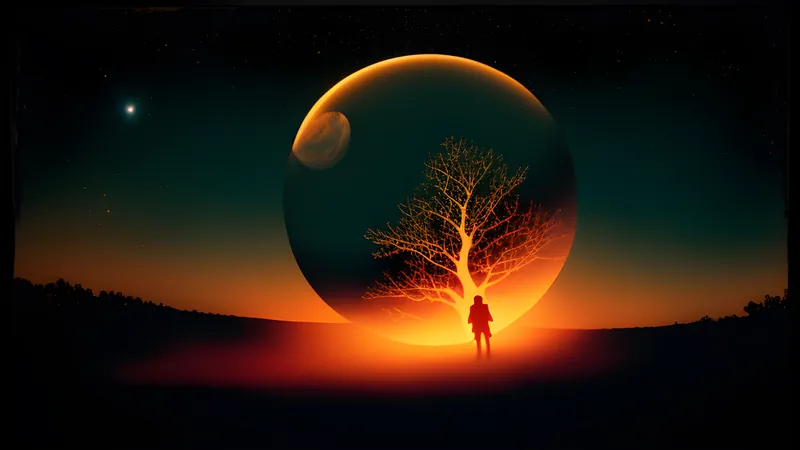
Von Trier opens with roughly eight minutes of extreme slow-motion tableaux set to the prelude of Wagner’s Tristan und Isolde, and those minutes function as a spoiler he is daring you to notice. Birds fall out of the sky. A bride drifts down a stream in her gown like Millais’s Ophelia. A woman crosses a lawn with a child while her feet sink into the turf. And in the last of them, a blue planet swallows the Earth in total silence. He has told you the ending before the story starts, which frees the rest of the film from suspense and reroutes all its tension into a single question: how do these people meet a fact they cannot change?
The structure that follows is a diptych, each half named for a sister. “Justine” is a wedding — Dunst’s bride, sabotaging her own reception at her sister’s country estate with a slow, magnetic cruelty that only another depressive will recognise as honesty. “Claire” belongs to Charlotte Gainsbourg’s elder sister, the capable one, as the rogue planet Melancholia — hidden until now behind the sun — swings past Earth on what her astronomer husband John (Kiefer Sutherland) insists is a harmless fly-by. The genius of the split is that it inverts the two women. The functional sister falls apart as the danger becomes real; the broken one steadies, because she has been rehearsing for annihilation her whole life.
Why the beauty is the argument
The craft here is a trap, and it is worth naming how it works. Manuel Alberto Claro’s photography makes the approaching planet ravishing — a great marbled blue world rising in the night sky, bigger each evening, casting a second, colder light across the lawn. Von Trier wants the apocalypse to be gorgeous because he wants you to feel the pull of it, the way a depressed mind feels the strange serenity of the worst outcome. The Wagner does the same work in sound, that endlessly deferred chord from Tristan looping without release, promising a resolution the film withholds until the final frame.
Against that beauty he sets a documentary roughness. The handheld camera lurches through the wedding, catching the champagne-flat cruelty of a family gathering — Charlotte Rampling’s poisonous mother, John Hurt’s dithering father, Stellan Skarsgård’s boss dispatching an underling to extract a tagline from the bride on her wedding night. The two textures fight: the sublime planet overhead, the squalid human comedy below. That collision is the whole thesis. Justine can see the planet clearly precisely because she is immune to the small consolations everyone else is clinging to.
The performances hold it together. Dunst plays depression from the inside, as a set of physical facts — the leaden limbs, the inability to lift a spoon, the flat certainty when she tells Claire that the Earth is evil and nobody will grieve it. Gainsbourg plays the opposite arc, competence curdling into panic, and the film gives her the tenderest thing in it: a mother trying to keep a bedtime routine going while the sky ends.
There is a mid-film image that tells you von Trier knows exactly what he is doing. Justine, catatonic through much of the second half, slips out one night and lies naked on a riverbank in the blue glow of the approaching planet, bathing in its light like a woman under a second moon. The shot is erotic, blasphemous and completely sincere. She is drawn to the thing that will kill everyone, the way the whole film is drawn to it, because she has already made her peace with oblivion. Everyone else in the picture experiences the planet as terror. She experiences it as recognition, and that single image carries the argument better than any line of dialogue could.
The company it keeps
Magpie’s instinct is to point past a film to its ancestors, and Melancholia has a distinguished shelf of them. The obvious grandparent is Tarkovsky, whose cosmic patience and pull toward the transcendent von Trier has openly claimed as an influence for years; the roped-off dread of Stalker and the grief-haunted space of Solaris both feed this picture. You can read the case for the first in the Zone as a test of faith and for the second in Tarkovsky’s answer to Kubrick. The overture’s silent, ceremonial approach of a heavenly body is also a deliberate rhyme with Kubrick — the cosmic scale of the film that refuses to hold your hand, stripped of its optimism and handed to a grief counsellor.
For the coldness of its gaze, its closest living cousin is Jonathan Glazer, another director who films the inhuman as something beautiful and indifferent; the case for that is in alien cinema at its coldest. What separates von Trier from all of them is that his catastrophe carries no metaphysics. There is no monolith, no sentient ocean, no lesson. The planet is just physics, and the only meaning available is the one the sisters bring to it.
So does it work? It works as very few art films built on a gimmick ever do, because the gimmick — telling you the ending first — turns out to be the emotional engine rather than a stunt. Watching it a second time, knowing exactly what the last shot holds, the film deepens instead of thinning, which is the surest sign it was constructed by someone who meant it. It is a hard sit, glacially paced by design, and the wedding half will lose viewers who want their science fiction to move. Stay for the second half. It is one of the great depictions of what it costs to be the calm one when calm is the only thing left to offer.
Where to find it: it circulates on the arthouse streaming services and on a good Blu-ray from the usual boutique labels. Watch it on the largest screen you can, at night, with the sound loud enough that the Wagner fills the room. This is a film about a light in the sky, and it deserves the dark.
Spoilers below
The mechanism of the ending is the whole point, so here is where it lands. John, the astronomer who has spent the film reassuring everyone that Melancholia will pass by harmlessly, is proven wrong — the planet loops back in a “dance of death,” a fatal orbit that swings it away and then brings it round for the collision. He has staked his authority and his family’s peace on the science, and when he sees the planet returning he takes his own life quietly in the stable, leaving his wife to find him. The rational man, the one holding the telescope, breaks first.
That leaves the two sisters and Claire’s small son, Leo. Claire’s instinct is to perform the end nicely — a glass of wine on the terrace, a little music, some human dignity — and Justine annihilates the idea with contempt, because to her a comforting ritual in the face of extinction is an obscenity. What she offers instead is the film’s one act of grace. She builds Leo a “magic cave,” a teepee of bare branches on the lawn, and tells him it will protect them. It will protect nobody. The three of them sit inside this frame of sticks, holding hands, Justine perfectly still, Claire weeping, the boy trusting, as Melancholia fills the entire sky and the sound drops out completely before the impact wipes the screen to white.
The magic cave is the key to the film. It is a lie told with total tenderness, the depressive’s gift to the people she loves — she cannot save them, so she gives them a shape to die inside. Von Trier’s argument, made across two hours of gorgeous doom, is that when the fact is unbearable and unchangeable, the honest response is a kind of ferocious composure, and that the person most fluent in despair is the one best equipped to supply it. The last image resolves the Tristan chord that has been aching for release since the first minute. The world ends, and for the first time in the film, the music finishes.
If von Trier’s beautiful catastrophe leaves you wanting more cinema that treats mortality as an image rather than a plot problem, the natural next step is grief filmed across a thousand years, which is where Aronofsky’s The Fountain picks up the same thread and refuses, like this one, to look away.
Related Content