Meatball Machine: The Bio-Mecha Splatter Romance
Under the parasites and the pneumatic gore, the 2005 Japanese cult item is a doomed love story with a Cronenberg heart and a scrapyard body
Contents
The title is a promise and a warning. Meatball Machine is a 2005 Japanese film about alien parasites that colonise human bodies and rebuild them into bio-mechanical gladiators called NecroBorgs, and it delivers on every grim syllable of that description. It also, somewhere around the halfway mark, turns into a love story so sincere that the first-time viewer tends to sit up and check whether they have accidentally changed the disc.
That collision is the whole reason the film has outlasted the two dozen Japanese splatter items released around it. Directed by Yudai Yamaguchi and Jun’ichi Yamamoto — Yamamoto had made an earlier, rougher version of the same idea in the late nineties — it belongs to the wave of low-budget Japanese extremity that broke through to Western cult audiences in the mid-2000s via DVD labels and festival midnight slots. Its special effects are the work of Yoshihiro Nishimura, three years before he directed his own.
This is a revisit, so the ending stays below the line. Above it, the argument for why this is the best-built film in its entire subgenre.
The setup
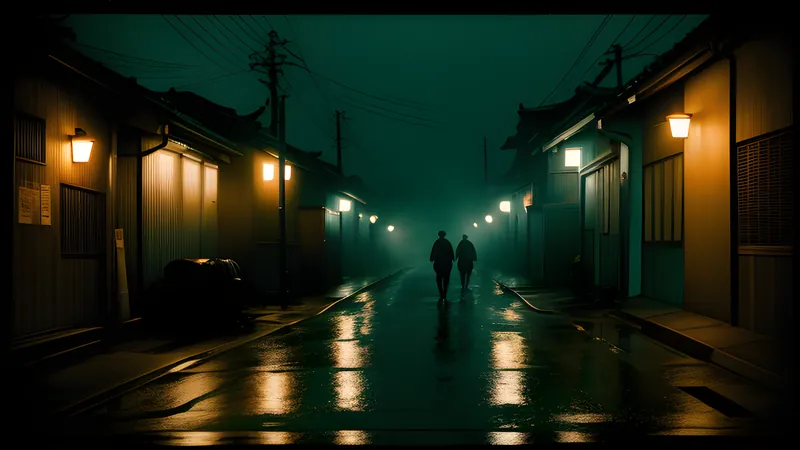
Yoji, played by Issei Takahashi, is a factory worker of the withdrawn, self-effacing kind — a man who has organised his whole personality around not being noticed. Sachiko, played by Aoba Kawai, works nearby and is equally isolated. The film spends real time on the two of them approaching each other with the awkwardness of people who have no practice at it, and Yamaguchi and Yamamoto shoot these scenes flatly, patiently, in the drab palette of Japanese industrial nowhere.
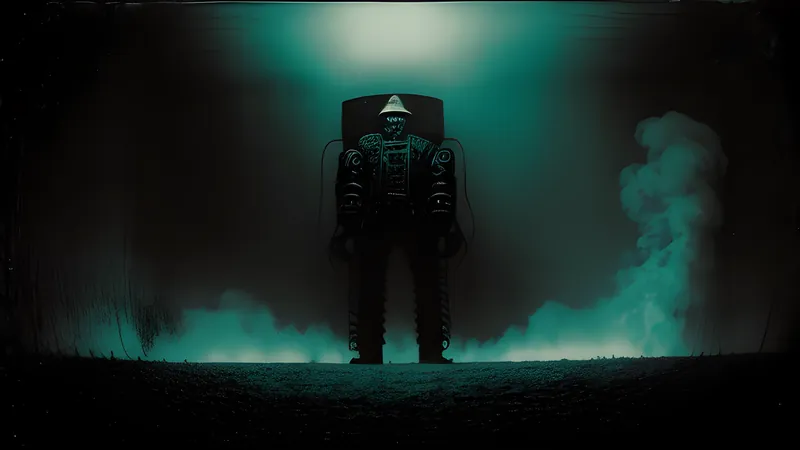
Then a parasite arrives. Once it takes a host, it converts the body into a NecroBorg: armoured, weaponised, fused with machinery that erupts through skin, and compelled to seek out other NecroBorgs and fight them. The transformation is involuntary and total. The host remains inside, aware, unable to steer.
That last detail is the film’s entire engine, and it is why the romance and the gore turn out to be the same thing.
Why the practical build carries it
The film cost very little and looks like it, in the specific way that helps. The NecroBorg designs are the star, and Nishimura’s approach is legible in every one: bodies opened up and re-plumbed with scrap, tubing, hydraulic-looking joints, weapons that appear to have been welded onto flesh by someone with more enthusiasm than training. The look is deliberately unfinished. Everyone here looks like they have had a workshop happen to them.
The mechanics of why this works come down to weight and constraint. Because everything is a physical suit on a physical performer, the fights have real inertia — the actors are visibly hauling their armour around, and the choreography is built to accommodate that rather than to hide it. A NecroBorg lunges and you can see the effort. Compare that to the weightless glide of digitally augmented combat and the difference is immediate: this hurts, because someone actually carried it.
The gore obeys the same logic. Nishimura’s pumps and squibs are the tools of a man who thinks in litres, and the film’s transformations are wet, slow and mechanical — plates opening, apparatus extending, fluid going where fluid should not. Duration matters here. The directors hold the transformation shots long enough for the horror to be about process, which is the point the whole subgenre inherits and which the desk keeps returning to in the artistry of the effects maestros and the case for latex over pixels.
The sound design deserves a mention it rarely gets. The NecroBorgs are largely characterised through noise — servo whine, hydraulic hiss, the wet click of something seating itself in flesh — and because the suits are real, a good deal of that noise is simply what the suits did on set with a microphone near them. It gives the machinery an unglamorous, agricultural quality, closer to a slaughterhouse than a laboratory. The parasites are processing meat rather than engineering weapons, and the audio track never lets you forget which of those two activities you are watching.
The cheapness even helps the tone. The rust, the fluorescent-lit factory spaces, the sense that this apocalypse is happening in the least glamorous corner of the country — all of it grounds the absurdity. The film plays a story about parasite gladiators with the straight face of a kitchen-sink drama, and that discipline is rarer than it sounds.
The collector’s ancestor
The reflex comparison is Tsukamoto, and the reflex is correct as far as it goes. The metal-flesh assault of Tetsuo: The Iron Man is the source code for the entire aesthetic: the salaryman colonised by hardware, the industrial soundscape, the DIY-poverty-as-style. Every Japanese bio-mecha splatter film made since 1989 is paying Tsukamoto rent, and Meatball Machine pays it openly.
The structural ancestor is somewhere else entirely, and it is the reason this film has a soul while its imitators have a highlight reel. Meatball Machine is built on the skeleton of Cronenberg’s love story told in meat. The shape is identical: two lonely people find each other, one body begins an irreversible transformation, and the horror is generated by the fact that the person inside remains present long enough to understand what is happening to them and to be witnessed by someone who loves them. Strip the parasites out and you have Seth Brundle’s arc. The film’s cruelty is Cronenberg’s cruelty — the monster is made of the same material as the tenderness.
There is a third strand worth naming, which is the wet, gleeful excess of the body-horror satire with the nastiest ending. Brian Yuzna’s film established that a practical-effects showcase could be the film’s argument rather than its garnish, and Meatball Machine takes that permission and runs.
Watched alongside the arterial cartoon Nishimura directed himself three years later, the difference in intent is instructive. Nishimura’s own film is a satire wearing gore. This one is a melodrama wearing gore, and melodrama turns out to be the sturdier frame.
The case against
The film is short on plot and knows it. The parasite mythology is thin — where the things come from, what they want, why the arena — and the directors handle that by declining to explain, which reads as confidence for about an hour and as evasion after that. The middle stretch, once the transformation logic is established, cycles through NecroBorg encounters with diminishing returns, and there is a version of this film twelve minutes shorter that is markedly better.
The supporting characters are functional at best. Everyone who is not Yoji or Sachiko exists to be converted, fought or destroyed, which is honest but flattening. And the acting outside the two leads varies from serviceable to visibly under-directed — a common cost of this budget tier, though it stings more here because the leads are doing genuinely careful work.
The gore, finally, will simply lose some viewers, and I would not argue with them. The film’s setpieces are protracted and anatomical, and the sincerity that makes the romance land also removes the escape hatch of camp.
What the subgenre took from it, and what it dropped
The films that followed Meatball Machine into Western cult circulation inherited its look almost completely and its structure almost not at all. That is the melancholy fact about this whole wave. The mutation-as-weaponry design language, the factory palette, the Nishimura plumbing — all of it recurs, film after film, through the second half of the 2000s. The patient, unfashionable twenty minutes of two lonely people failing to talk to each other recurs nowhere.
You can see why. That opening act is the hardest thing in the film to execute and the easiest thing to cut, and it produces no marketable image. A distributor selling a disc in 2006 was selling the NecroBorg on the cover, and the NecroBorg does not appear for a while. The result is that Meatball Machine ended up the most influential and least imitated film of its moment — everyone copied the parts that photograph and nobody copied the part that works.
Yamaguchi’s own career supports the reading. He came from broad comedy, and his other films of the period are looser, jokier, more disposable. Something about the collaboration here produced a discipline none of the surrounding work has, and the film has aged better than anything either director made on their own.
The verdict
Meatball Machine is the film to hand someone who thinks Japanese splatter is only a gag. It is grubby, cheap, mean and genuinely moving, and it achieves the last of those with the same tools it uses for the first three. The transformation that turns Yoji into a weapon is the same transformation that makes his feelings for Sachiko unbearable, and the directors are disciplined enough to keep both facts in frame at once.
It also functions as the keystone of a subgenre worth touring. Take it with Nishimura’s own Tokyo Gore Police and Helldriver, and you have a complete picture of what Japanese practical extremity was doing in the decade when Western DVD labels finally started importing it.
Physical media remains the honest route — the film surfaces on streaming intermittently and in transfers that muddy exactly the wet detail the whole enterprise depends on. Find a disc, turn the lights off, and give the first twenty minutes their patience. The payoff is earned.
Spoilers below
Sachiko is infected, and Yoji has to fight her. That is the film’s entire design, and every apparently idle minute of the opening act is construction work toward it.
What elevates the finale is that the film refuses the obvious release. Sachiko inside the NecroBorg remains partially present — the directors keep showing us the human eye inside the machine — so the fight plays as two people trying to communicate through armour that is actively trying to kill on their behalf. Yoji’s own conversion arrives as the only way he can meet her, which is a horrible, beautiful piece of logic: he has to become the thing destroying her in order to reach her at all.
The closing image lands the Cronenberg debt in full. The love survives the bodies, and the bodies are the problem, and there is no version of this where both of them get to be human at the same time. For a film with this title, that is an extraordinary place to end up.
Related Content