Matango: Attack of the Mushroom People
Ishirō Honda's castaway film is the bleakest thing Toho made in the 1960s
Contents
The English release title is a millstone. Attack of the Mushroom People promises a rubber-suit romp of the sort Toho was turning out by the yard in 1963, something to fill the bottom of a double bill and be forgotten by the bus home. What Ishirō Honda actually made is a film about seven people who discover that the only thing keeping them decent is a supply of tinned food, and that the supply is finite. The mushrooms are almost incidental. The film is a slow audit of what each passenger will trade away, and it arrives at an answer so sour that Toho seem to have spent sixty years slightly embarrassed by it.
I came to Matango the way most people my age did — long after the fact, on a murky transfer, with the title working against it. It took about twenty minutes to realise the film was not joking.
Seven people, one yacht, no plan
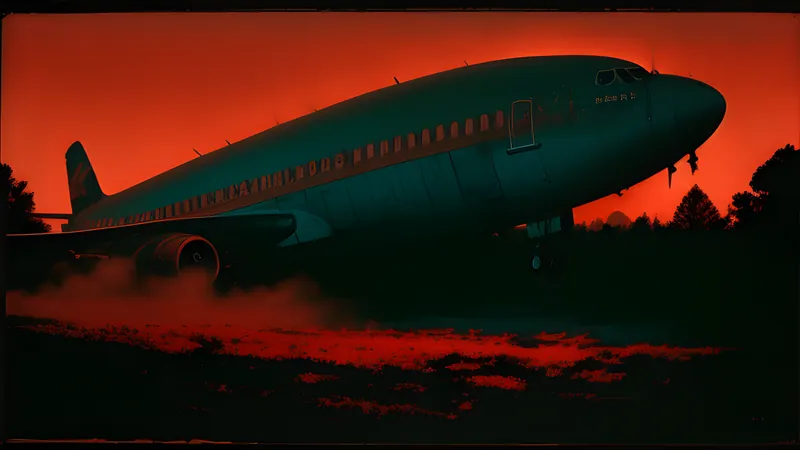
The setup is a class satire with the safety off. A pleasure yacht sails out of Tokyo carrying a university professor, a wealthy yacht owner, a writer, a singer, a student, a skipper and a sailor. The wealth on board is decorative — the owner cannot sail, the writer cannot fish, and the skipper is the only one whose skills survive contact with the weather. A storm dismasts them and they drift onto an uncharted island where the fog never lifts and nothing edible grows except fungus.
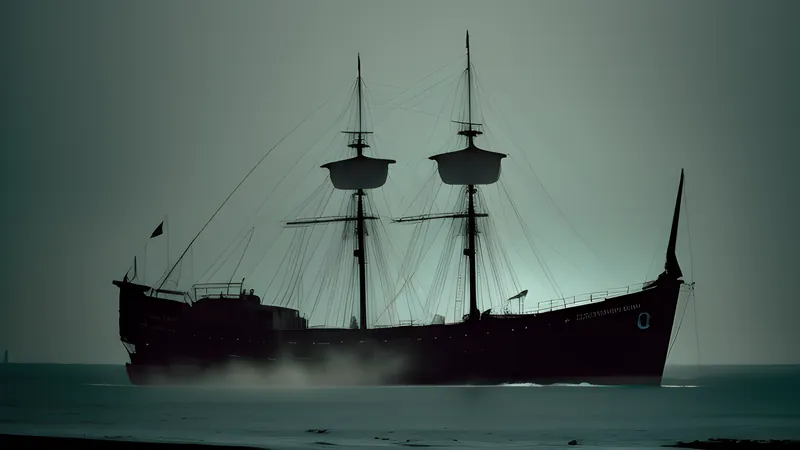
They find a derelict schooner, furred over with mould, its logbook half-legible, its research equipment intact. Honda lets that ship do an enormous amount of work. It is a preview of the castaways’ own future, sitting there in the shallows, and the film never has to say so. The mirror is the point: another crew came here, another crew made choices, and the evidence of how those choices ended is growing on the walls.
Screenwriter Takeshi Kimura adapted William Hope Hodgson’s 1907 short story “The Voice in the Night”, and the choice of source tells you the register Honda was aiming at. Hodgson wrote maritime weird fiction — sea-dread, isolation, the ocean as an indifferent process — and Kimura’s script keeps the story’s central cruelty while transplanting it into post-war Japanese class comedy. The Hodgson tale is a few pages of quiet horror delivered at a distance. Kimura’s expansion gives it a cast, a hierarchy, and something to lose.
Why it works: fog as a budget and a philosophy
The island set is one of Toho’s great achievements and almost nobody credits it, because the film that contains it has mushroom people in the title.
Honda and cinematographer Hajime Koizumi shoot the island in a permanent grey soup. Practically, fog is the cheapest set extension in cinema — it means you only have to build the near ground, and the far ground is implied. Every low-budget production in history has reached for it. What makes Matango different is that Honda uses the limitation as an argument. The fog never lifts because the film is about people who cannot see any further than the next meal. There is no horizon in this film in either sense. When characters wander off into the murk, the murk closes behind them immediately, and the geography of the island stays permanently unresolved. You never get a map. You never get a wide establishing shot that tells you how big this place is or where the ship sits relative to the mushroom groves. The audience is kept exactly as disoriented as the castaways, and that is a directorial decision rather than a shortcut.
Eiji Tsuburaya’s effects unit handled the fungal work, and the restraint is startling from the man who spent the decade smashing model Tokyo. The mushrooms glow faintly, they pulse, they are lit from within, and they are almost always slightly out of focus or half-obscured. Tsuburaya understood that a mushroom is a difficult monster — hold on it too long and it is a prop. Keep it at the edge of the frame in bad light and it becomes a suggestion.
The score by Sadao Bekku deserves a mention it never gets. It works largely through electronic tones and sustained dissonance instead of the brass fanfares Akira Ifukube was writing for the kaiju pictures next door. There are stretches where the sound design is essentially wind and a hum, and the effect is closer to a European art film than to anything else on Toho’s 1963 slate.
The performances hold the thing together
Akira Kubo plays Murai, the student, and he is the closest thing the film has to a moral centre — which is a low bar, and the film knows it. Kumi Mizuno plays Mami, the singer, and she is the performance people remember. Mizuno was Toho’s most interesting genre actress of the period, and here she plays a woman who works out the island’s rules faster than anyone else and decides to profit from them. It is a genuinely unsentimental piece of acting. Hiroshi Koizumi, a familiar face from Honda’s monster films, plays the professor.
The ensemble is what makes the horror land. Honda spends the first act establishing exactly how these seven relate to each other — who defers to whom, who is paid by whom, whose opinion carries. Then he removes the food. The hierarchy does not collapse so much as invert, slowly, with everyone watching it happen and pretending they are not keeping score.
The collector’s cross-reference
The obvious ancestor is Hodgson, but the more useful one is the shipwreck-morality tradition that runs through European literature and washes up in genre cinema repeatedly. Matango belongs on a shelf with the castaway films where the island is a laboratory for stripping the veneer, and it is one of the few that refuses to give anyone a redemption arc.
The more interesting question is what descends from it. The paranoid chamber horror of a small group in an isolated outpost, watching each other for signs of change, reaches its apex in Carpenter’s The Thing in 1982 — and Matango is doing the same arithmetic nineteen years earlier with a fraction of the money. The fungal-transformation strain, where the horror is assimilation into something botanical and arguably beautiful, resurfaces in Annihilation in 2018 with a philosophy that would have made perfect sense to Honda.
There is also the domestic lineage. Honda directed the original Godzilla in 1954, and Matango carries the same anxiety in a much smaller container. The mushroom-people makeup drew comparisons at the time to radiation scarring, and the film has a long-standing reputation for having been awkward to broadcast in Japan for exactly that reason. Whether or not you accept every version of that story, the resemblance is there on screen, and it is not accidental in a film made in Tokyo in 1963 by the man who made Godzilla. For where this sits in the wider tradition, our Japanese horror essential ten has the map. For the body-horror strain taken to its logical, screaming conclusion, see Tetsuo: The Iron Man.
Its closest sibling is the film Shochiku made five years later — Goke, Body Snatcher from Hell — which strands a group of survivors in another nowhere and arrives at a comparably savage view of the species. The two make an outstanding, deeply unpleasant double bill.
The case against
It creaks. The framing device is clumsy, the pacing sags in the second act while the film works through its hierarchy beat by beat, and the mushroom costumes, when finally revealed in full light, are exactly as good as 1963 Toho could manage — which is to say they are lumpy. Some of the dubbing on older English prints is atrocious enough to sink first-time viewers before the second reel.
The bigger problem is tonal. Honda was making a serious film inside a studio machine geared for spectacle, and you can feel the gears grinding — a few beats of broad comedy that belong to a different picture, a couple of effects shots that undercut the dread they are meant to build. The film is better than its worst ten minutes, and it needs a viewer willing to grant it that.
The verdict
Matango is the most despairing film Honda ever directed, and it is disguised as a creature feature so effectively that it fooled the market it was released into. Watch it for Mizuno, for the fog, for a monster movie in which the monster is the least frightening thing on screen. Criterion’s Eclipse-era reputation for it has faded; it turns up on the specialist Japanese-cinema labels and drifts across the boutique streaming services, and any version with a decent transfer will do — the film lives on atmosphere and the atmosphere survives compression better than the costumes do.
Go in expecting Hodgson. The title is lying to you.
Spoilers below
The mechanism is simple and horrible. The mushrooms are edible and they are addictive, and eating them turns the eater into one of them — a shambling fungal thing that is, crucially, content. Transformation here is a mercy. The castaways who give in are released from hunger, from status, from the whole grinding business of being a person on a rock with no food. The mushroom people laugh. That is the detail that has kept me thinking about this film for years: they laugh, and the ones still holding out are miserable.
Mami works it out first and takes the deal. Her seduction into the fungus is filmed with something closer to eroticism than dread, and Mizuno plays it as a woman making a rational choice. The professor’s slide into it is the more damning one, because he has the vocabulary to describe exactly what is happening to him and eats anyway.
Murai escapes and is rescued, and the film’s last move is the one that earns everything before it. He is telling the story from a Tokyo psychiatric hospital, and he insists he is the one who was saved. Then the camera finds the fungus already spreading across his face, in a room with a window looking out over the neon of the city, and the implication lands hard: Tokyo is the same island with better lighting. He would rather be back there, laughing, than here, alone, being told he is lucky.
Honda cut a film about a mushroom monster and delivered a film about the fact that human company had already become unbearable. In 1963. Under that title.
Related Content