Mandy: Cosmatos, Cage, and Grief Rendered in Lava Light
Panos Cosmatos's 1983-set revenge nightmare is a heavy-metal album cover animated by one of Nicolas Cage's greatest performances
Contents
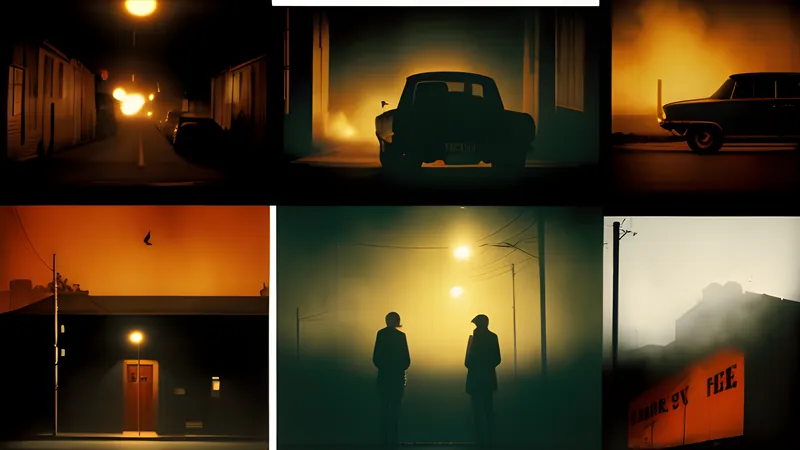
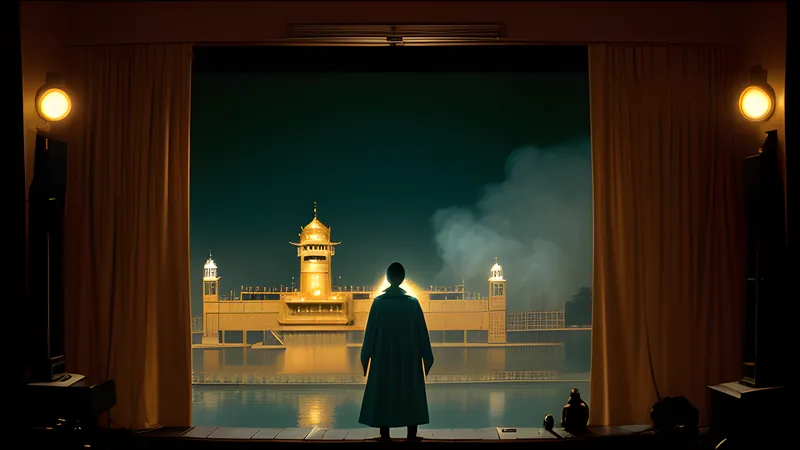
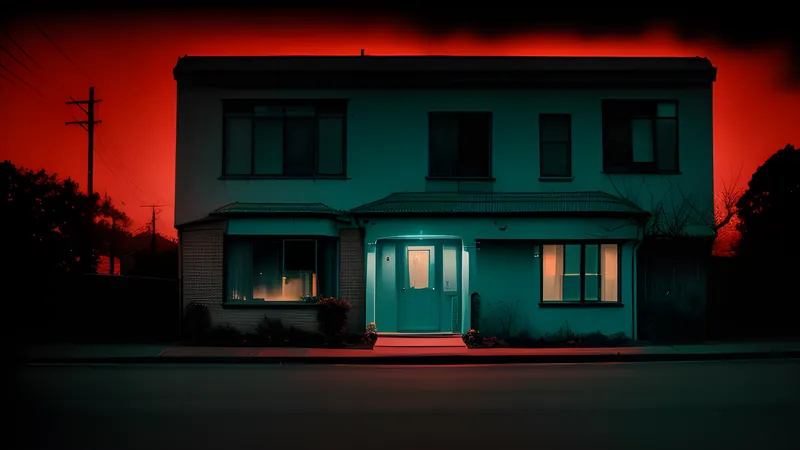
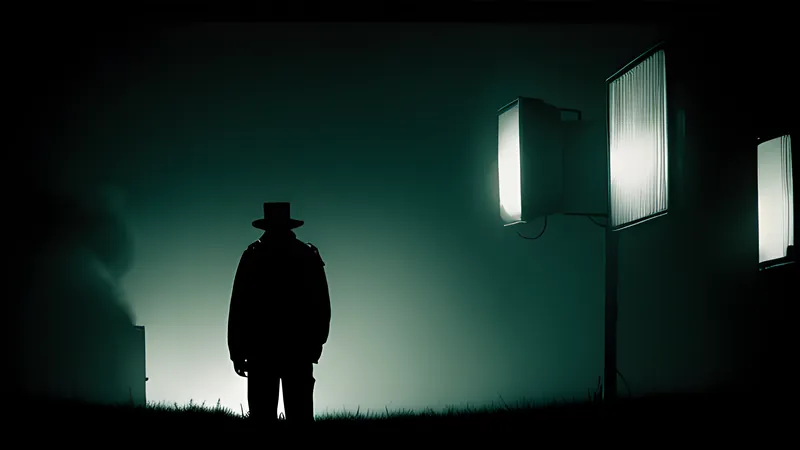
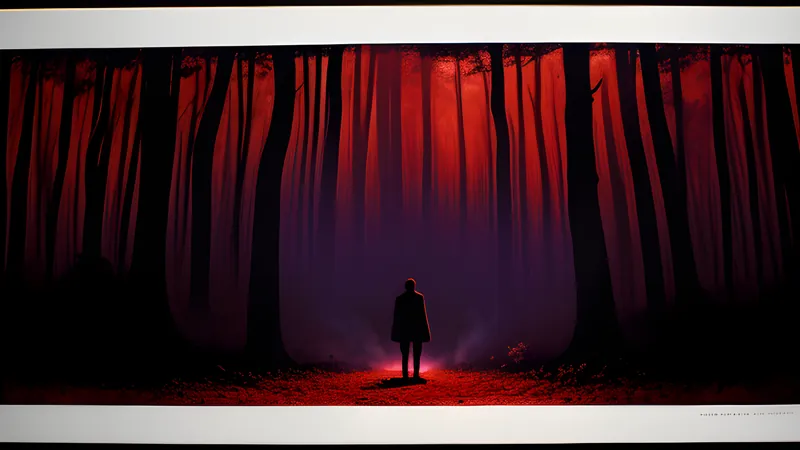
Mandy is the film that convinced a lot of people Nicolas Cage was serious again, though anyone who had been paying attention knew he had never stopped being interesting. What Panos Cosmatos’s second feature actually did was find the exact frame that Cage’s late style demands: a slow, hallucinatory, lava-lit revenge tragedy where a man’s grief is so large it has to be rendered in colour and distortion because no naturalistic performance could contain it. Released in 2018, eight years after Cosmatos’s glacial debut, it arrived looking like a heavy-metal album sleeve someone had learned to animate, and it turned out to have a broken heart at the centre.
I want to argue that the style is the meaning here, because the film’s detractors — and there are plenty — tend to treat the aesthetic as an obstacle to the story. It is the story.
Two films bolted together
Mandy is built as a diptych, and the halves are deliberately mismatched. The first hour is nearly still: Red Miller (Cage) and Mandy Bloom (Andrea Riseborough) live a quiet, tender life in a cabin in the Shadow Mountains in 1983, reading fantasy paperbacks and talking in the low, unhurried register of two people who have found their refuge. Cosmatos shoots this half in deep reds and blacks, faces swimming up out of shadow, dialogue drifting past like weather. It is a love story told almost entirely in atmosphere, and it takes its time precisely so that the second half will cost something.
Then a cult arrives. Jeremiah Sand (Linus Roache), a failed folk musician turned messianic narcissist, sees Mandy on a roadside and decides he must have her; his followers, the Children of the New Dawn, summon a gang of demonic bikers to help take her. What happens to Mandy shatters the first film, and the second film is Red’s answer — a molten, near-wordless rampage of forged weapons and chainsaw duels and blood the colour of the sky in the opening credits.
The structural gamble is enormous. Ask an audience to sit through fifty near-silent minutes and they will either be hypnotised or hostile. But the patience is load-bearing: the revenge only means anything because Cosmatos made you live inside the marriage first.
Why the excess is disciplined
The word people reach for is “excess,” and it is the wrong word, or at least an incomplete one. Mandy is one of the most controlled films of its decade. Every hallucinatory flourish — the faces dissolving into one another, the animated interludes, the moments where Red’s own reflection ripples like a bad trip — is doing psychological work. This is a film about a mind coming apart under grief, and Cosmatos externalises that collapse instead of asking Cage to mime it. When the visuals start bleeding and doubling, we are inside Red’s ruin.
Cage’s performance is frequently miscategorised as “unhinged,” which sells it short. There is a scene, alone in a bathroom, immediately after the worst has happened, where he lets the grief out in a single sustained, ugly, private howl — and it is one of the bravest things any American actor has done on film in years, because it refuses to be dignified. From there the performance modulates carefully: the wildness that follows is a man who has decided to become a weapon because being a person has stopped being survivable. Cage understands, as few do, that operatic and truthful are the same setting when the emotion is big enough.
The other author of the film’s power is the late Jóhann Jóhannsson, whose score — one of the last he completed before his death — is a droning, guitar-saturated dirge that sits somewhere between doom metal and liturgical music. It gives the imagery its funeral weight. Strip the score out and Mandy would be a beautiful object; with it, the film grieves. Cinematographer Benjamin Loeb pushes the palette until the light itself seems radioactive, and the whole thing was clearly built by people who love the airbrushed fantasy art of the era it is set in and wanted to make a film that felt like living inside one.
The collector’s note
Cosmatos does not hide his sources, and half the fun is tracing them. The obvious ancestor is his own Beyond the Black Rainbow, the 2010 debut that established the whole Cosmatos grammar — the retro-1983 setting, the synth drench, the pharmaceutical cult, the sense of a nightmare unfolding at the speed of a lava lamp. Mandy is that film given a pulse and a reason to move; where the debut was all cold containment, this one is hot and grieving, but the DNA is identical.
Beyond the family, Mandy belongs to a specific lineage of grief-as-apocalypse. The truest cousin is Andrzej Żuławski’s Possession, another film that treats the loss of a beloved as a literal breach in reality, staged at a pitch of performance most cinema is too polite to attempt. And the operatic revenge, the artist destroyed by a preening false prophet and answered in a wash of coloured light, rhymes hard with De Palma’s Phantom of the Paradise — swap the record mogul for the cult leader and the mask for the war-axe and the shape is the same doomed rock opera.
There is a wider heavy-metal-and-fantasy substrate too — the Frank Frazetta paperback covers, the Heavy Metal magazine surrealism, the Italian horror colour of Bava and Argento — but Cosmatos filters all of it through a specifically North American, specifically eighties melancholy about isolation and the men who arrive to break it.
The verdict
Mandy is a genuine cult film in the making, and it earns the status honestly, because its strangeness is in service of feeling rather than fashion. It is too slow for viewers who want the rampage without the requiem, and its pleasures are frankly indulgent — this is a film that stops for a fake television commercial and a philosophical chat about the cosmos mid-vengeance. But indulgence in the service of grief is not a flaw; it is the film’s entire proposition. Cosmatos and Cage made a monument to loss disguised as a midnight-movie bloodbath, and the disguise is thin enough that the sorrow comes through.
If you have only ever seen the meme-ready clips, you have seen the film’s surface and none of its ache. Watch it whole, at night, loud, and let the first hour do its slow work before you judge the second. What to watch next: the Cosmatos debut for the cold version of the same dream, then Possession if you can stand it.
Spoilers below
The film’s cruelty is precise. Mandy is not merely killed; she is first humiliated. Jeremiah has her drugged and brought before him, delivers a rambling self-mythologising sermon, and exposes himself expecting worship — and she laughs at him. That laughter is the hinge of the whole film. A narcissist’s fragility, punctured by the woman he has decided is his destiny, curdles instantly into the order to destroy her, and she is burned alive in a bag while Red, bound and forced to watch, can do nothing. Cosmatos stages it as the death of colour itself; the warm reds of the love story go cold and ashen from this point.
Red’s rampage is famously literal in its craftsmanship: he forges his own weapon, the Reaper, a monstrous scythe-axe, in a sequence that plays like a heavy-metal blacksmithing ritual, and there is a genuinely funny, genuinely unnerving chainsaw duel with one of the demon bikers that ends with the larger saw winning. The demons, we learn, are ordinary bad men who took a batch of unusually strong LSD and became something worse — a very Cosmatos idea, that the supernatural is just chemistry and cruelty compounded. Red picks them off, then moves up the chain to the cult.
The confrontation with Jeremiah is the film’s thesis made flesh. Stripped of his followers and his mystique, the messiah is revealed as a snivelling coward who begs, bargains and finally soils himself, and Red crushes his skull with his bare hands. There is no catharsis in it, which is the point — Cosmatos denies the revenge film its usual clean release. The final image is Red driving into a blood-red hallucinatory landscape, half-smiling, wholly lost, with a spectral image of Mandy beside him. He has won and he has nothing. The grief was never going to be solved by the killing; it was only going to be survived by becoming the kind of thing that can no longer feel it. That is a darker and sadder ending than the film’s cult-favourite reputation usually admits, and it is why Mandy outlasts the clips.
Related Content