Liquid Sky: The Alien Punk Film Only the 80s Could Make
A dinner-plate UFO, a heroin metaphor and the most fluorescent nihilism the New York new wave ever produced
Contents
Every so often a film arrives that could not have been made a year earlier or a year later, in any city but one, by anyone but the exact people who made it. Slava Tsukerman’s Liquid Sky is that film for early-eighties downtown Manhattan. A Soviet émigré director, a British-born actress writing and playing two roles, a plot about a UFO the size of a dinner plate that feeds on the chemicals the human brain produces at the moment of orgasm — it should not cohere, and part of its lasting fascination is that it barely does, yet holds together by sheer force of conviction and eyeliner.
The title is street slang for heroin, and that is the first clue to how the film thinks. This is science fiction wearing the clothes of the no-wave scene, shot in the fashion lofts and clubs of a New York that has since been renovated out of existence, and its aliens are less interested in humanity than in the specific high they can strip from it.
The plot, such as it is
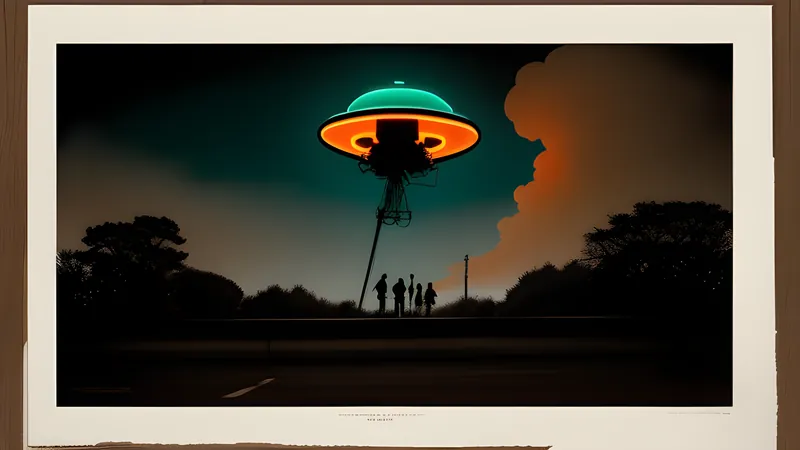
Anne Carlisle plays Margaret, a bleached, fashion-model androgyne moving through a downtown world of photographers, performance artists, dealers and predators. She also plays Jimmy, a preening male model who torments her — the same actress, two roles, a doubling that the film uses to say something pointed about the interchangeable beauty the scene consumes and discards. Above Margaret’s penthouse, a tiny flying saucer lands on the rooftop, piloted by an unseen alien that has come to Earth chasing the opioid chemistry it can detect in a human brain. It found it first in heroin. Then it discovers a purer source: the endorphin rush of the human orgasm.
From there the film becomes a queasy black comedy of cause and effect. Margaret’s many partners — willing and otherwise — reach climax and promptly vanish, killed at the peak of pleasure, a crystalline spike materialising in the skull. Margaret, who has spent her life being used, slowly grasps that she has become the deadliest woman in New York: to sleep with her is to die. A German scientist tracking the saucer from an apartment across the street, and a monstrous cast of scene-parasites, orbit the situation. Very little of it works as conventional plot. All of it works as atmosphere.
What elevates the conceit above its own silliness is the seriousness Tsukerman brings to it. He was an outsider twice over: a Russian in downtown New York, an art-cinema sensibility loose in a punk demimonde. He filmed the scene with an anthropologist’s distance and a satirist’s edge, so the film is at once besotted with its beautiful, damaged people and merciless about what they do to one another. The alien is simply the scene’s own logic given a spaceship. Everyone here is already feeding on somebody.
Why it works: the look and the sound
Liquid Sky is one of the great examples of style operating as content. Tsukerman and cinematographer Yuri Neyman lit the film in acid greens, hot pinks and ultraviolet, drenching faces in fluorescent make-up that fluoresces further under the alien’s-eye-view sequences, where the film flips into thermal negative to show us how the visitor sees us — as glowing sacks of chemistry. It looks like nothing else, and it dates the film to the precise moment when new wave fashion, club culture and video-synthesiser art were briefly the same thing.
The score is inseparable from the effect. Tsukerman composed it with Brenda Hutchinson and Clive Smith on a Fairlight, one of the first digital sampling synthesisers, and its cold, clattering, faintly medieval electronic pulse is the sound of the whole film. It loops and stutters like a malfunctioning music box. Paired with the performances — deliberately flat, affectless, posed — it produces an alienation that is clearly intentional. Nobody in Liquid Sky behaves like a person you would want to know, and that is the point of a scene the film regards with equal parts fascination and contempt.
Carlisle is the reason it holds. Playing both the used woman and one of her users, she gives Margaret a wounded, defiant blankness that slowly hardens into something like power. The film could have been pure pose. Her performance gives it a spine.
The company it keeps
Liquid Sky belongs to a small, precious shelf of films where the alien or the monster is really a metaphor for what a particular New York was doing to itself. The most direct sibling is Frank Henenlotter’s Basket Case, shot in the same city at almost the same moment, another no-budget vision of Manhattan as a place that eats its outsiders — Henenlotter working the Times Square grindhouse register while Tsukerman works the uptown-loft one, both filming a city that no longer exists. Henenlotter’s later Brain Damage makes the drug metaphor even more explicit than Liquid Sky dares, its addiction-parasite whispering exactly what the alien only implies.
For the pure body-horror-as-New-York-decay strain, Street Trash is the grubbier cousin, melting its cast into the pavement as a Reagan-era fable. And for the cleaner line of thought — cinema as an alien intelligence feeding on what we crave — David Cronenberg’s Videodrome is the intellectual heavyweight in the same weight class, released the following year, similarly convinced that our appetites are being harvested by something we invited in.
Where to watch, and how
Liquid Sky was for years a genuine rarity, a midnight-movie legend more talked about than seen. It has since been given a proper 4K restoration supervised by Tsukerman and Neyman, and that version is the one to find — the colours are the film, and a muddy copy loses half of what makes it worth the trip. Approach it with patience. The acting is a wall, the pace is deliberate, and the first twenty minutes will test anyone raised on conventional coverage. Stay with it and the film’s cold logic clicks into place, and by the end its imagery lodges somewhere you cannot dislodge it. The reward is a film that behaves like a transmission from a lost planet, because the planet it came from — early-eighties downtown New York, still cheap enough for artists, not yet policed into a mall — really is lost, and Liquid Sky is one of the few cameras that was pointing at it.
The verdict
Liquid Sky is not a good film in any sense your local multiplex would recognise, and it does not want to be. It is a document, a fever chart of a scene at its most decadent and self-devouring, dressed as science fiction so it could say things about desire, drugs and being used that a straight drama would have blunted. Its influence runs quietly through decades of music videos, fashion editorials and any pop culture that has ever reached for neon and nihilism at once. Watch it for the artefact, stay for the strange sincerity underneath the pose, and come away understanding a corner of New York that only survives now on grainy film. Nothing else looks or feels remotely like it, which is the highest thing a cult film can achieve.
Spoilers below
Everything above is safe to read before watching. The mechanism and the ending are below.
The rules of the film, once you assemble them, are grimly funny. The alien does not want to conquer Earth or even understand it. It wants the specific neurochemical produced at orgasm — a more concentrated version of what it first came chasing in heroin — and it takes that chemical by killing the human at the exact instant of climax, leaving a small crystal spike buried in the brain and the body simply gone. Margaret, unknowingly, becomes the delivery mechanism. Every person who has sex with her dies, whether she consents to them or not, which means the film’s rapists and abusers are executed at the moment of their assault. The alien turns Margaret’s victimhood into a weapon she never asked for.
The film’s cruel joke is that Margaret is the only survivor of her own sex life, and she comes to understand it before anyone else does. She has spent the whole film being consumed — by Jimmy, by the photographer, by the scene — and now consumption kills the consumer. There is a bleak liberation in it. When she finally grasps her power she embraces it with a defiant, self-anointing monologue, painting her face and declaring herself, in effect, the new deadly deity of the rooftop.
The ending refuses catharsis. Margaret, cornered and transformed, is taken up by the saucer itself in a burst of the film’s ultraviolet light — beamed away into the alien’s orbit, ascending rather than escaping, having become too potent for the world she was made to serve. The German scientist’s rational investigation comes to nothing. There is no rescue, no cure, no return to normal, because the film never believed in normal. Its downtown Manhattan was already an alien planet where people fed on one another; the flying saucer only made the metabolism visible. Margaret does not defeat the alien. She joins it, which is the only victory the film is willing to imagine for someone the city spent its whole running time devouring.
Related Content