Lips of Blood: Rollin's Dream-Logic Vampire
A photograph at a party, a memory a mother buried, and a coffin going out with the tide
Contents
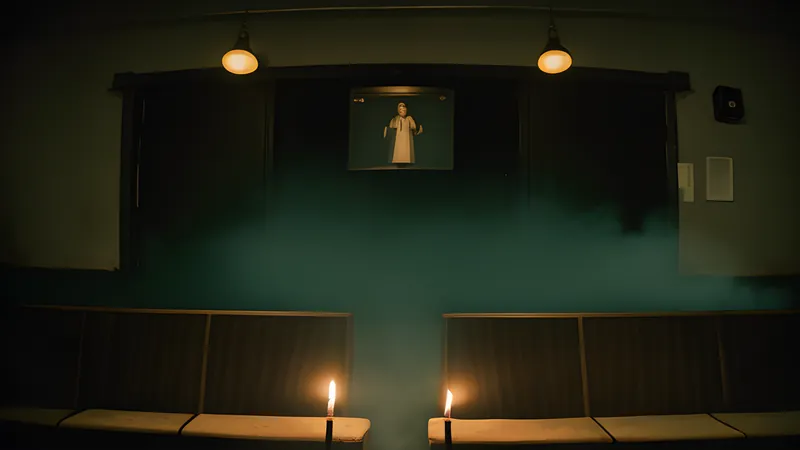
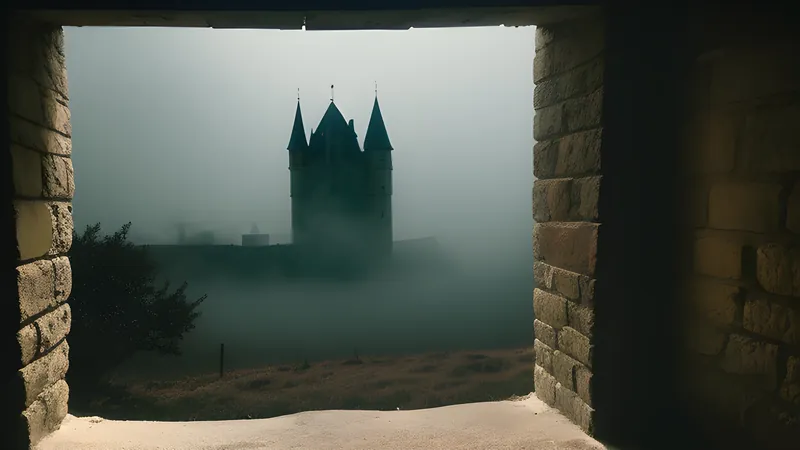
A man at a drinks party sees a photograph on a wall. It shows a ruined château at night, blue-lit, empty. He stops in front of it and something happens behind his eyes — a memory arrives that he did not know he had, of being a boy at that place and meeting a woman in white who was kind to him. He asks where the château is. Nobody will tell him. His mother, when he asks her, says the memory is a dream and he should let it go.
That is the entire engine of Lèvres de sang, and it runs for eighty-odd minutes without ever quite becoming a plot. Jean Rollin made it in 1975, at the point where he had stopped trying to be commercial and had not yet worked out how to be solvent, and it is the film of his that most resembles what he actually had in his head. Everything else in his filmography is a compromise with somebody — a producer, a market, a distributor demanding more nudity or more blood. Lips of Blood is Rollin unsupervised.
Frédéric, and a search with no clues
Jean-Loup Philippe plays Frédéric and co-wrote the script, which explains why the character behaves like nobody in a horror film has behaved before or since. He does not investigate. He does not gather evidence, interrogate witnesses, or assemble a picture. He wanders Paris at night, and the film arranges for him to keep almost finding the place.
The Castel twins — Catherine and Marie-Pierre Castel, Rollin’s recurring image, two identical women in white who appear and evaporate — drift through the search as guides or lures, and the film never clarifies which. They are the strongest evidence that Rollin’s project was closer to the surrealists than to the horror shelf he was filed on. He came out of the same Paris that took Breton seriously, and his twins do what a surrealist image does: they mean nothing decodable and they are impossible to forget.
Annie Brilland — later billed as Annie Belle — is the woman in white from the memory, and her role is almost entirely to be looked for. Rollin gives her a handful of appearances, mostly at a distance, mostly at night, mostly at the moment Frédéric loses her again. The casting instinct is the same one Franco had with Soledad Miranda in Vampyros Lesbos: find a face the camera cannot let go of and then keep taking it away.
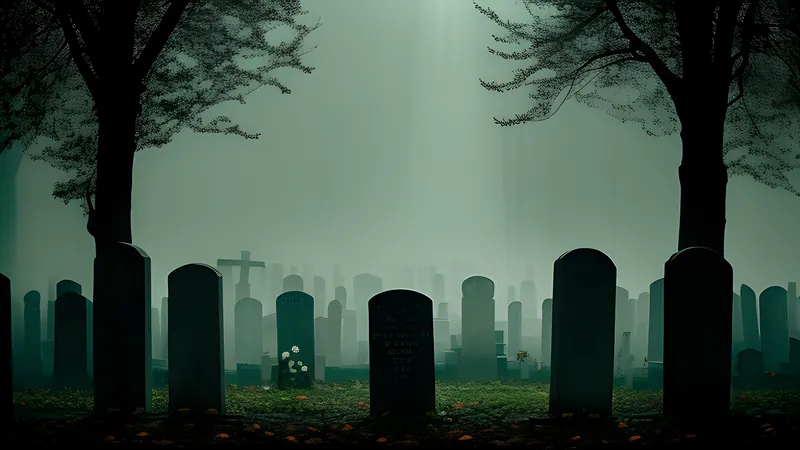
What makes the search bearable is that Rollin films Paris as a set of thresholds. Frédéric moves through an aquarium after hours, a cinema, a cemetery, a beach — spaces that are all interior and all abandoned, connected by cuts rather than by geography. You could not draw a map of this film. That is the design. The city has been re-plotted as the inside of a head.
The mother
The one piece of hard structure is Frédéric’s mother, and she is the best-written character Rollin ever managed. She has spent twenty years ensuring her son does not remember the château. She is a mother protecting a child from something she genuinely believes will destroy him, and she is correct.
Rollin gives her the film’s only real scene of confrontation, and he shoots it flat and domestic — two people in a room, one of them lying. There is no score under it. After an hour of blue-lit reverie the sudden ordinariness of a mother and son arguing in daylight is genuinely disorienting, which is exactly the trick: the dream is where the film is comfortable, and the plain-lit truth is where it flinches.
This is why the film has held up better than its reputation. The vampire material is vague, the rules are unstated, the mythology is a shrug. The family material is precise. Somebody buried a memory in a boy’s head for his own good, and the film asks whether that was a mercy or a theft, and it declines to answer. Every Rollin picture has one clean idea in it. This is his.
Why it works: cutting on the blue
The technique here is worth pulling apart, because Lips of Blood is Rollin’s most rigorous film and nobody ever says so.
Start with the colour. The night material is lit blue — a hard, saturated, artificial blue that no location has ever produced. The day material is drained. Rollin cuts between them without transitions, so the film’s grammar tells you immediately which register you are in before a single line lands. When the blue arrives, the rules change. It is the cheapest possible way to signal a shift into dream and it is completely effective, because he never breaks it.
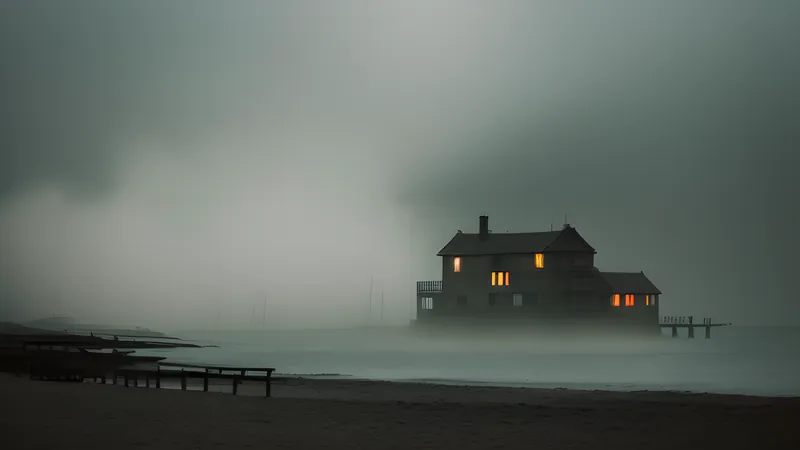
Then the framing. Rollin composes almost everything head-on and centred, with the figure small and the architecture enormous. The ruined château on the coast is filmed as a silhouette against sky for whole minutes at a time. He had no money for crowd, so he made emptiness the subject, and the emptiness reads as significance rather than as absence. This is a genuine craft solution to a genuine budget problem, and it is the same solution that makes The Iron Rose work two years earlier.
Then the withholding. The film’s structural trick is that Frédéric never gets a scene of explanation until it is too late for explanation to help. Conventional horror gives you a librarian, an old man in a pub, a book. Rollin gives you a photograph and a woman saying let it go. He understood that a mystery survives exactly as long as nobody sits down to describe it, and he had the discipline to never sit anybody down.
The case against is easy to state and I will state it: this is a film in which a man walks around for an hour looking for a building. If that proposition does not appeal, nothing in the execution will rescue it for you. There is no acceleration, the middle section repeats itself, and the vampire content arrives late and thin. Lips of Blood asks to be dreamed at rather than watched, and that is a real demand to place on an audience.
The ancestor
Everyone files Rollin under Hammer-with-less-money, and it is wrong here. The Karnstein films have plots. This has weather.
The real ancestor is Carl Theodor Dreyer’s Vampyr from 1932 — another film where a young man drifts through a landscape that has decided to be about him, where the vampire material is a set of images rather than a set of rules, and where the horror is the sensation of being inside somebody’s sleep. Vampyr is the film Rollin is descended from, and once you see it the family resemblance is embarrassing in its directness: the drifting protagonist, the light that behaves wrongly, the refusal of causality as an organising principle.
The other line runs to Maya Deren. Meshes of the Afternoon is fourteen minutes long and contains the entire grammar Rollin spent a career elaborating — the repeated approach to a house, the double, the loop. Meshes of the Afternoon explains more about Lips of Blood than any horror film does.
The verdict
Lips of Blood is the Rollin film to watch if you want to know what he was for. It is not the one to start with — Fascination is more controlled and much more entertaining, and The Living Dead Girl will hold a horror audience for longer. This one is the argument. Everything Rollin was accused of — no plot, no logic, no pace — is present here in concentrated form, and the film demonstrates that those were choices by using them to build something no competent screenwriter could have produced.
It is also, frankly, beautiful in a way that his budget should have made impossible. The blue-lit coast, the twins in white, the final image at the water: these are pictures made by somebody who knew exactly what he wanted and had precisely enough money to point a camera at it.
One more thing deserves saying, because it is the film’s least fashionable virtue. Lips of Blood was made by a director working with a crew of a few people, on locations he could get for nothing, over a shoot short enough that continuity was a matter of luck. The finished picture is more visually coherent than most of the French horror made with real money that decade. Rollin achieved that by deciding, in advance, what the film would look like and refusing every opportunity to deviate — one palette for night, one for day, one framing logic, one recurring image. Poverty imposes discipline on people who already know what they want. It merely exposes everyone else.
Restored versions circulate on disc with the French track and the night material finally readable, which changes the film considerably — decades of grey bootlegs sold it short. For the wider map of where it sits, the eurohorror canon and the vampire canon both place it.
Spoilers below
The memory was real and the mother buried it because the woman in white is a vampire and the boy Frédéric let her out.
Rollin springs this without ceremony, and the elegance is that it retrospectively converts the mother from an obstacle into the only person in the film who was ever right about anything. She has spent twenty years holding a lid on. The film’s sympathy for her survives the reveal entirely — she loses, and losing does not make her wrong.
Frédéric’s choice at the end is the payoff for the whole shapeless search. Offered the world as it is and his mother’s version of him, or the château and the woman he remembers, he takes the château. He frees the vampires from the crypt, and the twins and the others go out into the world because of him. The film treats this as a happy ending. That is the nerve of it: Rollin films a man choosing a memory over his own life and shoots it as a release rather than as a fall.
The last image is a coffin on the beach at Dieppe, going out with the tide, Frédéric inside it with her. It is the same closing gesture as The Iron Rose — the sea taking the plot away — and it is the single most Rollin thing in his filmography. No resolution, no consequence, no dawn. Just water, and two people leaving in a box.
Related Content