Let's Scare Jessica to Death: The Quiet American Unease
A 1971 ghost story that never lets you decide whether the haunting is the house or the head
Contents
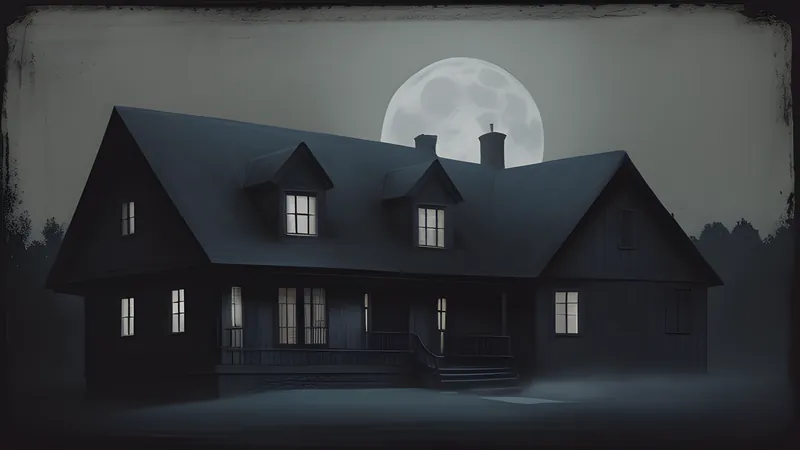
The title is the worst thing about Let’s Scare Jessica to Death. It sounds like a drive-in shocker, a gimmick picture, the kind of thing sold on a lurid one-sheet and forgotten by Monday. What John D. Hancock actually made in 1971 is one of the quietest, most genuinely unnerving American horror films of its decade — a whispering, water-logged mood piece that spends ninety minutes refusing to tell you whether anything supernatural is happening at all. It has been rescued from obscurity slowly, by word of mouth and the odd revival screening, and every rescue has run up against that ridiculous title. Get past it. The film beneath is a small masterpiece of ambiguity.
The set-up: a recovery that will not hold
Jessica (Zohra Lampert) has recently been released from a psychiatric institution. To recuperate, she and her husband Duncan, a former double-bassist who has traded the city orchestra for a quieter life, drive out to a farmhouse they have bought in rural Connecticut, along with their friend Woody. The move is meant to be gentle, therapeutic, a place to get well. What they find waiting in the empty house is a young woman named Emily, a drifter who has been squatting there. In the spirit of the era, they invite her to stay.
From the first minutes the film establishes its central instability through Jessica’s voice. We hear her thoughts in near-constant interior monologue, and the monologue is frightened of itself. She sees things — a figure in white standing across the cove, a face at the edge of the water — and immediately interrogates whether she saw them. Am I imagining this? Is it starting again? The whole film is built on that flinch. Because we have been told she was recently unwell, every image arrives pre-loaded with doubt, and Hancock never once resolves the doubt in either direction.
The mechanics of not-knowing
This is the craft achievement of Let’s Scare Jessica to Death, and it is harder than it looks. A film that wants you to be uncertain whether the horror is real or psychological has to withhold the one thing audiences most want — confirmation — for its entire length, without the withholding curdling into mere frustration. Hancock manages it by making the ambiguity the emotional subject rather than a mere plot trick. Jessica’s terror is inseparable from her fear of her own mind. Every possible ghost is also a possible relapse, and she cannot afford either reading. If the town is full of the undead, she is in danger. If it is not, she is losing herself again. There is no safe interpretation for her to reach.
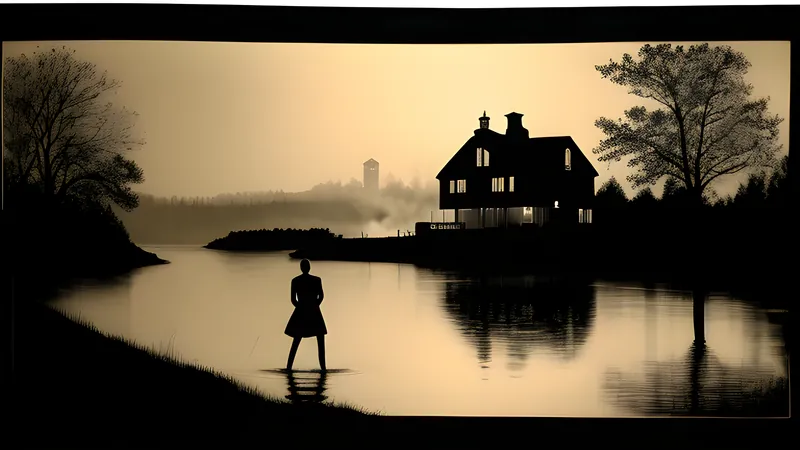
The film’s texture does enormous work here. It was shot around Old Saybrook, Connecticut, and the New England autumn is a character — the low light, the still coves, the antique stone and apple orchards gone slightly to seed. The town nearby is populated by old men, several of whom carry odd wounds and bandages that no one explains. There is a local legend, dug out of a Victorian photograph and a mossy gravestone: a girl named Abigail Bishop who drowned around the 1880s, on the eve of her wedding, and whom the old stories call something other than dead. Emily bears an unsettling resemblance to the girl in the photograph. Hancock lays these clues out plainly and then declines to connect them, so the viewer is left doing the paranoid arithmetic right alongside Jessica.
Why the dread lands
What makes the film work is restraint of a very specific kind. There are almost no scares in the jolt sense. The horror is ambient and slow — a hand trailing in dark water, a whisper on the soundtrack (Jessica hears voices telling her to come to the water, and we cannot tell if they are on the air or in her skull), the sense that the whole sleepy town has quietly agreed on something she has not been told. Orville Stoeber’s score leans on folk instruments and reverbed murmurs, keeping the register close to a lullaby that has gone wrong. The film sounds like it is being remembered rather than witnessed.
It belongs, at heart, to the great tradition of horror films that make the unreliability of a mind their true monster. The nearest cousins are the ambiguity classics — The Innocents and The Haunting, both of which stake everything on a protagonist whose perceptions may be the problem. Jessica is scruffier and more American than either, an indie shot on real locations with a countercultural cast of drifters and drop-outs, but it shares their fundamental wager: the scariest ghost is the one you cannot be sure is there. It also rhymes forward, decades on, with the grief-soaked ambiguity of Lake Mungo, another film where the question of whether the dead are truly present matters less than what the survivor needs to believe.
The company it keeps
Let’s Scare Jessica to Death sits in a very particular pocket of early-1970s American horror, the moment when the genre went regional, dreamy and low-budget, drifting away from studio gothic toward something more like a bad trip half-remembered. Its truest sibling is Messiah of Evil, released two years later — another film about an outsider arriving in a coastal community that has curdled into something predatory, told in the same disjointed, waking-dream grammar. Watch them together and you can see a whole strand of American horror that history nearly lost: quiet, painterly, more interested in unease than in shock, allergic to explanation.
It also shares its animating paranoia with a film from the other side of the Atlantic. The dissolving certainty of Roman Polanski’s The Tenant — is the community conspiring against me, or is my own mind building the conspiracy? — is exactly Jessica’s predicament, transplanted from a Paris apartment block to a Connecticut orchard. Both films trust the viewer to sit inside an unravelling head without a rope.
Lampert, and the face that carries it
None of this holds together without Zohra Lampert, whose performance is the film’s real special effect. She plays Jessica as porous — a woman with no protective layer between herself and the world, registering every ambiguous shimmer of light as either a threat or a symptom. Her voice, both spoken and in the constant frightened narration, has a hesitant, upward-drifting quality, as though she is asking permission to trust her own eyes. It is a performance almost entirely without vanity; she lets herself look tired, plain, unwell, genuinely on the edge, and because we believe her fragility we believe her terror. Hancock, who came out of theatre and would go on to more conventional fare, never directed anything else this attuned, and much of the credit belongs to what Lampert does with a camera held close on a face that cannot hide anything.
The film also carries the fingerprints of its exact cultural moment. Its drifters, its communal living, its distrust of the tidy squares in the nearby town, all place it at the tail end of the 1960s dream turning sour. The horror is partly the horror of that turn: the free-spirited outsiders discover that the old New England community they have wandered into does not want them, and may want to consume them. That undercurrent gives the supernatural material a real-world charge and keeps the dread grounded even as the plot floats into fever.
The verdict
Let’s Scare Jessica to Death is a film that gets under the skin precisely because it declines every opportunity to grip it. It is slow, it is quiet, its scares are made of light on water and voices you cannot source, and it ends without granting you the relief of knowing what happened. Zohra Lampert’s performance holds the whole thing together — a portrait of fragility so specific and so unguarded that you feel her fear of her own perceptions as your own. Fifty years on, its refusal to resolve reads less like coyness and more like honesty about what mental illness and grief actually feel like from the inside: a world where you can never be sure the horror is out there.
If you love the ambiguity horror of Jack Clayton and Robert Wise, this is the shabby, beautiful American cousin they never advertised. Seek out a decent print — the film lives or dies on its autumn light — and let it be as slow as it wants to be.
Spoilers below
The film’s masterstroke is that it never breaks. Emily, the squatter, is strongly implied to be Abigail Bishop herself — the drowned bride, returned, moving through the town and drawing its inhabitants into her circle of the undead. Duncan and Woody both fall under her spell; the old men of the village, with their strange bandages, are revealed as the marks of the bite, a whole community quietly converted. Jessica witnesses deaths, sees the girl in white rise from the cove, watches her own husband turn cold and complicit. By any literal reading, the town is a vampire’s colony and Jessica is the last uninfected soul.
But Hancock keeps the escape hatch open to the very end. Because we have spent the film inside Jessica’s frightened, self-doubting narration, every one of these revelations can be read as the delusion of a woman relapsing — the paranoid’s fantasy that everyone she loves has been turned against her, that the whole world is in on it. The final image is her alone in a rowing boat in the middle of the cove, drifting, as her voiceover circles the same unanswerable question she began with: did any of this happen, or am I mad? The film gives her no answer, and gives us none. Whether she has survived a haunting or completed a breakdown is left entirely, deliberately, permanently open. That refusal is the film’s whole argument — and it is the same trap, told in a lower and sadder key, that snaps shut on the heroines of The Innocents and The Haunting.
Related Content