Le Samourai: Melville and the Coldest Hit Man in Cinema
Alain Delon in a grey trenchcoat, a caged bird, and a professional killer's ritual filmed until it becomes a religion
Contents
The film opens on a nearly empty room and holds it. A man lies fully dressed on a narrow bed in the grey half-light, smoke rising from a cigarette, a small bird chirping in a cage by the window. Nothing happens for a long time. Then a title card offers a line about the loneliness of the samurai, attributed to the Bushido, the code of the warrior — an “epigraph” Jean-Pierre Melville is widely thought to have written himself and simply invented a source for, which is the perfect first move for a film so devoted to the beautiful lie of ritual. The man on the bed is Jef Costello. He is a contract killer, and over the next hundred minutes Melville will watch him perform the rites of his trade with the gravity of a priest at an altar.
Le Samouraï (1967) is the coldest, most controlled crime film ever made, and its influence on everything that followed is almost comically large. Every laconic screen assassin with a code, a uniform and a death wish is Jef Costello’s grandchild. But the original still out-freezes all of them, because Melville isn’t stylising a thriller. He is stripping the thriller down until only the ceremony remains.
The uniform and the ritual
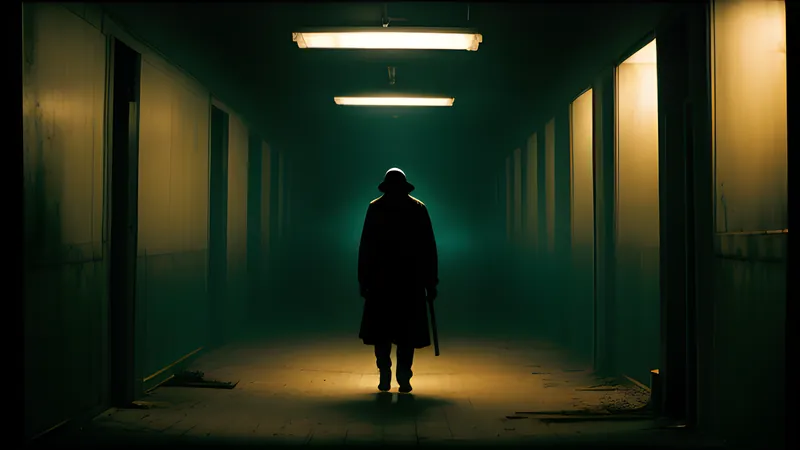
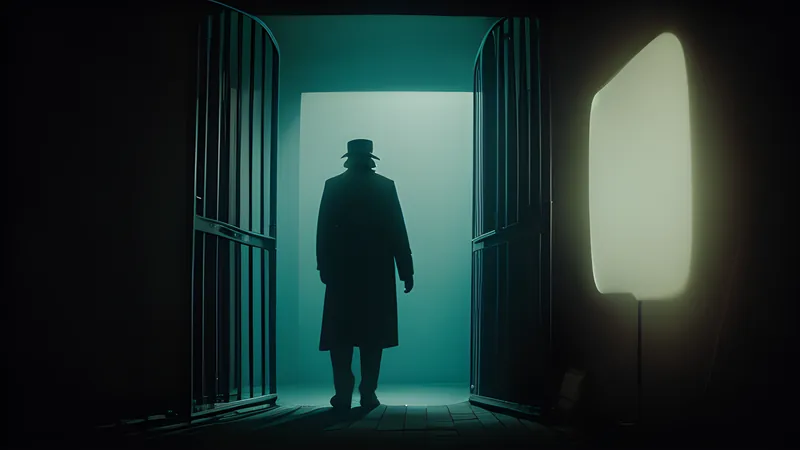
Alain Delon was the most beautiful man in European cinema and Melville uses that beauty as armour. Costello wears a pale grey trenchcoat and a snap-brim fedora, and the first proper sequence of the film is simply him putting them on, adjusting the hat’s angle in the mirror with the care of a man completing a sacrament. He barely speaks — Delon reportedly has fewer than a dozen lines of dialogue in the whole picture — and Melville shoots his flat, his car thefts, his alibi-building and his killings as a set of repeated procedures, filmed with the same unhurried attention every time.
That repetition is the film’s secret engine. By showing us Costello’s method in full — how he steals a Citroën, how he swaps the plates at a lock-up garage where a silent mechanic works without a word passing between them, how he arranges the witnesses and the timings that will protect him — Melville turns process into character. We learn who Jef is entirely through how he works, because he has no private life to show us. The bird in the cage is the closest thing he has to a companion, and it functions as an alarm: it reacts to intrusion, and Costello reads its agitation the way a soldier reads a tripwire.
Melville drains the colour almost to monochrome. He and cinematographer Henri Decaë graded Paris down to slate, ash and rain-wet asphalt, a palette so restricted that the few warm tones — a nightclub’s amber, the red of a wound — land like violations. This is a director who had loved American film noir all his life and who here distils it past its own source, making a French film more purely noir than the Hollywood pictures that taught him.
The plot as a closing net
The story is minimal. Costello kills a nightclub owner as a paid job, and despite a meticulous alibi he is seen leaving the scene — most dangerously by the club’s pianist, Valérie, who looks straight at him and then, at the police line-up, declines to identify him. Two forces now close on Jef simultaneously. The police, led by a patient, needling superintendent, know he did it and set about breaking his alibi and tailing him through the Métro. And his own employers, unnerved that he was seen, decide the safest asset is a dead one and send men to erase him.
Melville turns this into a pure suspense geometry, most famously in an extended Métro pursuit where plain-clothes detectives try to shadow Costello through the tunnels and platforms while he uses the timing of the trains and the crowds to slip them. There is no music, little dialogue, just movement, glances and the choreography of pursuit. It’s a masterclass in building tension out of geography and patience, and you can draw a straight line from it to the wordless procedural stretches of Thief, where Michael Mann films a safecracker’s craft with the same devotional focus. Melville shot the Métro material with real trains and real crowds, and the authenticity gives the cat-and-mouse a documentary hardness that no soundstage could fake; you feel the timings of the doors, the risk of a missed connection, the way a professional turns a public space into a private chessboard.
Why the coldness works
A film this withholding should be inert. It is instead almost unbearably tense, and the reason is that Melville has taught us to read the tiniest signals. When your protagonist barely blinks, a blink becomes an event. When a man’s face is a mask, the one moment the mask slips — Costello registering that Valérie protected him, and not understanding why — carries the weight of a confession. Melville front-loads the ritual so that any deviation from it screams. The bird stops singing; something is wrong. Costello finds a listening device or a disturbed object in his flat; the machine has been breached. The film trains you into Jef’s own hypervigilance until you are watching the world with an assassin’s paranoia.
Delon is essential to this. A more expressive actor would have leaked emotion and broken the spell. Delon gives Melville a surface of perfect, melancholy blankness, a man who seems already half-dead, going through the motions of a life he no longer inhabits. The samurai epigraph is the key: a warrior whose entire identity is his code, adrift in a world that has no more wars for him, so that the code becomes a way of dying with form. Costello is loyal to a professionalism that everyone around him has abandoned, and that loyalty is both his dignity and his doom.
The bloodline
Melville had been building toward this his whole career and would refine it further in Le Cercle Rouge, but Le Samouraï is the pure distillation, the film that fixed the template. Its children are everywhere. John Woo lifted its imagery wholesale for The Killer. Jim Jarmusch remade its soul as Ghost Dog: The Way of the Samurai, keeping the invented-code conceit and making it explicit. And Nicolas Winding Refn’s Drive is Costello reborn in Los Angeles neon — a near-silent professional in a signature jacket, defined by craft and ritual, undone by the one human connection he permits himself.
Melville’s own precursors matter too. The Japanese hit-man cinema that ran parallel to him, from the same era, was pushing toward its own gorgeous nihilism; Seijun Suzuki’s Branded to Kill, released the very same year, took the assassin-with-a-ritual and blew it apart into surreal absurdity, the anarchic twin to Melville’s monastic control. Watch them as a pair and you see two directors arriving at the hit man as pure ritual figure from opposite temperaments.
Le Samouraï asks to be watched twice: once for the tension, once for the ceremony, when you stop waiting for the plot to hurry and start seeing the film as Melville built it, a series of rites performed by a man keeping faith with a code no one else believes in. Few crime films reward patience so completely.
Spoilers below
The ending is the film’s whole argument made flesh, and it is a suicide dressed as a hit. Costello, cornered by both the police and his own paymasters, accepts a final contract from the organisation that has been trying to kill him: the target is Valérie, the pianist who protected him at the line-up. He steals his car, builds his alibi, dons the coat and hat one last time, and walks into the nightclub to complete the job. He crosses the room, draws his gun, and points it at the one person in Paris who showed him mercy.
And it isn’t loaded. When the police, who have followed him in, gun him down, they discover his revolver held no bullets. He walked into a room full of officers he knew were watching, drew on a woman he had no intention of killing, and stood there to be shot. It’s an elaborate, ceremonial self-erasure — a man arranging his own death with the same fastidious professionalism he brought to every job, because his employers marked him for death and his code left him no honourable way to keep living once he had broken it by caring about Valérie’s fate.
Melville withholds any confirmation of Costello’s inner state, which is what makes the moment devastating rather than sentimental. We can read it as love, or as exhaustion, or simply as the last correct move available to a warrior who has outlived his function and chooses the form of his ending. The caged bird gets the final rhyme: the creature that spent the film as his only companion and his early-warning system, a thing that lives its whole existence inside a small enclosure it cannot leave. Jef Costello was the same. He walked to his death on his own two feet, in the uniform, having decided the hour himself, and it is the closest the coldest man in cinema ever comes to warmth.
Related Content