Kwaidan: Kobayashi's Ghost Stories as Painted Theatre
Four Lafcadio Hearn tales shot on soundstages that never once pretend to be real
Contents
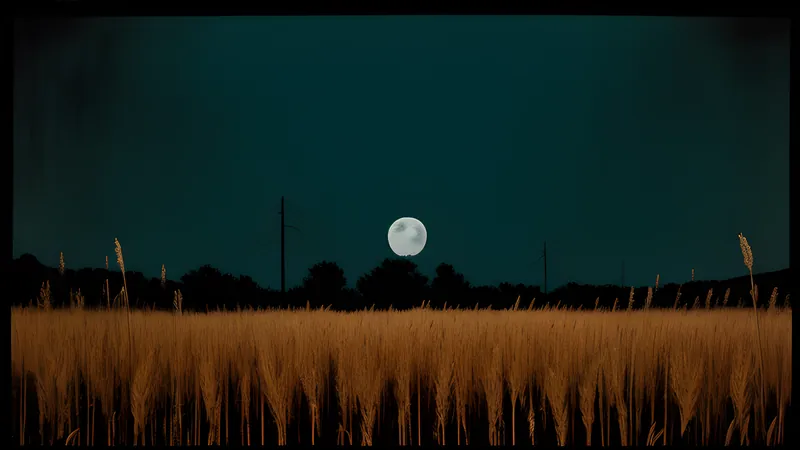
There is a shot near the end of Kwaidan — a sky the colour of a bruise, with a single vast eye painted into the clouds, watching a doomed samurai walk toward his own reflection. No fog machine made that sky. A crew painted it on a soundstage wall, hung it behind the actor, and lit it so that the whole world tilts into dread. Masaki Kobayashi’s 1964 anthology of four Japanese ghost stories is one of the most beautiful horror films ever made, and it earns that beauty by refusing, from the first frame, to pretend it is anything other than a stage.
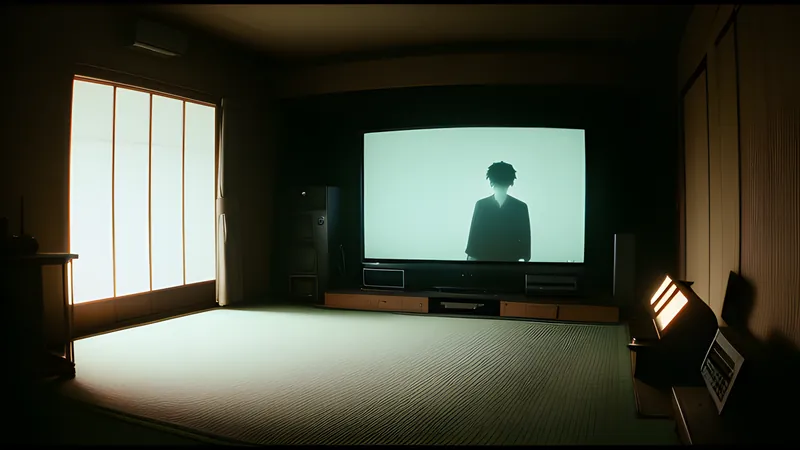
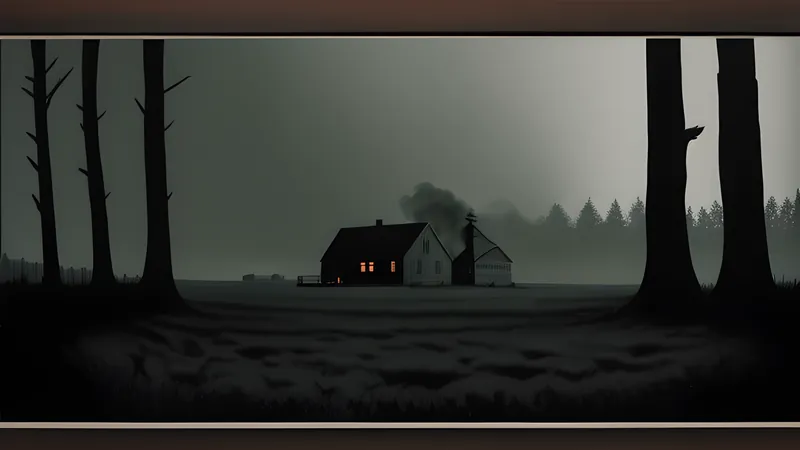
Most ghost films chase realism and hope the ghost survives contact with it. Kobayashi went the other way. He shot the entire three-hour picture inside a converted aircraft hangar, built his skies and forests and seas out of paint and silk and cloth, and let the seams show. The wager is audacious: that a frightened image can be more frightening when you can see it is made. Sixty years on, the wager has paid off so completely that the film looks less dated than the “realistic” horror of its own decade.
Four tales, one sensibility
The stories come from Lafcadio Hearn, the Greek-Irish writer who settled in Japan in 1890, took the name Koizumi Yakumo, and spent his last years collecting the country’s folk tales in careful, homesick English. Kobayashi adapts four of them, and the anthology structure lets each work at a different temperature.
“The Black Hair” is the oldest ghost-story engine there is: a swordsman abandons his loyal first wife for an advantageous second marriage, prospers, regrets it, and returns to the old house to find her still waiting, still weaving, exactly as he left her. “The Woman of the Snow” gives us Yuki-onna, the snow spirit who spares a young woodcutter on the condition that he never speak of her, and then reappears, years later, as the wife who bears his children. “Hoichi the Earless” — the longest and the centrepiece — follows a blind lute-player summoned each night to perform the battle epic of the Heike clan for an audience of the drowned dead. “In a Cup of Tea” is a fragment, a story about a story, in which a samurai keeps seeing a stranger’s face reflected in his drinking water.
The four share a moral architecture. Each is about a promise broken or a boundary crossed, and each punishes the transgression with a haunting rather than a verdict. Kobayashi, who had spent the 1950s making furious anti-authoritarian epics like The Human Condition and Harakiri, is quieter here, but the disquiet with power and hierarchy runs underneath. The dead in Kwaidan are almost always the wronged, the overlooked, the discarded first wife weaving in the dark.
Why the artifice works
Here is the mechanism, and it is worth watching for. When a film shoots a real forest, the forest is indifferent; it was there before the camera and will be there after. When Kobayashi builds a forest out of hanging strips of painted cloth and floods it with unreal amber and green light, every element in the frame has been chosen to mean something. The environment stops being a backdrop and becomes a face. In “Hoichi”, the sea battle that opens the segment is staged against a sky streaked with reds and blacks that no dawn ever produced — a sky that is grieving. The image tells you the outcome before a single sword is drawn.
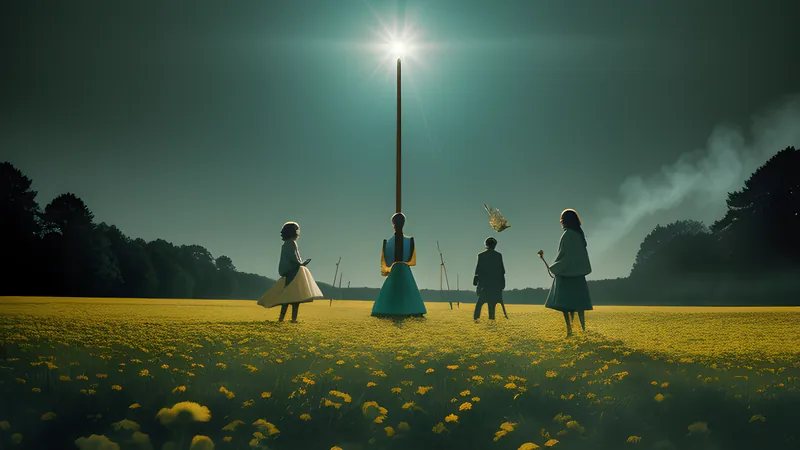
Cinematographer Yoshio Miyajima and Kobayashi treat colour as emotional weather. Cold blues and whites strangle “The Woman of the Snow”; sickly greens seep through “The Black Hair” as the house rots around its ghost. Because the colours are painted rather than found, they can be pushed past anything nature allows, and the push is exactly where the fear lives. This is the same discovery Dario Argento would make, in a completely different register, a decade later — that heightened, artificial colour bypasses the rational eye and speaks straight to the nervous system. Watch Suspiria (1977) after Kwaidan and you see two directors arriving at the same weapon from opposite ends of the world.
Then there is the sound, which is the film’s secret engine. Tôru Takemitsu, one of the great composers of the twentieth century, scored Kwaidan by mostly refusing to score it. He recorded creaking wood, splitting ice, the twang of a biwa string bent past music, and dropped these sounds into vast pools of silence. The famous trick: he removes ambient sound entirely at moments a conventional film would fill with strings, so that a footstep on a wooden floor detonates in the quiet. Silence, deployed with that precision, is louder than any orchestra. When Yuki-onna’s breath frosts the screen, the absence of music is what makes your skin move.
Hoichi, and the body as text
The centrepiece deserves its own paragraph because it contains the film’s single most indelible idea. To protect the blind musician Hoichi from the ghosts who summon him each night, the temple priests cover every inch of his body in the painted characters of a holy sutra, rendering him invisible to the dead. The image of a man’s entire skin turned into sacred writing is one of the great compositions in horror cinema — the human body as a page, protection and vulnerability written in the same ink. I will not say what the ghosts can still see, because the segment’s payoff turns on it, and it is waiting for you below the spoiler line.
What makes “Hoichi” land is patience. Kobayashi lets the nightly performances run long, lets the drowned court assemble in the fog, lets the biwa carry the lament of a clan wiped out at sea. The horror is braided into mourning until you cannot separate the two. This is the folk-horror principle a dozen later films would rediscover — that the past is not gone, only unappeased — and Kwaidan states it with a formal grandeur almost no one has matched.
Where it sits, and what to watch around it
Kwaidan took the Special Jury Prize at Cannes in 1965 and an Oscar nomination for Best Foreign Language Film, and then spent decades hard to see in anything like its full form; American distributors hacked it down, often cutting “The Woman of the Snow” entirely to shorten the runtime. Seek out a complete restoration — the segment’s absence guts the film’s symmetry. The Criterion edition runs the full three hours and lets the pacing breathe as designed.
For the collector, Kwaidan sits at a crossroads. Look back and you find the kabuki and noh theatre it borrows its frontal, presentational staging from — the ghost who addresses the audience as much as the character. Look sideways and you find Onibaba, Kaneto Shindô’s reed-field nightmare from the same year, working the opposite way: real location, real sweat, a demon mask instead of a painted sky, and every bit as terrifying. The two films are the twin poles of 1960s Japanese horror, the built world and the found one. Look forward and you find the slow, patient dread that would resurface in Ringu thirty years later, where the vengeful woman with the black hair walks straight out of Hearn’s oldest tale and into the age of videotape.
The verdict is easy to state and hard to exhaust. Kwaidan is the film that proves horror does not need to convince you it is real to frighten you; it needs to convince you it is true. Kobayashi builds an openly artificial world and then fills it with such conviction, such colour and grief and patience, that the artifice becomes the most haunted thing in it. You leave knowing exactly how the trick is done and no less afraid.
Spoilers below
Everything above is safe before a first watch. From here I am going to talk about the endings.
The punishments in Kwaidan are physical, and that is what makes them stick. In “The Black Hair”, the returning husband spends a tender night with the wife he abandoned — only to wake beside a mummified corpse, her long black hair still lush and alive and reaching for him as the house collapses into the ruin it truly was. His remorse gets no absolution; the film ages him decades in seconds as he crawls through the rot he had chosen to forget. The horror is the arithmetic of guilt made visible on a body.
“The Woman of the Snow” turns on the broken promise. Years into a happy marriage, the woodcutter, lulled by domestic contentment, tells his wife the story he swore never to tell — the night the snow spirit spared him. She is the snow spirit, of course, and the telling is the violation. She does not kill him, and that mercy is the cruelty: she leaves, dissolving back into the blizzard, because he has children who need him, and the marriage and the years simply vanish, unmade. The ghost’s restraint is worse than any vengeance.
And “Hoichi”: the sutra covers every inch of the musician’s skin except his ears, which the priests forget. When the ghost warrior comes to collect him and can see nothing but two floating ears, he tears them off to bring something back to his lord. Hoichi survives, earless, and — the final, bitter turn — becomes famous and wealthy from the story of his mutilation, the wound monetised into legend. Kobayashi ends the film on that irony, the artist made rich by the thing that maimed him. It is the most modern idea in this most antique of films, and it is why Kwaidan keeps its edge sixty years on.
Related Content