Kiyoshi Kurosawa: The Architect of Ambient Dread
How a video-shop journeyman turned empty rooms, billowing curtains and dimming light into the most patient horror grammar in cinema
Contents
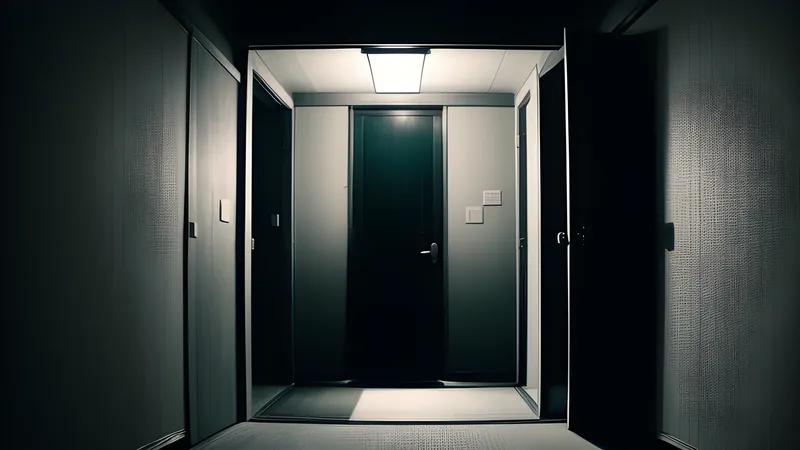
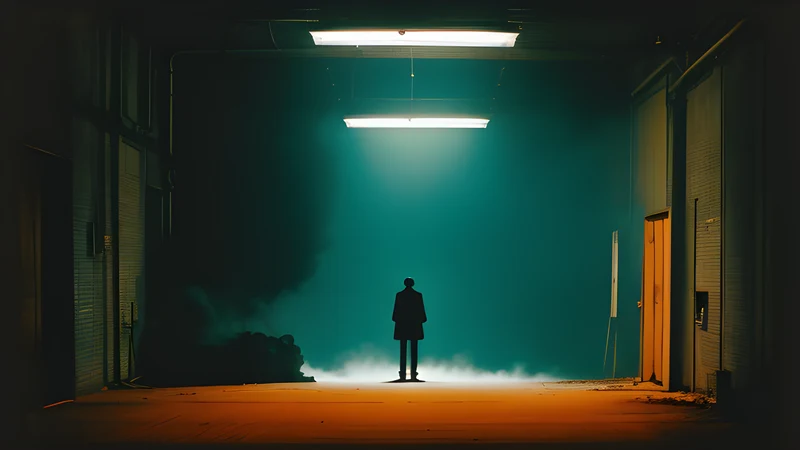
There is a shot Kiyoshi Kurosawa keeps returning to across thirty years of work. A room, filmed wide and flat, with a person standing in it. Nothing moves. Then, at the edge of the frame or deep in its background, something you had not clocked resolves into a second figure — a smudge of a person who was there the whole time, patient as furniture. You do not jump. You go cold, slowly, the way a room goes cold when a window has been open longer than you realised. That shot is the whole method. Kurosawa builds his horror out of space and light and the terrible amount of time a static camera is willing to give you, and the effect is less a scare than a change in air pressure.
He is often filed, lazily, as one of the J-horror names that broke internationally around the turn of the millennium alongside Hideo Nakata and Takashi Shimizu. The filing is accurate enough, yet it flattens a career that has run far past the vengeful-ghost boom and out the other side into spy melodrama and Venice prizes. Kurosawa (born Kobe, 1955, and no relation to Akira) is one of the most spatially intelligent directors alive, and the argument of this piece is that his subject was never really ghosts. It was architecture, and what empty buildings do to the people left inside them.
From the video shop to Cannes
The origin matters because it explains the patience. Kurosawa came up in the 1980s making pink films and, crucially, direct-to-video V-cinema — cheap genre product shot fast for the rental shelf. He directed the studio haunted-house film Sweet Home in 1989, whose troubled production (and a lawsuit with Juzo Itami over the final cut) taught him early what a director does and does not control. Through the early nineties he ground out yakuza and thriller programme-fillers, learning the working-fast discipline that lets a filmmaker hold a shot for ninety seconds because he has already decided he does not need coverage.
The breakthrough was Cure in 1997, a serial-killer procedural with the killing removed. A drifting amnesiac prompts strangers to murder, a burnt-out detective chases him, and the film declines to hand you a method or a motive you could carry home. It is the moment Kurosawa’s grammar arrives fully formed, and it remains the essential entry point — I have written about it at length in Cure (1997): Kiyoshi Kurosawa’s Hypnotist and the Empty Detective, and everything that follows in his work is prefigured in it.
What Cure announced was a filmmaker who had watched a great deal of American genre cinema — Tourneur’s suggestion, Don Siegel’s economy, the flat menace of a Richard Fleischer crime picture — and metabolised it into something ambient and Japanese. He wrote criticism, taught film, and directed like a man who had thought hard about why the cheapest effect is often the best one. When the international festivals finally came calling in the 2000s, they were discovering a director who had already made a dozen features on the margins.
The grammar of the wide shot
Watch enough Kurosawa and the toolkit becomes legible, which does nothing to weaken it. He shoots wide and lets figures sit small in deep space, so the room is always a character and you are always aware of how much of it is empty. He kills the score, or lets an industrial hum stand in for one, so the sound design is mostly rooms breathing — a distant machine, wind against plastic sheeting, the drone of a fluorescent tube. He loves thresholds: doorways, corridors, the far end of a warehouse, the gauzy membrane of a curtain that billows for no reason the plot will ever explain.
That curtain is his signature more than any ghost is. A sheet of translucent plastic or a pale drape, catching a breeze in a space that should be sealed, is Kurosawa telling you the barrier between the ordinary and the wrong has gone soft. He rarely cuts in for the reveal. The horror stays at the same distance as the furniture, which denies you the release a close-up would give and leaves the dread hanging in the frame with nowhere to discharge. This is the patient cousin of the technique I traced in The Long Take as an Instrument of Dread — Kurosawa allows himself a cut, yet he holds the distance, which is the part that does the work.
Colour does the rest. His palette drains toward institutional greys, sickly greens and the brown of buildings that were cheap when they were new. When light changes in a Kurosawa film — a room dimming as a cloud crosses, a bulb failing — it reads as an event, because he has trained you to watch the ambient level rather than the plot. The apocalypse, when it comes, often looks like nothing more than the lights going down for good.
The apocalypse is just loneliness
Kurosawa’s second great subject arrives in the run of films around 2000: the end of the world as a quiet, administrative process. Charisma (1999) sets a hostage negotiator loose in a forest fighting over a single possibly-poisonous tree, and turns an ecological parable into a study of how a society dismantles itself calmly. I unpacked its strangeness in Charisma: Kiyoshi Kurosawa’s Forest Parable, and it pairs with Pulse (Kairo, 2001) as his diptych on extinction by attrition.
Pulse is the masterpiece of the loneliness thread, a ghost story delivered through dial-up modems in which the dead do not haunt so much as recruit, and the living fade one by one into stains on the wall. Its vision of connection technology as a machine for isolation looks more prescient every year; I made that case in Pulse (Kairo): Kiyoshi Kurosawa’s Lonely Apocalypse. Set beside it, Retribution (Sakebi, 2006) — a detective, a drowned woman in a red dress, a city of accusing water — reworks the same guilt into a more openly generic frame, covered in Retribution: Kiyoshi Kurosawa’s Red Dress Ghost.
The through-line is that Kurosawa’s ghosts want company. They stand in the wide shot because they are waiting, and the horror is the suggestion that joining them would be a relief. Loneliness is the payload; the supernatural is only the delivery mechanism. It is a deeply unfashionable idea about horror — that the true terror is dissolution, the self thinning out into a crowd of the indifferent dead — and he has spent a career proving it holds.
The late turn: same rooms, new genres
The lazy assumption is that a horror stylist eventually calcifies. Kurosawa spent his second act widening his range instead. Tokyo Sonata (2008), a drama about a salaryman hiding his redundancy from his family, won a jury prize at Cannes and revealed that the ambient-dread grammar works just as well on economic humiliation as on ghosts — the same empty rooms, the same dimming light, the same figure standing where you did not expect one. From there he roamed. Journey to the Shore (2015) is a tender ghost-marriage road film that took a directing prize at Cannes. Before We Vanish (2017) is an alien-invasion picture that treats body-snatching as a melancholy comedy of language. To the Ends of the Earth (2019) follows a Japanese TV presenter adrift in Uzbekistan and is, quietly, one of his most moving films.
Then Wife of a Spy (2020), a wartime melodrama of betrayal shot in 8K for television, won him the Silver Lion for best director at Venice — a horror-shelf journeyman standing on the podium for a historical spy picture. His recent Cloud (2024), a thriller about an online reseller stalked by the strangers he has short-changed, drags the Pulse thesis into the gig economy and served as Japan’s Academy submission. The rooms are the same rooms. The dread is the same dread. He simply keeps finding new genres to smuggle it into, which is why the career resists the tidy J-horror caption people want to give it. Two working habits knit the whole thing together. The first is his repertory company, above all Kôji Yakusho, the face of Cure and Retribution, an actor Kurosawa uses for exactly the quality of a man being slowly hollowed from within while his surface stays composed. The camera holds on Yakusho long enough for the composure to look like a cost, and the performance becomes another empty room. The second is that Kurosawa keeps rebuilding his own past. In 2024 he shot Serpent’s Path a second time — a French-language remake of his own 1998 V-cinema revenge film, thirty years and one continent removed from the shelf where it started. A director returning to his direct-to-video juvenilia to redo it with a Cannes-calibre budget is its own quiet statement: the cheap films were never a phase he escaped, only a grammar he has spent his whole career refining.
Where to start
Begin with Cure, always, and let it recalibrate what you think horror is allowed to withhold. Follow it with Pulse for the apocalyptic register and Tokyo Sonata to watch the method survive the loss of the supernatural entirely. If you want the wider map of the movement he anchors, The J-Horror Essential Canon sets him in company, and my companion career piece Kiyoshi Kurosawa: Dread Without a Jump Scare goes deeper on the emptied frame specifically. Most of the major titles circulate on Blu-ray through the boutique labels and drift through the arthouse streamers; Cure and Pulse are the ones worth hunting down in the best transfer you can find, because the ambient level is the film.
Spoilers below
Cure ends by refusing to close. The detective, Takabe, appears to have absorbed the drifter Mamiya’s power rather than defeated it; the final restaurant scene, with a waitress collecting a knife, implies the killing suggestion has simply changed hosts and will go on spreading. There is no cure, and the title curdles. Kurosawa gives you the shape of a resolution and withholds the thing itself, so you leave carrying the infection.
Pulse commits fully to its extinction. The ghosts win. Tokyo empties, planes fall, and the two survivors drift out to sea on a boat under a smeared sky, the woman narrating a happiness that reads as terminal — the last two people alive describing companionship as the world ends around them. It is Kurosawa’s bleakest ending and also his most honest, because the whole film has been arguing that the dead were only ever offering what the living could not: someone in the room who will not leave. The wide shot finally has no one standing in the background, and that is the most frightening image of all.
Related Content