Kiyoshi Kurosawa: Dread Without a Jump Scare
The Japanese master who empties the frame, kills the music, and lets the dread walk in on its own
Contents
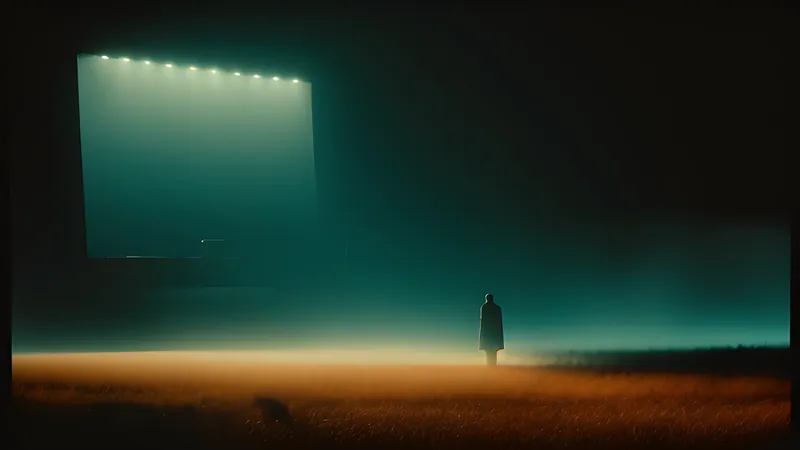
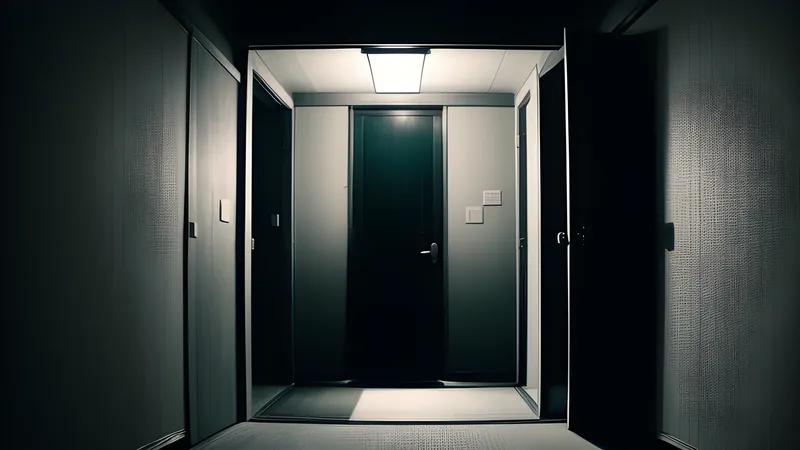
There is no one else in horror who scares you with an empty room the way Kiyoshi Kurosawa does. No jolt, no orchestral sting, no figure lunging from a cupboard. He gives you a wide, grey, badly lit space — an abandoned factory, a flooded basement, a dim clinic corridor — holds the shot longer than is comfortable, and lets your own eye do the terrifying work of scanning the corners. Something is wrong in the frame before anything happens in it. That is the Kiyoshi Kurosawa signature: dread as an atmospheric pressure rather than an event, a sense that the world itself has gone slightly, permanently off.
He is often lumped in with the J-horror boom of the late nineties, and he did make two of its landmark films. But where his peers chased the vengeful-ghost formula that Ringu codified, Kurosawa was after something bleaker and stranger — a horror of emptiness, of the slow leak of meaning out of modern life. Understand that and his sprawling, genre-hopping filmography (horror, crime, family drama, science fiction, period romance) resolves into one long study of the void behind ordinary things.
Cure and the birth of the empty frame
He had worked for years in Japan’s low-budget V-Cinema straight-to-video industry, grinding out yakuza pictures and learning to shoot fast, before Cure (1997) made him internationally visible. A detective hunts a string of murders with an identical signature — an X carved into each victim’s throat — committed by different killers who cannot explain why they did it. The thread connecting them is a drifting young amnesiac who asks people, gently, endlessly, “Who are you?” until something inside them comes loose. It is a serial-killer procedural drained of every procedural comfort. There is no gratifying capture, no tidy motive, and the horror is the suggestion that the murderous impulse is already inside everyone, waiting for a hypnotist to switch off the social software that suppresses it.
Cure is the master key to Kurosawa. The camera keeps its distance and stays wide. Rooms are underlit and over-large. Dialogue happens in flat, exhausted tones. And the dread lives in composition — a figure placed too far away, a doorway leading somewhere you cannot see, a long take that refuses to cut to safety. He learned from the flat, deep-focus horror of directors like Jacques Tourneur and from the alienated modernism of Antonioni, and he fused them into a horror grammar that owes nothing to the jump-scare. Once you have seen Cure you cannot unsee the method, and every dim corridor in cinema starts to feel occupied.
Pulse: the apocalypse of loneliness
Pulse (Kairo, 2001) is his masterpiece and one of the essential films about the internet, made before most people had it. Ghosts begin bleeding into the world through computer screens and dial-up connections, and the dead are not there to frighten so much as to spread a contagion of despair; people who encounter them simply fade, lose the will to exist, and leave a smear on a wall. It builds to one of the great apocalyptic endings in horror — a depopulated Tokyo, the loneliness that the connected age was supposed to cure turned into a literal plague of isolation. The infamous “ghost walk,” a figure lurching toward the camera in a single unbroken shot, works precisely because Kurosawa has spent the whole film teaching you that nothing here will save you.
Pulse sits alongside Ringu as the twin peak of J-horror, and the contrast is the whole argument. Ringu has a curse with rules, a mystery to solve, a clock to beat. Pulse has no rules and no solution — its ghosts are a symptom of a world already ending — and that formlessness is exactly why it lingers longer and disturbs deeper. The American remake, like most of the Hollywood J-horror ports, kept the ghosts and threw away the melancholy, which was the only thing that mattered.
His ghosts also belong to an older Japanese tradition than the video-nasty franchises. The patient, painterly dread of a film like Kwaidan — the ghost as a mood that saturates a space rather than a creature that attacks — is closer to Kurosawa’s spirit than Ringu ever was, and his refusal to explain his hauntings continues that lineage of the ghost story told as atmosphere.
The genre-hopper: crime, family, science fiction
Here is where Kurosawa surprises people: he is not only a horror director, and his career has ranged far from the ghost. Charisma (1999) is an ecological parable disguised as a thriller, a detective drawn into a forest feud over a single strange tree that may be poisoning everything around it. Bright Future (2003) follows disaffected young men and a poisonous jellyfish through a Tokyo of drifting menace. Then, astonishingly, he made Tokyo Sonata (2008) — a straight family drama about a salaryman who loses his job and hides it from his wife — and it is one of the finest films of its decade, the same eye for domestic dread turned on an ordinary household, the same sense that the floor could give way at any moment. It won a jury prize at Cannes and proved the atmosphere was never a horror trick; it was a worldview.
One actor recurs through the strongest work: Koji Yakusho, the tired detective of Cure, the drifter of Charisma, the vengeful presence of Retribution. Yakusho’s gift is a kind of watchful blankness — a face that could be exhausted, could be possessed, could be about to do something terrible — and Kurosawa uses it as another empty surface for the audience to read into. He returned to the supernatural with Retribution (Sakebi, 2006) and the crime-horror hybrid Creepy (2016), a genuinely frightening film about a family living next door to something monstrous, and to science fiction with Before We Vanish (2017), an alien-invasion film in which the aliens harvest human concepts — the very idea of “family,” of “work” — and leave people hollowed. Wife of a Spy (2020), a wartime espionage drama shot in high-definition video for a broadcaster, won him the Silver Lion for direction at Venice, a long way from V-Cinema yakuza quickies. His recent Cloud (2024) — a paranoid thriller in which an online reseller becomes the target of the strangers he has quietly ripped off — and the short, nasty Chime (2024) show him still restless, still emptying the frame, still finding the modern void in a reselling scam or a strange sound. Nearly thirty years after Cure, the diagnosis has not changed: connection has curdled into surveillance, and the loneliness only deepens.
The misfires and the constant
Not every experiment lands. Loft (2005) muddles its ghost story; Séance (2000), a remake of an English film, is minor; Real (2013) and Daguerreotype (2016) are admired more than loved, and the very consistency of his mood can, in the weaker films, tip into inertia — atmosphere with too little underneath it. Kurosawa’s method is high-risk in exactly this way: when the empty frame is charged with meaning it is unbearable, and when it is not, it is merely empty. The great films earn the dread; the lesser ones assume it.
But the constant never wavers. Whether the genre is horror, crime, or domestic drama, Kurosawa films the world as a place where the surface of normal life is thin and something worse presses up against it from below. His people are lonely, disconnected, half-erased by the systems they live inside, and his rooms are always too big and too dark for them. It is the same film, in the best sense, made over and over in different clothes.
Why it works — and where to start
The mechanics are subtraction. He removes the score, or reduces it to a low industrial hum. He removes close coverage, keeping the camera wide so you feel the space around a character rather than their face. He removes the reassurance of a cut on action, holding long takes so that dread accumulates in real time. And he lights for gloom, using the sickly greys and greens of underfunded public buildings so the world looks abandoned even when it is full. The horror is what you supply yourself, scanning that empty frame — which is why it survives repeat viewing, where a jump-scare dies the moment you know it is coming.
Start with Cure, always. It is the clearest statement of the method, one of the best thrillers of the nineties, and the film every later Kurosawa idea grows out of. Then Pulse, for the apocalypse. If the mood grips you, Tokyo Sonata shows the same instrument playing a completely different tune, and Creepy proves he can still make you genuinely afraid in the modern era. His influence runs through the whole “slow-burn” and atmospheric horror of recent years — the patience of a film like It Follows owes him a debt — and through every director who has learned that the scariest thing you can put on screen is a wide shot of a room where nothing is happening yet.
Related Content