Jin-Roh: The Wolf Brigade and the Fairy-Tale Fascism
A revisit of Hiroyuki Okiura's 1999 debut, in which Little Red Riding Hood is read back as a manual for state violence
Contents
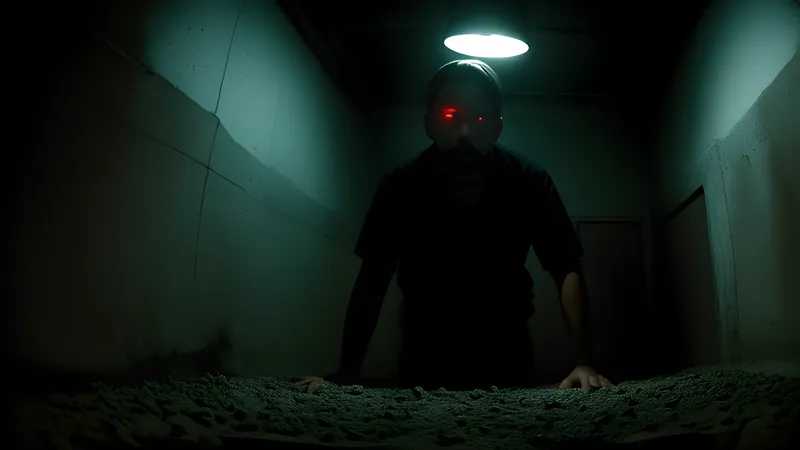
The image everyone keeps from Jin-Roh is a pair of red lenses glowing in a concrete tunnel above a bulk of grey armour, and the film knows exactly what it has given you. That silhouette is a wolf, drawn as a riot policeman, standing in a storm drain that any child in a fairy tale would recognise as the forest. Hiroyuki Okiura’s 1999 debut spends ninety minutes insisting that the Brothers Grimm wrote the better manual for understanding state violence, and by the end it has made the case with a thoroughness that is genuinely upsetting.
An alternate Japan, sketched not explained
The setting is a postwar Japan that lost the war to a different occupier and rebuilt into a different country: a nation that recovered under German influence, with the visual furniture and institutional instincts to match. Economic misery has produced a violent protest movement; the movement uses teenage girls as couriers for explosives, nicknamed Red Riding Hoods; and the state’s answer is the Capital Police, an armoured paramilitary force whose Special Unit wears full protect-gear and carries machine guns into civil disturbances.
The film gives you almost none of this as exposition. It arrives in fragments — a newsreel, a briefing, a piece of graffiti, a uniform cut a shape you were not expecting — and expects you to assemble the world while the plot is already moving. That confidence is inherited directly from Mamoru Oshii, who wrote the screenplay from his own long-running Kerberos material, and it is one of the reasons the film has aged so well. Nothing dates a genre picture faster than a character explaining the premise to another character who already knows it.
The Kerberos saga is worth knowing about as context. Oshii had been circling this world for over a decade in manga and in two live-action films of his own in the late 1980s and early 1990s, none of which quite worked. Handing it to Okiura — an animator of formidable reputation who had worked on the biggest features of the era before this, his first film as director — is what finally cracked it.
Kazuki Fuse and the failure to fire
The story proper begins with a Special Unit trooper, Kazuki Fuse, cornering one of the girl couriers in the sewers beneath a riot. He has the girl at gunpoint. He does not shoot. What happens next is public knowledge from the film’s first ten minutes and I will keep it that way: the encounter goes badly, Fuse is pulled off duty and put through retraining, and the institution he belongs to begins to ask a question it takes very seriously — why did he hesitate?
Fuse then meets Kei Amemiya, the dead girl’s sister, and the film settles into a relationship that is tender, halting, and impossible to read. They walk. They visit places connected to the girl. She lends him a copy of Grimm. He reads it, and the film starts quoting the story back at itself with a straight face.
Around them, three institutions circle: the Capital Police, the rival Public Security agency that wants them abolished, and a shadow faction inside the Capital Police itself known as the Wolf Brigade. Every conversation in the middle hour is two people establishing what the other knows, which sounds tedious and is the opposite — Okiura shoots it like a thriller of glances, and the tension is close to unbearable because the audience is never sure which of these people is running which errand.
Why the animation is doing the acting
Jin-Roh is one of the great pieces of character animation, and it is worth being specific about why.
Okiura came up as an animator with a reputation for realistic human motion, and the film’s performances are built from behaviour rather than expression. The faces barely move. Fuse’s default is a blank, and Okiura declines almost every opportunity to give him a readable reaction shot. What you get instead is weight: the way he sits down, the way he handles a rifle with the unthinking competence of a man who has done it ten thousand times, the way he stands slightly too still when he is lying. The animation is doing the work a great screen actor does with their body while their face keeps the secret.
The armour is the counterpoint. When a trooper is in protect-gear, the film gives you no face at all — just the lenses, the breathing apparatus, and a mass that moves with the appalling deliberation of something heavy and unhurried. Okiura animates the armoured men as though they are a different species from the men inside them, and the transition between the two states is the film’s core visual idea. A man takes off a helmet and the film’s whole grammar changes.
The sound design completes it. Hajime Mizoguchi’s score is mournful and largely string-based, and it stays out of the action entirely. The setpieces are carried by mechanical noise — servos, breath, the specific dead sound of a heavy round in a concrete space. The famous sewer sequences are frightening because they are quiet, and because a machine gun in a tunnel is animated with a physical accuracy that most live-action war films do not bother to achieve.
The fairy tale is the thesis
The Grimm text runs through the film like a rail. Okiura and Oshii use the older, unsoftened version of Red Riding Hood — the one in which the wolf eats the girl and the story simply stops, without the woodsman and the rescue that later editions bolted on to make it bearable for children.
That choice is the entire argument. A fairy tale, in this film’s reading, is a document that a society writes to explain to its children what it is actually prepared to do to them, and every softening is a lie the society tells itself afterwards. The Wolf Brigade recite the story to one another. They know precisely which character they are, and they have no interest in the woodsman version.
The reason this rises above a clever conceit is that the film refuses to let the fable be a metaphor at a safe distance. The girls really are couriers. The men really are wolves. The state really does need both roles filled, and the film’s most chilling suggestion is that the arrangement is stable — that a society can run indefinitely on a supply of children who believe they are heroes and a cadre of men who have accepted they are predators.
The design carries the history
The alternate world is established almost entirely through industrial design, and this is the film’s most efficient trick.
Protect-gear is the centrepiece. The armour reads instantly as a descendant of German infantry equipment — the helmet silhouette, the belt-fed weapon, the greatcoat lines of the plating — and the film never once says the word that the design is saying for it. A viewer with no interest in counterfactual history absorbs the premise from a costume in the first two minutes. Every other element in the frame is calibrated to the same job: the vehicles, the typography on official documents, the cut of a suit, the architecture of the Capital Police building. The world-building lives in the art department and asks nothing of the script.
The choice pays off in a way exposition never could, because it makes the horror ambient. A film that explained its alternate Japan would have invited you to evaluate the premise. A film that only shows it forces you to keep noticing it, shot after shot, in objects that the characters find utterly unremarkable. The most unsettling thing in Jin-Roh is how normal all of it is to the people living in it — an ordinary street, an ordinary commuter, and a man in the armour of a defeated ideology directing traffic.
It also solves the tone problem. Armed police in fantastical armour is inherently a comic-book image, and a lesser film would have shot it for spectacle. Okiura shoots protect-gear as equipment: dirty, heavy, poorly ventilated, awkward on stairs. The gear looks like something a procurement committee approved, which is exactly why it frightens.
The verdict, argued
The case against is that Jin-Roh is airless. Okiura’s control is total, and it can shade into embalming: the pacing is glacial by design, the alternate history is more atmosphere than analysis, and the film’s fatalism is so complete that it forecloses on its own drama. If you resist it, you will feel the film arranging its people towards a conclusion it decided on before the first frame.
The case for is that this fatalism is honestly earned rather than fashionable. The film argues its position — that institutions consume the individuals who serve them and that the consumed generally consent — through behaviour, animation and structure instead of through speeches, which is more than most political cinema manages in any medium. It is beautiful in a way that never once prettifies its subject, and it contains a final movement that a great many viewers have never quite got over.
Watch it after Patlabor 2, which shares its writer, its studio’s sensibility and its conviction that the interesting part of state violence is the paperwork. The other ancestor is Ghost in the Shell, for the same technical culture — Production I.G at the height of its powers, drawing rain and concrete better than anyone alive.
Spoilers below
The trap is the film, and everybody in it is inside one.
Fuse’s hesitation in the sewer is real, and the girl detonates her explosive in front of him. His retraining, his transfer, his apparent vulnerability — all of it is being watched. Public Security has been building a case to destroy the Capital Police, and Kei Amemiya is their instrument: she is not the dead girl’s sister, and her assignment is to become Fuse’s weakness, so that the resulting scandal can be used to break the force.
The turn is that the Wolf Brigade knew from the start. Fuse’s superiors identified the operation early and let it run, and Fuse’s grief and tenderness were, from the institution’s side, a bait laid deliberately in front of a rival agency. The relationship the audience has watched develop with real feeling was a controlled experiment on both sides, and the film’s cruellest stroke is that it plays as love anyway.
The ending stages the Grimm text without a shred of irony. Kei, in a red coat, is taken into the tunnels, and Fuse — in full protect-gear, the wolf entire — is given the order to finish it. The Brigade recite the story. He does it. The film cuts the woodsman, because the older version of the tale has no woodsman, and Okiura’s point is that the version with a rescue is the one written for people who do not have to look.
What lingers is Fuse’s obedience. He does not become a monster in the last reel; he was one throughout, and the film’s structure has been slowly withdrawing the comforting possibility that his silence meant sensitivity. His hesitation in the opening was never mercy. It was a man recognising his own species and being briefly surprised.
Follow it with Patlabor 2 for the same argument with the fable stripped out, and Angel’s Egg for the film where Oshii first learned that a symbol left unexplained does more damage than one you unpack.
Related Content