Jacques Tourneur: The Master of the Unseen
The Frenchman at RKO who made poverty into a philosophy and shadow into a special effect
Contents
The most famous thing Jacques Tourneur ever filmed is a bus. A woman walks a long block at night in Central Park West, another woman follows her, the footsteps behind her stop, the tension racks up for a minute and a half, and then a shape lunges into frame with a hiss — and it is the air brake of a city bus pulling in. The gag was so effective that RKO’s horror unit reused it for years and the trade came to call any cheap shock a “Lewton bus”, which is a small injustice, because Val Lewton produced it and Tourneur shot it.
He was born in Paris in 1904, the son of Maurice Tourneur, one of the finest silent directors in France, who took the family to America when Jacques was ten. The boy grew up on his father’s sets, became an American citizen, worked as an office boy at MGM, then a script clerk, then his father’s editor. He went back to France with Maurice in 1928 and directed several features there in the thirties before returning to Hollywood, where he landed in the second unit — and it was on the second unit of A Tale of Two Cities in 1935 that he met David Selznick’s story editor, a Russian émigré named Val Lewton. That introduction is the hinge of both their careers.
The Lewton unit
When RKO gave Lewton a horror unit in 1942 with a fixed ceiling of around $150,000 a picture and titles handed down from the marketing department, Lewton hired his friend. The three films they made together in two years reorganised American horror.
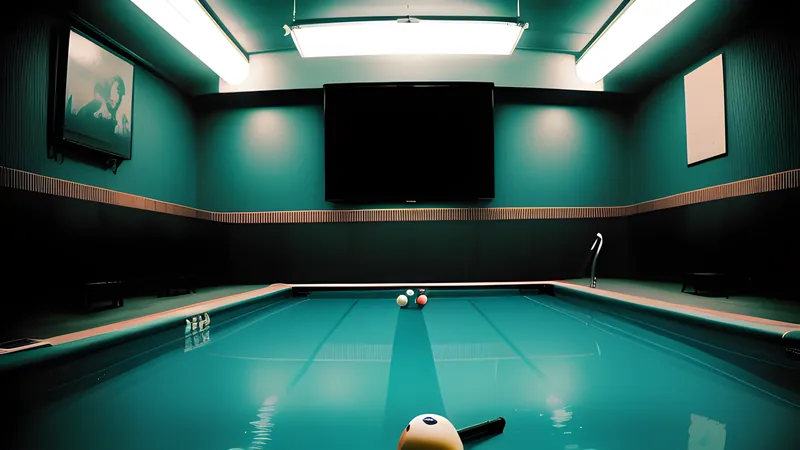
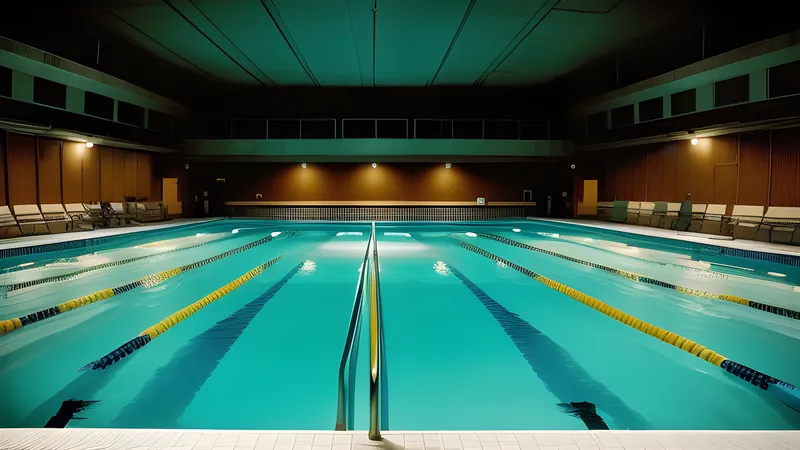
Cat People (1942) cost roughly $134,000 and made so much money it is credited with steadying a studio still bleeding from Citizen Kane and The Magnificent Ambersons. The title was assigned before a word was written; DeWitt Bodeen’s script turned it into a story about a Serbian émigré who believes she will become a panther if she is touched. Nicholas Musuraca lit it in blacks that swallow half of every frame. Two sequences are permanent: the walk to the bus, and the swimming pool, where Alice treads water in a basement pool while something paces the tiled edge above her and the reflected light thrashes on the walls. Nothing is shown. The terror you don’t see is the whole method in one sequence — a growl, a bathrobe, water, and an audience doing all the work.
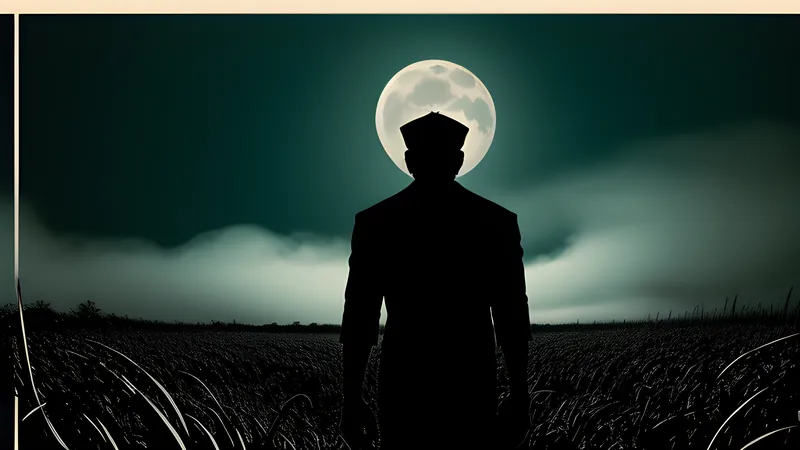
I Walked with a Zombie (1943) is the better film and one of the strangest studio pictures of the decade. Curt Siodmak and Ardel Wray transposed Jane Eyre to a Caribbean sugar plantation, and Tourneur filmed the result as a slow, mournful reverie about colonial guilt — the estate built on the slave trade, the calypso singer who narrates the family’s shame in the marketplace, the figurehead of Saint Sebastian at the shore. Its centrepiece is a walk through the cane fields at night to the houmfort, past Darby Jones’s Carrefour standing enormous and silent in the path, with nothing on the soundtrack but wind and drums. The Jane Eyre of the undead is a horror film in which the horror is history.
The Leopard Man (1943) is the loosest and contains the unit’s cruellest scene: a girl sent out at night for cornmeal, locked out by her mother, and a slow dark stain arriving under the door. It is also, structurally, an American film about a serial killer years before the vocabulary existed, and it hands the point of view around between victims in a way that anticipates a great deal of what came later.
What restraint actually cost
The received account is that Lewton’s unit suggested rather than showed because suggestion is superior. The truer version is that the budgets forbade a convincing panther and Tourneur turned the prohibition into a grammar, which is a more interesting story and a more useful one.
The technique is specific. Tourneur and Musuraca lit for pools of light with genuine darkness between them, so that the frame contains areas the audience cannot resolve and must therefore populate. He held shots longer than the sequence required, which converts waiting into looking. And he used sound as the primary carrier — footsteps changing surface, a growl mixed just under the threshold of certainty, the abrupt removal of everything. In the pool scene you never learn whether there was anything there at all, and the film never returns to adjudicate. Lewton’s poetry of the low budget and the producer as author both matter to this story, and Lewton’s taste shaped the scripts profoundly. The staging, the darkness and the patience are Tourneur’s, and you can prove it by watching the unit’s films made without him: they are good, and they are lit.
The walk
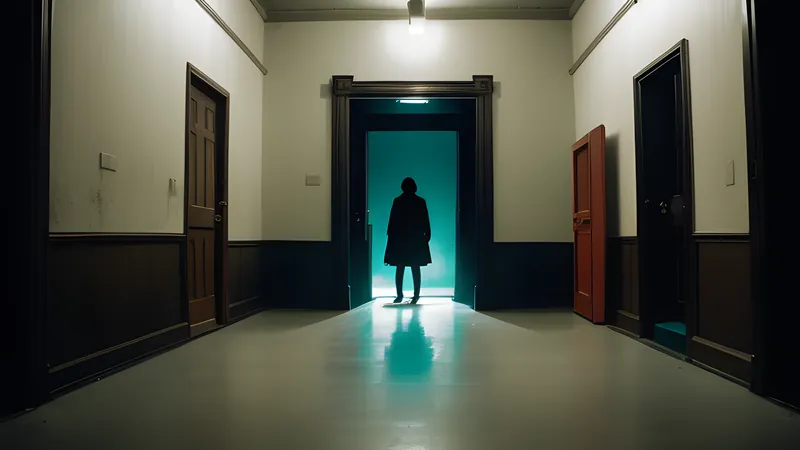
Tourneur’s signature is a form rather than an image, and once you see it you find it in every genre he touched: the walk. A character moves through a space at night, alone, for longer than the plot requires, and the film’s whole argument happens during the transit. Alice on Central Park West. Betsy and Jessica through the cane. The girl sent out for cornmeal. Jeff Bailey walking up to a house in Bridgeport, Karswell’s guest walking through a wood in Hertfordshire.
The mechanics are consistent. The camera travels with the character at a fixed distance, so the audience is escorted rather than shown. The lighting establishes exactly one safe pool and lets the character leave it. The sound reduces to footsteps, and the footsteps change texture as the surface changes — pavement, grass, gravel, tile — which is the detail that persuades the ear the space is real even when the set is thirty feet of stage. And crucially, Tourneur never cuts to what is behind. A cut to the pursuer would answer the question and end the sequence; staying with the pursued keeps the audience trapped inside a single, limited point of view, which is where all his effects live.
This is why his horror and his noir are formally identical. Both are about a person moving through territory they cannot see the whole of, carrying a past they cannot put down, and the camera’s refusal to grant them an overview is the same refusal in both cases. He made one film about one situation for thirty-five years.
The noir
RKO promoted him and he made Days of Glory (1944), which gave Gregory Peck his first role, and Canyon Passage (1946), a western in Technicolor of unusual moral weather. Then in 1947, with Musuraca back beside him, he made Out of the Past.
It is arguably the finest film noir ever produced. Robert Mitchum’s Jeff Bailey pumping petrol in a mountain town while his past drives up the road; Jane Greer’s Kathie walking out of the Acapulco sun and into the picture, which is the single best entrance in the genre; Kirk Douglas smiling. Tourneur brought the horror unit’s lighting wholesale — the interiors are all lamplight and encroaching black — and applied the same withholding discipline to character, so that Kathie’s motive is never explained and never needs to be. The doom-laden peak of film noir works because the director had spent five years learning that an audience will believe most intensely in what it has been made to supply.
Night of the Demon and the interference
His last great picture came a decade later in England. Night of the Demon (1957) adapts M.R. James’s “Casting the Runes” from a script by Charles Bennett, who had written The 39 Steps and The Man Who Knew Too Much for Hitchcock. Dana Andrews plays a debunking American psychologist; Niall MacGinnis plays Karswell as a plump, courteous, faintly ridiculous man doing children’s conjuring at a party in a clown suit, which is the most quietly disturbing characterisation in fifties horror.
And then the producer, Hal E. Chester, put a monster in it. Tourneur and Bennett both wanted the demon left ambiguous — a possibility inside a smoke cloud — and Chester shot inserts of a large rubber fire-demon and cut them into the opening and the ending while they were elsewhere. Bennett said afterwards that if Chester walked up his driveway he would shoot him. The extraordinary thing is that the film survives it: everything between the two inserts is the runes and the restraint working exactly as designed, and the strip of paper blowing across a room remains more frightening than anything Chester bought.
The long tail
Tourneur’s later work drifted. Stars in My Crown (1950), a small-town drama he named as his own favourite and made for reduced money to get it made at all, is barely known. There were westerns — Wichita (1955) with Joel McCrea is very fine — a good tight noir in Nightfall (1957), a Corman comedy in The Comedy of Terrors (1963), and television. His last significant credit is one of the best half-hours in American broadcasting: “Night Call”, the Twilight Zone episode with the telephone and the storm, which is the Lewton method compressed into twenty-five minutes and aimed at loneliness. He retired to France and died at Bergerac in 1977.
The honest case against
He was a company man and it shows. Handed weak material he directed it competently and went home; there are fifteen years of his filmography in which the personality simply is not present, and his defenders skip them. He had no interest in fighting for pictures, which is why Chester was able to vandalise Night of the Demon and why Tourneur’s response was resigned rather than furious. A director with Fisher’s stubbornness or Hitchcock’s contractual cunning would have protected more of his work.
The reputation therefore rests on about six films across two genres, held together by one idea. It is a great idea. Every horror director who has since chosen to keep the thing off-screen — and Georges Franju arrived at the neighbouring position from an entirely different starting point, principle rather than poverty — is working a seam Tourneur opened in a basement swimming pool at RKO for a hundred and thirty-four thousand dollars.
Watch Out of the Past and I Walked with a Zombie in one evening. They are seventy and sixty-nine minutes respectively, they were made five years apart by the same man in different genres, and they are recognisably the same film about people who cannot outrun what they did. Criterion and Warner Archive keep both in print, and the Val Lewton canon is where to go next.
Related Content