It Follows: The Metaphor Everyone Argues About
David Robert Mitchell's slow walker and the fight over what it means
Contents
Every conversation about David Robert Mitchell’s It Follows (2014) collapses into the same argument within about ninety seconds. Someone says it is about sexually transmitted infection. Someone else says no, it is about mortality, the thing that starts walking towards you the moment you are old enough to know you will die. A third person insists it is about trauma, the way harm gets passed from one body to the next because the harmed can think of no other way to be rid of it. The film survives all three readings, and that survival is the first clue that the metaphor was never the point. The metaphor is the bait. The craft is the film.
The premise is clean enough to explain in a sentence, which is part of why it travelled. Jay, a nineteen-year-old in a soft-focus Detroit suburb, sleeps with a boy who then ties her to a chair and explains, apologetically, that he has passed something to her. From now on a figure will walk towards her, slowly, always at walking pace, taking the form of strangers or of people she loves. Only she can see it. If it reaches her it will kill her. She can pass it on the way it was passed to her, but if the person it kills dies, it comes back down the line to her. It is a chain letter written in dread.
The walk is the whole engine
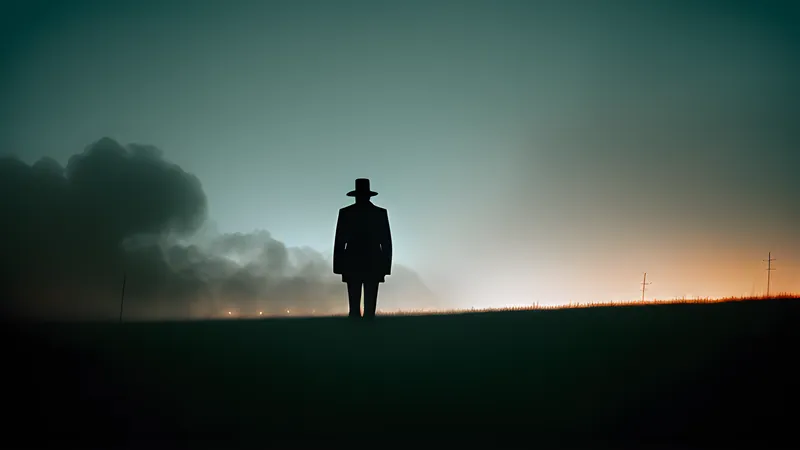
Start with the thing the film gets exactly right, because everything else hangs off it. The entity walks. It never runs, never lunges, never teleports for a jump-scare. This single design decision does more work than any monster makeup could, and it works because it hands the horror to geometry rather than to shock. A creature that runs frightens you for a second. A creature that walks frightens you for the length of a film, because you are always doing the maths. It is four streets away and coming. You can sleep, drive, cross a state line, but it knows where you are, and it is still walking. The threat is not the moment of contact; it is the interval before it, which never closes and never quite opens.
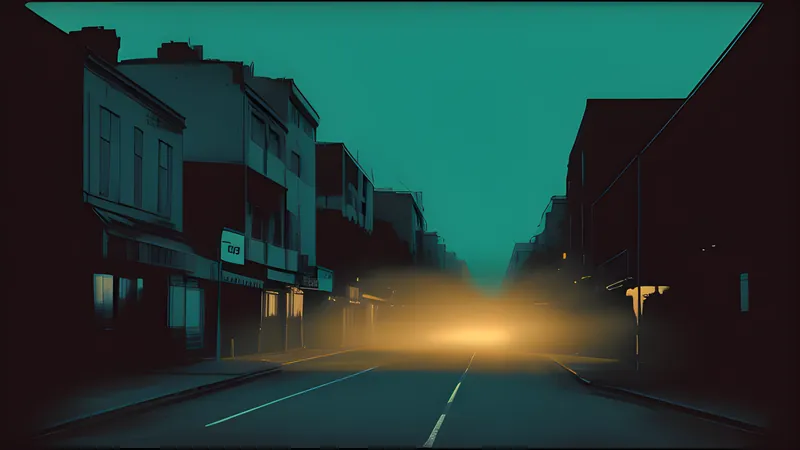
Mitchell shoots this with a patience that a lot of contemporary horror has forgotten how to afford. The camera loves the slow 360-degree pan, turning through a full circle in a schoolyard or a living room while you scan every face in the background for the one that is walking too deliberately, staring at the wrong person. He teaches you the grammar early and then weaponises your own literacy. Once you know to check the deep background, the film can terrify you by putting nothing there, because the absence is as loaded as the presence. Mike Gioulakis’s widescreen compositions leave acres of room at the edges of the frame precisely so your eye has somewhere to be afraid of.
Then there is Disasterpeace’s score, which is the film’s second engine. Rich Vreeland came to It Follows from scoring the video game Fez, and he brought a chiptune composer’s understanding that a synthesiser can be an assault. The cues are enormous, dissonant, and often deliberately out of proportion to what is on screen, a wall of analogue menace that makes an empty suburban street feel like the surface of a hostile planet. It is the most Carpenter thing about the film, and that is a compliment I will come back to.
The suburb out of time
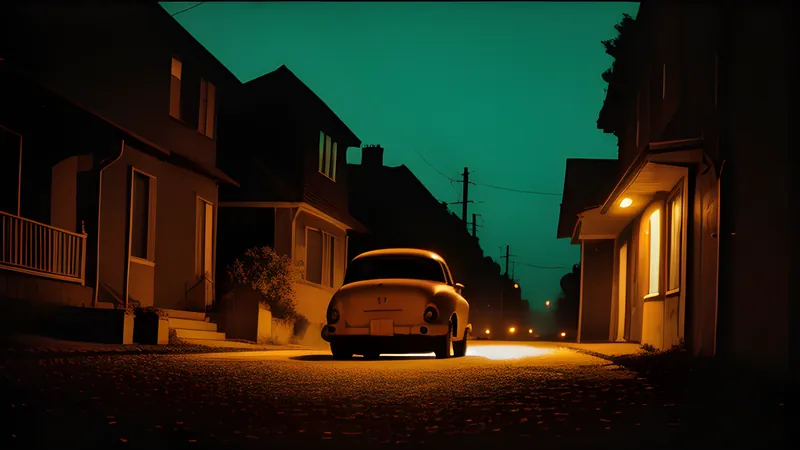
Part of the film’s unease is that you cannot place when it happens. The cars are boxy and old. The televisions are cathode-ray sets showing crackly black-and-white creature features. Yet one character reads from a clamshell device shaped like a make-up compact, an e-reader that exists nowhere on Earth. The clothes drift between decades. This is not sloppiness. Mitchell has built a suburb that floats free of any specific year, and the effect is to make the horror feel folkloric, a thing that has always been walking and always will be, rather than a 2014 news story about teenagers.
That floating quality is where the film reveals its real ancestry, and here the collector in me wants to reshelve it. Everyone reaches for the STI reading and stops. The truer lineage runs back to Jacques Tourneur and Val Lewton’s Cat People (1942), where sex and dread were fused into a thing that stalks at the edge of the light and is never fully shown. It runs through A Nightmare on Elm Street (1984), another film where teenagers inherit a doom they did not choose and cannot outrun by staying awake. Above all it runs back to John Carpenter’s Halloween (1978): the widescreen suburban Illinois that Mitchell’s Detroit is quoting almost shot for shot, the shape that walks rather than sprints, the synth score that turns the ordinary street into a trap. If you want the blueprint It Follows is redrawing, it is Halloween and the slasher grammar Carpenter set in shadow. Mitchell is not hiding this. The film is a love letter with a return address.
Where it earns its own place on the shelf is in tone. Carpenter’s Michael Myers is evil as a force. Mitchell’s follower is sadder than that, closer to the ache of adolescence itself, the dawning knowledge that the body is a countdown and that intimacy is the thing that starts the clock. In that melancholy it sits beside another modern classic of teenage dread, Tomas Alfredson’s story of a lonely boy and the thing next door, which I wrote about in Let the Right One In and its study of loneliness. Both films understand that the most frightening thing you can tell a young person is that they are running out of time and that love will not save them from it.
Where the argument gets it wrong
So back to the metaphor everyone fights about. The reason the STI reading feels reductive is that it treats the film as an allegory with a solution, a coded lecture you decode and then discard. But It Follows refuses the tidy one-to-one. If it were only about infection, passing it on would be a cure, and the film would end when Jay finds a willing partner. Instead the chain is the horror. Passing it on does not free you; it merely moves you further up a queue that can always shunt back down. That structure describes mortality better than infection, and it describes inherited trauma better than either, the way pain looks for somewhere to go and finds another person.
The film is strongest when it lets the ambiguity breathe and weakest in its final act, when the teenagers hatch a plan to kill the thing at a swimming pool with electrical appliances. The plan is gloriously stupid in exactly the way frightened teenagers would be stupid, which I forgive, but it also drags the film towards a literalism the walk had spent ninety minutes avoiding. You cannot electrocute a metaphor for death, and the film half-knows it, which is why the sequence feels like a held breath rather than a release.
Judged whole, it is one of the two or three best American horror films of its decade, and the rare one that improves the more you resist explaining it. Watch it for the walk, the score and the composition, and let the argument about meaning be the after-dinner sport it was always designed to be.
Where to find it: it streams across the major horror-forward services and has a handsome physical release worth owning for Disasterpeace’s score alone. Watch it late, with the lights off, and check the corners of the frame.
Spoilers below
The final image is the argument in miniature, and it is why I distrust anyone who tells you the film has a clear answer. Jay and Paul walk down a suburban pavement, hand in hand, having presumably slept together so the curse now runs through him. Behind them, at the vanishing point of the shot, a figure walks. You cannot tell whether it is a stranger or the follower. Mitchell holds it just long enough for the dread to arrive, then cuts to black.
That shot is the whole film’s thesis rendered in one composition. It does not tell you whether they are safe. It tells you that safety is no longer a category that applies, that the walk continues off the edge of the story the same way it continued before the story began. Paul, notably, is the boy who has loved Jay since childhood, and his willingness to take the curse reads as devotion and as doom in the same gesture. The film lets the tenderness and the horror occupy one frame without resolving which wins.
Consider too what the plan at the pool actually achieves, which is nothing you can confirm. They lure the entity, electrocute the water, and there is blood in the pool, but the follower is invisible to everyone but the cursed, so we never see a body, never get a clean kill, never earn the catharsis a lesser film would have handed over. Mitchell withholds the corpse on purpose. A thing that might be dead is far worse to live with than a thing you watched die, and the closing pavement shot exists to tell you it is still walking. That refusal, more than any reading of what the follower stands for, is why the film keeps its grip a decade on.
Related Content