Invasion of the Body Snatchers (1978): The Remake That Out-Dreads the Original
Philip Kaufman moved the pods to the city and made the bleaker, scarier version
Contents
Almost every remake is a downgrade, a cover version that reminds you why you loved the original. Invasion of the Body Snatchers, Philip Kaufman’s 1978 reworking of Don Siegel’s 1956 classic, is the rare exception that improves on a film already considered perfect. It keeps the pods, keeps the premise, keeps the creeping dread, and then does the two things the original could not: it lets the horror off the leash — no studio to blunt the ending — and it moves the whole nightmare from a small town to a big city, where nobody notices that everyone around them has stopped being human because nobody was really looking at anybody in the first place.
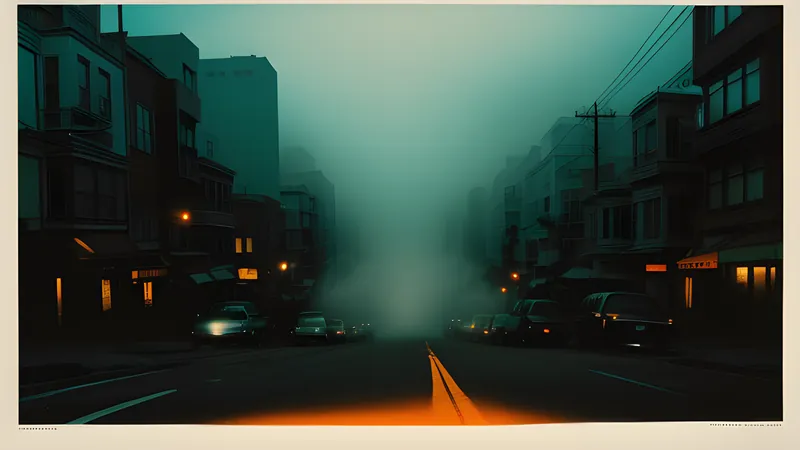
That relocation is the whole thesis. Siegel’s Santa Mira depended on intimacy for its horror; the terror there was that in a place where everyone knows everyone, you could still tell that your uncle had become a stranger. Kaufman drops the pods into 1978 San Francisco, a city of atomised strangers, self-help seminars, and people who are already slightly checked out, and asks a colder question. In a place this alienated, how would you ever know? The pods do not have to hide in the city. The city was halfway to being pod already.
A cast at the top of its game
Kaufman assembled an ensemble that grounds the paranoia in recognisable, lived-in people. Donald Sutherland plays Matthew Bennell, a health inspector with a perm and a moustache and a nice line in fussy decency; Brooke Adams is Elizabeth Driscoll, his colleague, who is the first to notice that her boyfriend has gone strange and cold. Around them Kaufman builds a circle of friends whose loss will actually hurt: Jeff Goldblum, all twitchy indignation, as a failing writer, and Veronica Cartwright as his wife, who runs a mud-bath spa where the pods make one of their most memorable incursions.
The single sharpest casting stroke is Leonard Nimoy as Dr David Kibner, a celebrity pop-psychiatrist with a bestselling book, forever telling the panicking characters that their fear their loved ones have changed is a common neurosis, a projection, a symptom of modern relationships. He is the film’s most insidious idea made flesh: the soothing authority who explains away the evidence of your own senses, whose reasonable, therapeutic voice is the exact pitch the pods themselves adopt. Casting Mr Spock — the era’s icon of pure, feelingless logic — as the smooth apostle of emotional flatness is the kind of joke that is also the thesis. Two of the original’s stars turn up as well: Kevin McCarthy, still running and screaming his warning from 1956, hammers on car windows in the street, and Don Siegel himself plays a taxi driver, passing the nightmare on.
Ben Burtt’s scream and Kaufman’s eye
The 1978 film is a technical leap, and the leap is mostly in the sound. Ben Burtt, fresh from inventing the voice of every droid and lightsaber in Star Wars, designed the pod-people’s shriek — the flat, inhuman screech the converted emit to point out an unconverted human in their midst — and it is one of the great sound effects in horror, a noise that is somehow both a scream and a car alarm and the death of everything warm. The film also gives the pods a wet, organic birth: Kaufman shows the duplication process in full, the pod cracking open to disgorge a glistening, half-formed copy strung with filaments, and the practical effects have a clammy biological horror the 1956 version never attempted.
Michael Chapman, who shot Taxi Driver, gives the city a paranoid geometry — canted angles, foregrounds cluttered with strangers, deep-focus compositions where you keep scanning the background for who might already be gone. The score, unusually, is the work of jazz pianist Denny Zeitlin, the only film he ever scored, and its nervy, dissonant textures keep the film off balance. Kaufman also lets the biology turn genuinely grotesque: an early casualty is a half-formed thing with a barely human face, and later the film delivers its most infamous image, a stray dog trotting through a crowd wearing the face of a homeless man — a botched duplication, the pods getting their wires crossed, and a glimpse of pure nightmare logic that no amount of explanation could improve on. Every craft department is pulling in the same direction: toward a San Francisco that looks normal on the surface and feels, in every frame, like a trap that has already sprung. The film that would later match this atmosphere of total bodily distrust is The Thing (1982), and it is no accident that Veronica Cartwright, screaming in the snow here, would carry that same terror into other genre landmarks of the era.
Why the city version cuts deeper
Set the two films side by side and the 1978 version’s advantage is thematic as much as technical. Siegel’s 1956 original is a horror of conformity aimed at a culture that still believed in the warm, connected community the pods were corrupting. Kaufman’s remake arrives after the 1960s curdled into the 1970s — after Watergate, after the failure of the counterculture, into an America that had grown suspicious of everything and everyone. His pods are not invading a healthy body; they are finishing off a sick one. The self-help culture Kibner represents, with its promise of frictionless calm and its horror of messy feeling, is already selling exactly what the pods deliver for free.
That is the darker and truer horror. The 1956 film says: beware, they will take away your humanity. The 1978 film says: you might hand it over gladly, because feeling less has started to look like relief. The alienation the pods offer is continuous with the alienation the city already runs on, which is why nobody sounds the alarm until it is far too late. This is the same cold current the movies would follow all the way to something like Under the Skin, where the modern city is a place a person can simply vanish from and no one comes looking. The updated dread also plugs straight into the surveillance-era anxiety catalogued in nine sci-fi films that saw the surveillance age coming — the sense of a world quietly reorganising itself against the individual.
The verdict
Invasion of the Body Snatchers (1978) is the model of how to remake a classic: honour the machine that works, then rebuild it for a colder decade and a bigger city, and above all refuse the reassurance the first film was forced to offer. It is scarier, sadder, and more precisely tuned to modern loneliness than its ancestor, and it accomplishes the near-impossible by improving a film that did not appear to need improving. The pods found better hunting in the city, and Kaufman found the version of the story the 1950s could not have released.
Watch it as the second panel of the paranoia diptych, right after Siegel’s 1956 blueprint, and then step into the genre’s frozen extreme with The Thing (1982), where the question of who is still human becomes unanswerable.
Spoilers below
Kaufman gets to keep the ending Siegel was denied, and he sharpens it into one of the bleakest final shots in American cinema. Where the 1956 film was forced to bolt on a hospital frame and a last-minute phone call to the FBI, the 1978 version simply lets the pods win, completely and without appeal. One by one the little band of survivors is taken. Elizabeth falls asleep in Matthew’s arms in a hiding place and is replaced; he wakes to find the woman he loves crumbling to dust and a naked duplicate rising in her place, and Sutherland plays the moment as pure, wordless devastation.
The knife is twisted by the film’s last scene. Matthew, now apparently the only human left, is glimpsed walking through the city in daylight, keeping his head down, doing his job at City Hall as though he has survived by blending in — the one small hope the audience is allowed. Then Nancy, Cartwright’s character, the last other free human, spots him across a plaza and approaches with relief, and Matthew slowly turns, opens his mouth, and lets out the pods’ flat, damning shriek, pointing at her with a rigid arm. He was taken at some unseen point, and the film never showed us the moment, which means the person we were rooting for had already been hollowed out while we watched and we never noticed — the same thing the movie kept warning could happen to anyone.
Kaufman holds that scream and points it, exactly as Siegel once wanted to point Miles’s warning, straight at the audience, and then cuts to black. There is no frame, no reprieve, no authorities on the way. It is the ending the 1956 film reached for and was not allowed to keep, delivered twenty-two years later with the full force of its despair intact — the moment the remake stops being a tribute and becomes the definitive version. The pods do not just win the town. They win the last face you trusted, and they use it to give you away.
Related Content