Institute Benjamenta: The Quay Brothers' Only Live-Action Feature
The animators of Street of Crocodiles built a whole world out of servants and dust
Contents
The Quay Brothers spent the 1980s making some of the most influential animation in the world without most of the world noticing. Stephen and Timothy Quay, American twins who settled in London, built miniature universes out of doll parts, dust, screws, and dead-eyed puppets, and their 1986 short Street of Crocodiles rearranged the nervous systems of everyone who later made a music video or a horror film about a haunted room full of objects. Then in 1995 they did the thing nobody expected. They pointed a camera at actual human beings and made a feature.
Institute Benjamenta, or This Dream People Call Human Life is the result, and it remains their only live-action feature to this day. It is adapted from Robert Walser’s strange, quietly devastating 1909 novel Jakob von Gunten, and it is one of the most beautiful and least seen films of its decade. The Quays did not abandon their animation instincts when they moved to flesh actors. They simply applied the same obsessive tactile control to human bodies, and the result is a film in which people move like the most delicate puppets the brothers ever built.
A school that teaches nothing, forever
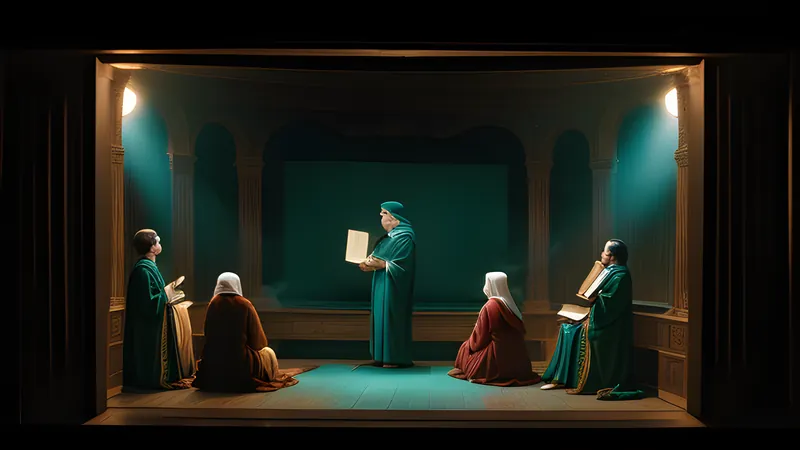
Walser’s novel and the Quays’ film share a premise that reads like a joke and plays like a trance. Jakob von Gunten, played by a young Mark Rylance in one of his first screen roles, enrols at the Institute Benjamenta, a school for servants. There he and the other students are trained to be butlers and footmen, and the training consists of the same small lesson repeated endlessly, drilled until it becomes a kind of ritual with no destination. The pupils learn to serve, to bow, to efface themselves, and the school seems to exist outside time, sealed off from any world where these skills might be used.
The Institute is run by the domineering Herr Benjamenta, played by Gottfried John, and his sister Lisa Benjamenta, played by Alice Krige, who teaches with a melancholy that hangs over the whole building. Jakob is drawn to Lisa, and a current of frustrated, unspoken feeling moves between them and between Jakob and Herr Benjamenta as well. The plot, such as it is, concerns the slow dissolution of the school and the strange spell it holds over everyone inside it.
Robert Walser is worth a word here, because the film is unusually faithful to a genuinely peculiar writer. Walser wrote in a register of gentle, self-cancelling irony, and spent the last decades of his life in a Swiss sanatorium, reportedly saying he was there to be mad, not to write. His fiction is full of characters who court their own smallness, and Jakob von Gunten is the purest of them. The Quays did not soften or explain him; they found a visual language for a sensibility that had never been filmed, and Rylance, at the very start of his career, plays Jakob with exactly the mischievous humility the part demands.
What matters is that the Quays understand Walser’s real subject, which is the odd dignity and horror of choosing to disappear. Jakob wants to become a nobody, a servant, a zero, and the film treats that desire with complete seriousness. There is something genuinely unsettling in watching a young man train himself out of ambition and into invisibility, and Rylance plays it with a sly inner life that keeps you from ever writing Jakob off.
The texture is the film
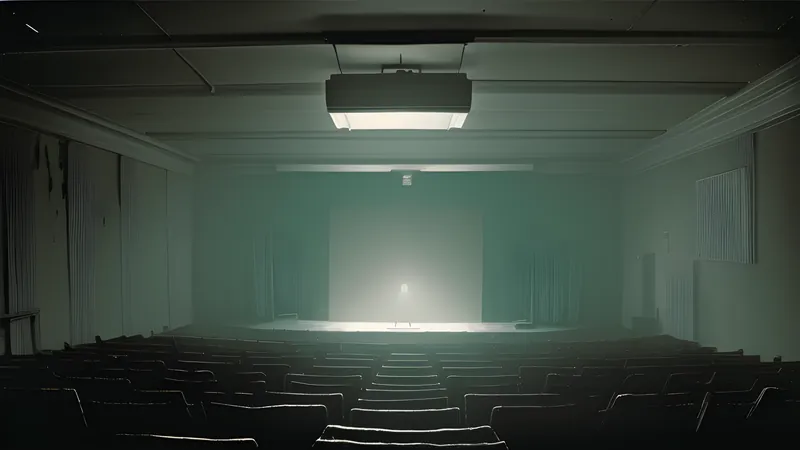
The Quays film everything in silvery monochrome, and the surface of Institute Benjamenta is where its power lives. This is a film about touch. Cinematographer Nic Knowland lights the Institute so that light seems to cling to surfaces — polished wood, worn fabric, the grain of skin, the antlers of a mounted stag that recurs like a household god. The camera drifts and probes rather than cuts, and objects are photographed with the same loving, slightly sinister attention the brothers once gave their puppets.
This is the transfer worth studying: the Quays took the vocabulary they invented for inanimate matter and imposed it on living actors, so that Rylance and Krige and John move with the careful, weighted deliberateness of figures being animated one frame at a time. The performers hold still in ways human beings rarely do, then move with a precision that reads as slightly unreal. The effect is hypnotic, and it belongs to no other film, because no other filmmakers arrived at live action through a decade of moving objects by hand.
The obvious cousin is David Lynch’s Eraserhead, another monochrome dream where a whole interior world is built from texture, sound, and dread, and where narrative gives way to atmosphere as the primary carrier of meaning. Both films ask you to stop waiting for a plot and start living inside a space. The Quays are gentler than Lynch, and stranger in a quieter register, but the demand they make on the viewer is the same one.
Sound, dream, and the servant’s paradise
The score by Lech Jankowski is inseparable from the images, a drifting, chamber-scaled music of unresolved phrases that seems to come from inside the building’s walls. Sound design in a Quay film is never decoration; the whispers, the scrapes, the small mechanical noises build a sensorium as detailed as the visuals, and Institute Benjamenta is wall-to-wall with this quiet activity. The film hums even in its silences.
The recurring dream imagery — the stag, the forest glimpsed inside the Institute, the mysterious inner chamber the students are forbidden to enter — gives the film the logic of sleep. Rooms connect in ways architecture would not allow. The line between the school and Jakob’s dreaming mind blurs until you stop trying to keep them separate. This is the film’s boldest move and the reason its subtitle names it a dream. The Quays are filming a state of consciousness, and they trust the imagery to carry it without a narrator explaining what any of it means.
It is worth saying plainly how much of modern screen craft flows from these two men. The tactile-object horror that the Quays perfected in the 1980s seeded a whole visual grammar that later turned up everywhere from music videos to prestige horror, in any film that lingers on the sinister life of dolls, machines, and dust. Seeing that vocabulary applied to living actors in Institute Benjamenta is like hearing a composer known for miniatures suddenly write for a chamber ensemble. The scale changes; the obsessive attention to every surface does not.
Set it beside the great Eastern European art films the Quays revere and the debt becomes clear. There is Tarkovsky in the drift and the patience, the sense of a space that tests those who move through it, the quality I traced in Stalker and the Zone as a test of faith. The Institute is a Zone of its own, a threshold space where the students are perpetually being prepared for a life outside that the film never lets them reach.
Where to find it, and who it is for
Institute Benjamenta is a demanding watch, and it rewards surrender rather than concentration. Push against it for a plot and it will frustrate you; give in to it and it becomes one of the most immersive films you can find. It has never been a hit, and it lived for years in the hard-to-see margins, but restorations have made it available to the patient viewer, and it should be watched with the best image and sound you can manage, because so much of it is texture that cheap copies destroy.
It belongs to the tradition of difficult, hand-built cinema that finds its audience one convert at a time, the same corner of film culture that keeps Begotten alive. Where Merhige’s film is scorched and violent, the Quays’ is silvered and tender, but both are films that treat the medium as a place to conjure a world rather than to report one. If you love one, the other is waiting.
The Quays never made another live-action feature, returning to their animation and shorter forms, which makes Institute Benjamenta a genuine one-off — the single occasion these two singular artists brought their tactile, dust-and-shadow universe to human scale. That rarity is part of its pull.
Spoilers below
The film moves toward the collapse of the Institute itself. As the school dissolves, Herr Benjamenta’s authority crumbles with it, and the strange sealed world the students have inhabited begins to open. Lisa Benjamenta’s fate is the film’s emotional centre of gravity, and her decline gives the dream its sorrow; the melancholy that has hung over the building all along finds its object in her.
The closing movement releases Jakob from the Institute, and the film ends with the possibility of departure into the world outside — the world the students were forever being trained for and never allowed to enter. The Quays keep it ambiguous whether this is liberation or simply the end of one dream and the start of another, which is faithful to Walser, whose novel closes on Jakob setting off into the unknown with Herr Benjamenta himself.
What lingers is the film’s tenderness toward the desire to vanish. Jakob wanted to become a zero, a servant, a nobody, and the film neither mocks that wish nor endorses it. It simply watches, with the patience of a dream, as a young man trains himself for a smallness the world may never require of him, and it finds in that quiet ambition something close to grace. Few films this strange are also this kind.
Related Content